How Do Goals and Values Shape Perception?
TL;DR
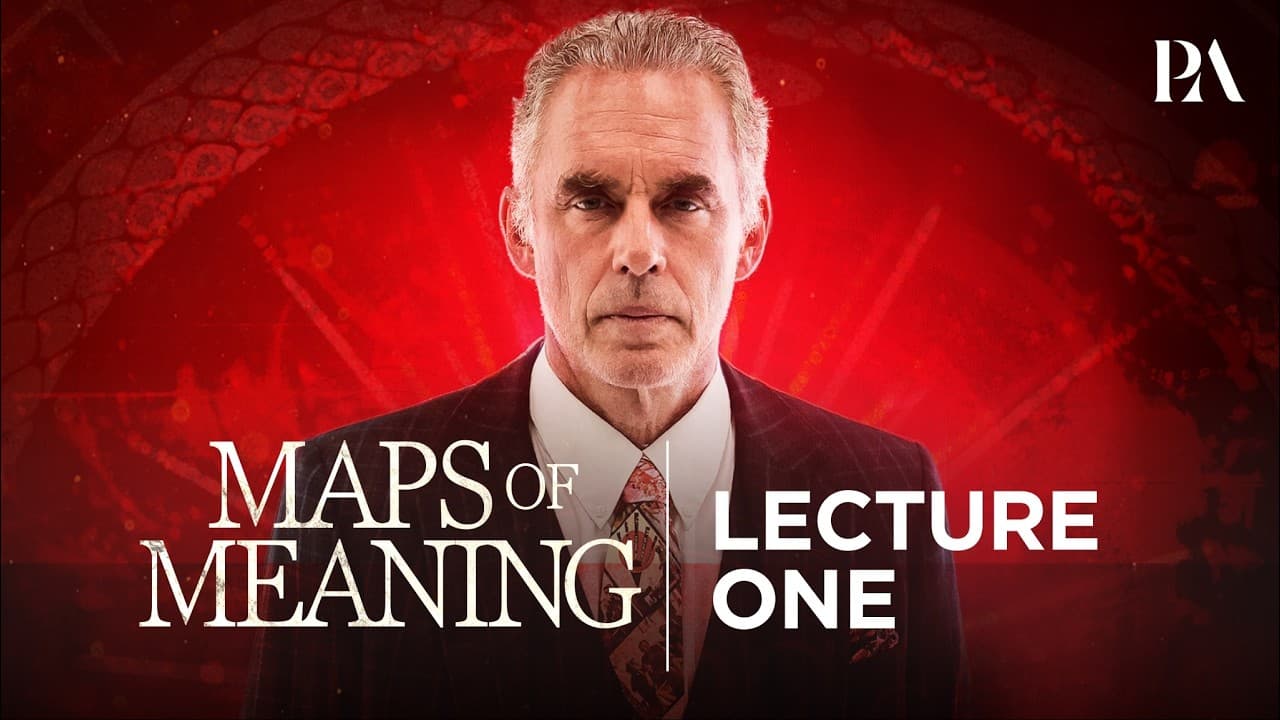
Perception is an active, goal-directed process: attention selects what matters from an otherwise overwhelming field of detail. Goals and values organize action, determine relevance, and shape emotion, while stories provide maps for moving from a present state toward a desired future. Meaning emerges through pursuing valuable aims, confronting risk and suffering, and participating in transformative journeys.
Transcript
There are forces behind the scenes that are moving you. You have no idea what they are. The primary cry of our time is for a uniting narrative. The hero's narrative defines the foundation of things. So what's the story? One of the things that a great story does is that it reveals truths that have been known since the beginning of time. That's a map... Read More
Key Insights
- Perception is an active process because observing anything requires directing attention and moving the eyes through mechanisms connecting vision with neurological systems. A person is therefore not a passive recipient of neutral sensory data but an active observer operating inside a framework of action.
- Attention is organized by relevance because the surrounding world contains an indefinite amount of available detail. In a restaurant, people usually focus on their guests and servers rather than everyone present, unless an unusual event makes something else important to their immediate aims.
- A perceptual frame has three essential parts: a sense of the present position, a destination, and a strategy for moving between them. This structure organizes both attention and action by evaluating possible steps according to whether they advance a chosen goal.
- Emotion is a trajectory-adjustment system that evaluates movement relative to a goal. Positive emotion indicates progress and supports the existing perceptual frame, while negative emotion signals deviation, obstruction, or a possible failure in the frame used to interpret events.
- Human vision concentrates neurological resources on a small point of high-resolution focus while peripheral vision becomes progressively less detailed. This structure illustrates how perception foregrounds what is important to a goal and allows everything less relevant to fade toward the edge of awareness.
- Experience is inseparable from value because perception depends on action, action depends on goals, and goals depend on judgments about importance. The lecture therefore challenges the idea that objective material reality can fully explain human experience without considering perceivers, purposes, meaning, and value.
- Stories are maps that reveal enduring patterns and organize movement through uncertain situations. A useful narrative links the present to a valued destination, gives meaning to risk, and provides a structure through which suffering, responsibility, chaos, and transformation can be interpreted.
- The hero narrative represents voluntary confrontation with danger and suffering in pursuit of maximal value. The lecture argues that confronting a larger dragon can release greater potential, making the meaningful journey a process of transformation rather than a guarantee of comfort or safety.
Install to Summarize YouTube Videos and Get Transcripts
Explore YouTube Video Summarizer or Get YouTube Transcript Extractor
Questions & Answers
Q: How do goals and values shape human perception?
Goals shape perception by determining what receives attention and what remains in the background. Because the environment contains an indefinite amount of detail, people must select information that matters to their aims. Action depends on a goal, and a goal depends on value, so perception is never presented as entirely detached from judgments about relevance, importance, progress, and desired outcomes.
Q: Why is perception described as an active process?
Perception is active because seeing requires directed attention and continual eye movement supported by neurological mechanisms. The observer selects points of interest rather than passively absorbing every available detail. Even basic sensory experience operates within action, since a person must orient toward something, inspect it, and organize the resulting information according to what matters in the current situation.
Q: What are the two fundamental ways of viewing the world?
The lecture distinguishes between asking what the world is made of and asking how to act within the world. The first emphasizes material composition, while the second emphasizes experience, navigation, goals, and conduct. Because people are living and acting creatures, the lecture argues that understanding how to act is arguably of primary importance and perhaps closer to primary reality.
Q: What is the basic structure of a perceptual frame?
A perceptual frame contains a present position, a desired destination, and a strategy for moving from one to the other. Attention and action are organized around that structure. Possible events become relevant according to whether they help close the gap, obstruct progress, or reveal that the strategy and interpretive frame must be reconsidered.
Q: How do emotions guide progress toward a goal?
Emotions operate as trajectory-adjustment signals within a goal-directed frame. Positive emotion indicates movement toward the intended destination and validates the current organization of perception and action. Negative emotion indicates that something has gone astray, such as a deviation from the path or a failure in the frame itself, prompting attention and possible correction.
Q: Why can people not attend to every detail around them?
The world presents an indefinite amount of detail, including variations in color, light, faces, objects, and surrounding activity. Attempting to process everything would overwhelm attention. People therefore focus on what is relevant to a goal, place it in the foreground, and allow less important information to become progressively lower in resolution or disappear from awareness.
Q: How do stories function as maps for human action?
Stories function as maps by organizing a journey from a present condition toward a valued destination. They identify what deserves attention, what risks may be meaningful, and how transformation can occur through action. A powerful story also reveals enduring truths and provides a narrative framework for confronting chaos, suffering, uncertainty, responsibility, and the demands of purposeful change.
Q: What does the hero narrative say about risk and transformation?
The hero narrative portrays transformation as the result of voluntarily confronting danger, suffering, and chaos while pursuing something of great value. The journey does not remove risk, since difficult events may still occur. Instead, meaning justifies chosen risks, and facing a larger dragon can release greater potential by requiring courage, responsibility, persistence, and a stronger orientation toward the goal.
Summary & Key Takeaways
-
Human beings can view reality by asking what the world is made of or by asking how to act within it. The lecture prioritizes the second perspective because living creatures must navigate toward goals. Perception is therefore inseparable from attention, movement, aims, and the values that make particular details relevant.
-
A basic perceptual frame contains a present position, a desired destination, and an organized strategy for closing the gap between them. Cybernetics, phenomenology, and perceptual psychology describe versions of this structure. Within it, positive emotion signals progress, while negative emotion identifies deviation, obstruction, or failure in the guiding frame.
-
Stories function as maps that organize action across time and make difficult journeys intelligible. The hero narrative represents voluntary confrontation with chaos, suffering, and risk in pursuit of something valuable. By embodying a worthwhile story, a person can orient attention, accept responsibility, and transform both present circumstances and personal potential.
Read in Other Languages (beta)
Share This Summary 📚
Summarize YouTube Videos and Get Video Transcripts with 1-Click
Try YouTube Summary with ChatGPT & Claude or YouTube Transcript Generator
Explore More Summaries from Jordan B Peterson 📚


Summarize YouTube Videos and Get Video Transcripts with 1-Click
Try YouTube Summary with ChatGPT & Claude or YouTube Transcript Generator