What Is Endpoint Security and Why Is It Crucial?
TL;DR
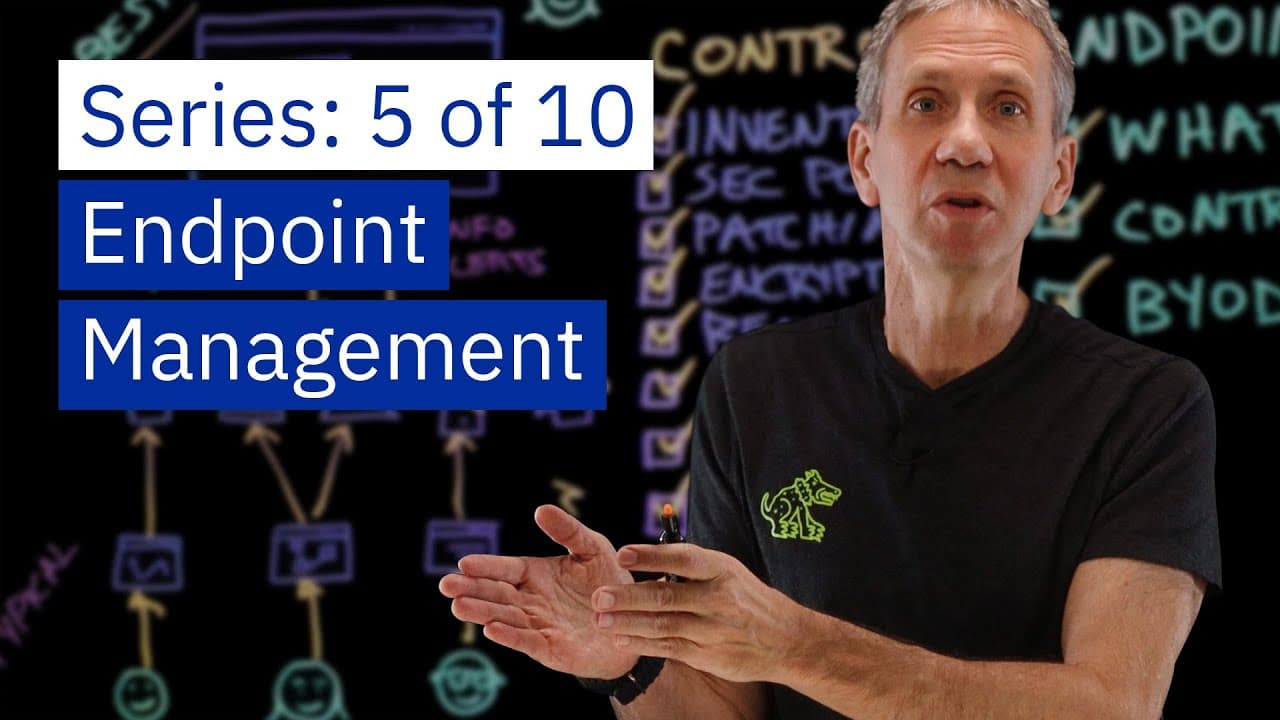
Endpoint security is essential for protecting various devices, including desktops, servers, and IoT devices, from cyber threats. A holistic approach, which integrates unified security policies and management systems, can reduce complexity and enhance control by establishing clear guidelines and monitoring mechanisms, especially in scenarios involving Bring Your Own Device (BYOD) policies.
Transcript
Welcome back to the Cybersecurity Architecture Series. In the previous videos, I talked about some of the fundamentals of cybersecurity. And then in the last video, we started a seven part series on the various domains of cybersecurity. In particular, last time we talked about identity and access management, which I said is the new perimeter. Well,... Read More
Key Insights
- 👊 Endpoint devices encompass varied hardware and operating systems, broadening the potential attack surface drastically.
- 🧑🏭 Identity and access management (IAM) practices, such as multi-factor authentication, rely on the trustworthiness of the endpoints.
- 😒 Organizations are increasingly facing a blend of personal and business use on devices, complicating security protocols.
- 🔒 Integration of endpoint management systems can streamline security practices, reducing management complexity.
- 🔒 Security policies should dictate acceptable software and hardware to mitigate risks associated with outdated systems.
- 👤 The effectiveness of BYOD policies hinges on clear user guidelines and the capability for data separation on personal devices.
- 🎮 Ultimate security relies on visibility and control over all endpoints, underscoring the need for comprehensive monitoring solutions.
Install to Summarize YouTube Videos and Get Transcripts
Explore YouTube Video Summarizer or Get YouTube Transcript Extractor
Questions & Answers
Q: What are endpoints in cybersecurity?
Endpoints refer to any devices that connect to a network, including servers, desktops, laptops, mobile devices, and IoT devices. Each endpoint operates with different operating systems and has unique vulnerabilities that can be exploited by attackers. Understanding the endpoint landscape is critical for developing effective security policies.
Q: Why is a holistic approach to endpoint security important?
A holistic approach ensures that all devices, regardless of their function or operating system, are managed under a unified security policy. This reduces complexity, enhances visibility, and allows for efficient monitoring and control, creating a more secure environment against potential threats across various platforms.
Q: What are some common security controls for managing endpoints?
Common controls include enforcing strong password policies, implementing encryption, regular software patching, remote wipe capabilities for lost devices, antivirus solutions, and tracking software to maintain visibility and security for all endpoints within an organization.
Q: How can organizations effectively manage Bring Your Own Device (BYOD) policies?
Successful BYOD strategies include defining clear consent agreements, outlining acceptable software and hardware configurations, establishing monitoring protocols, and ensuring the ability to selectively wipe corporate data without affecting personal information. This promotes user compliance while safeguarding organizational data.
Q: What challenges arise from the increasing number of endpoints in networks?
The rise of multiple endpoint types increases the attack surface for cyber threats, as each device might introduce its own vulnerabilities. Additionally, managing diverse operating systems and ensuring compliance with security standards becomes more complicated, highlighting the need for an integrated endpoint management system.
Q: What practices do organizations commonly overlook in endpoint security management?
Many organizations fail to manage IoT devices properly, often ignoring their security requirements due to lack of oversight. Additionally, inadequate policies around software updates and hardware configurations lead to vulnerabilities that can be exploited by attackers.
Q: How does complexity affect cybersecurity?
Complexity can create significant vulnerabilities in cybersecurity as it becomes more challenging to monitor and secure diverse devices and systems effectively. Simplifying management through integrated solutions enhances both visibility and control, thus helping to mitigate risks and strengthen overall security.
Summary & Key Takeaways
-
The video emphasizes the necessity of endpoint security within a holistic cybersecurity architecture, highlighting various types of devices, including IoT, servers, desktops, and mobile devices.
-
Best practices for managing endpoints include implementing unified security policies and integrated management systems to minimize complexity and enhance visibility and control.
-
The challenges surrounding Bring Your Own Device (BYOD) policies are addressed, advocating for well-defined programs to ensure users understand security measures while accessing corporate data.
Read in Other Languages (beta)
Share This Summary 📚
Summarize YouTube Videos and Get Video Transcripts with 1-Click
Try YouTube Summary with ChatGPT & Claude or YouTube Transcript Generator
Explore More Summaries from IBM Technology 📚






Summarize YouTube Videos and Get Video Transcripts with 1-Click
Try YouTube Summary with ChatGPT & Claude or YouTube Transcript Generator