Why AI Stock Selloff Contradicts Market Data

TL;DR
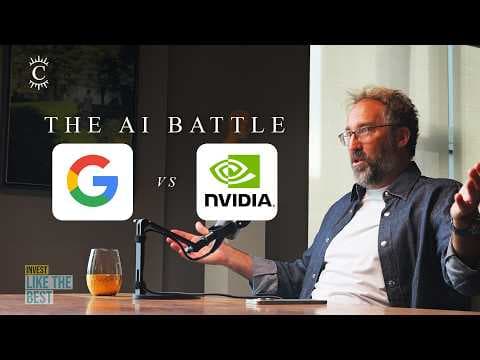
Despite a significant selloff in AI stocks, the underlying data shows accelerating growth and demand in the AI sector. Key metrics such as GPU availability, DRAM pricing, and token growth are improving, contradicting market sentiment. Open-source models and private companies like OpenAI and Anthropic continue to expand, suggesting a robust future for AI infrastructure.
Transcript
I want to be scared, you know. I don't want to feel like a lunatic watching these stocks get more cheaper thinking the expected forward returns are going up. My main kind of mission out here this week >> is like pressure test. >> Yeah. >> Yeah. >> Find tell me something negative. >> But I haven't been able to find one that is like a quantitative me... Read More
Key Insights
- AI stocks have seen a significant selloff, but the underlying fundamentals are improving.
- Nvidia's forward PE is at its lowest in a decade, indicating market skepticism about its valuation.
- GPU availability and DRAM pricing are accelerating, contradicting the market's negative perception.
- Open-source AI models are driving massive infrastructure demand, enhancing the AI ecosystem.
- Long-term agreements (LTAs) in the memory market are shaping market dynamics and company strategies.
- Nvidia's strategic dominance is supported by its innovative business models and partnerships.
- SpaceX's ambitions in the data center market could significantly impact AI compute infrastructure.
- Regulatory risks remain a significant concern for the AI industry's future growth and development.
Install to Summarize YouTube Videos and Get Transcripts
Explore YouTube Video Summarizer or Get YouTube Transcript Extractor
Questions & Answers
Q: Why are AI stocks selling off despite positive data?
AI stocks are experiencing a selloff due to market skepticism and a perceived overvaluation, despite improving fundamentals like GPU availability and DRAM pricing. The market may not fully understand the accelerating demand driven by open-source models and private companies, leading to a disconnect between stock performance and underlying data.
Q: How is Nvidia maintaining its market dominance?
Nvidia maintains its market dominance through strategic partnerships, innovative business models, and a focus on long-term agreements in the memory market. These strategies allow Nvidia to capitalize on the growing demand for AI infrastructure, despite market skepticism about its valuation.
Q: What role do open-source AI models play in the market?
Open-source AI models are driving significant infrastructure demand by providing scalable and customizable solutions. They enhance the AI ecosystem by offering alternatives to proprietary models, increasing accessibility, and fostering innovation. This growth in open-source models contributes to the overall expansion of the AI market.
Q: What are the risks associated with AI's growth?
Regulatory risks are a significant concern for AI's growth, as potential regulations could impact data center operations and AI development. Additionally, market skepticism and potential overvaluation pose challenges, requiring companies to navigate these risks effectively to sustain growth.
Q: How is SpaceX impacting the AI compute infrastructure?
SpaceX is impacting AI compute infrastructure with its ambitious data center plans, aiming to bring significant compute capacity online. This expansion could reshape the AI landscape by providing more resources for AI development and potentially lowering costs, thereby influencing the market dynamics.
Q: What is the significance of GPU availability in the AI market?
GPU availability is crucial for the AI market as it directly impacts the ability to process large datasets and train models efficiently. The accelerating availability of GPUs, along with favorable pricing trends, supports the growth of AI infrastructure and the development of advanced models, contradicting the negative market sentiment.
Q: Why are long-term agreements important in the memory market?
Long-term agreements (LTAs) in the memory market are important because they provide stability and predictability for companies, allowing them to secure resources at fixed prices. These agreements help manage supply chain risks and ensure a steady supply of memory components, which are critical for AI infrastructure and model training.
Q: What could potentially break the current AI market thesis?
A potential break in the AI market thesis could occur if operating cash flows do not continue to accelerate, requiring increased reliance on debt financing. Additionally, a significant regulatory intervention or a sustained drop in GPU prices could disrupt the current growth trajectory, challenging the assumptions underpinning the market's optimism.
Summary & Key Takeaways
-
The AI stock selloff doesn't align with the improving market data, as key metrics like GPU availability and DRAM pricing show growth. Open-source models and private companies are expanding, indicating a strong future for AI infrastructure.
-
Nvidia's strategic positioning, including its new business models and partnerships, reinforces its market dominance despite the selloff. The market's skepticism about AI valuations contrasts with the accelerating fundamentals.
-
Regulatory risks pose a significant threat to AI's growth, while SpaceX's data center ambitions highlight the evolving landscape of AI compute infrastructure. The industry's future depends on navigating these challenges effectively.
Read in Other Languages (beta)
Share This Summary 📚
Summarize YouTube Videos and Get Video Transcripts with 1-Click
Try YouTube Summary with ChatGPT & Claude or YouTube Transcript Generator
Explore More Summaries from Invest Like The Best 📚





Summarize YouTube Videos and Get Video Transcripts with 1-Click
Try YouTube Summary with ChatGPT & Claude or YouTube Transcript Generator