How Does GPT-5 Enhance Engineering and Coding?
TL;DR
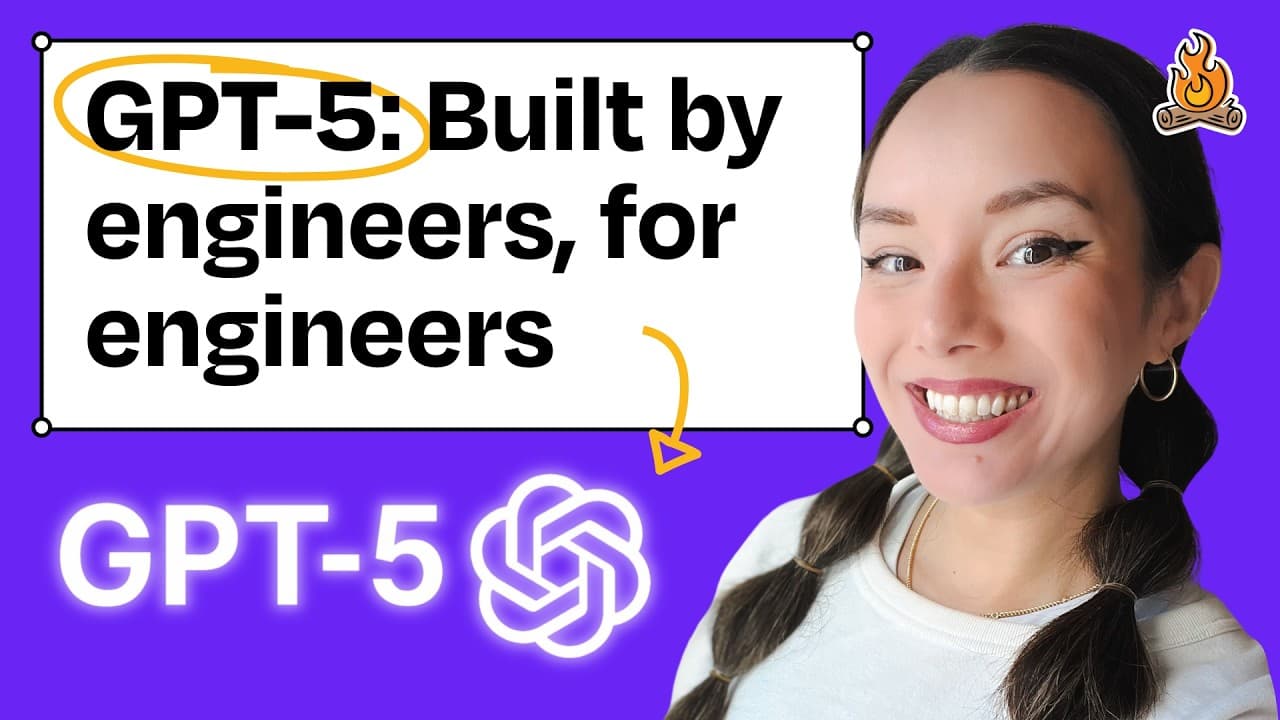
GPT-5, OpenAI's latest model, is designed with a strong focus on engineering and technical tasks. It excels in coding, technical writing, and generating detailed functional requirements, making it a valuable tool for engineers. However, it may overlook business-oriented discovery questions, making it less ideal for non-technical stakeholders.
Transcript
GPT5 is the newest model released from OpenAI and from my very first interaction I felt like this was a engineer built by engineers for engineers. It writes good code it refactors. It's thoughtful and girlfriend loves to call a tool. If you have a good idea and you really just need to get down to what are the technical implementation of this featur... Read More
Key Insights
- GPT-5 is engineered with a focus on technical tasks, excelling in coding and technical writing.
- It generates detailed functional requirements, beneficial for engineering tasks.
- GPT-5 tends to prioritize technical details over business context, potentially skipping important discovery questions.
- The model exhibits impressive spatial awareness in image generation, useful for interior design and visual tasks.
- GPT-5's tool-calling behavior and bullet-point communication style reflect its engineering-oriented design.
- For non-technical stakeholders, GPT-4.1 may be more suitable due to its business-oriented approach.
- GPT-5's performance is fast and efficient, making it a strong candidate for daily use by engineers.
- OpenAI's API design and developer support enhance the usability of GPT-5 for software engineers.
Install to Summarize YouTube Videos and Get Transcripts
Explore YouTube Video Summarizer or Get YouTube Transcript Extractor
Questions & Answers
Q: How does GPT-5 differ from GPT-4.1 in terms of technical tasks?
GPT-5 is designed with a focus on technical tasks, excelling in coding and technical writing. It generates detailed functional requirements, making it ideal for engineering tasks. In contrast, GPT-4.1 is more business-oriented, providing a higher-level overview suitable for non-technical stakeholders.
Q: What are GPT-5's strengths in image generation?
GPT-5 demonstrates impressive spatial awareness in image generation, which is beneficial for tasks like interior design. It can accurately interpret prompts and generate detailed visual layouts, making it a valuable tool for design-oriented tasks.
Q: Why might GPT-5 not be ideal for non-technical stakeholders?
GPT-5 may not be ideal for non-technical stakeholders because it prioritizes technical details over business context. It tends to skip important discovery questions that are crucial for business-oriented tasks, making GPT-4.1 a better choice for those needing a higher-level overview.
Q: How does GPT-5's tool-calling behavior affect its use?
GPT-5's extensive tool-calling behavior reflects its engineering-oriented design, allowing it to efficiently perform technical tasks. However, this behavior may raise concerns about token usage and performance in production environments, especially if tool calls become excessive.
Q: What makes GPT-5 a strong candidate for daily use by engineers?
GPT-5 is a strong candidate for daily use by engineers due to its fast performance and efficiency in coding and technical writing. Its ability to generate detailed functional requirements and its engineering-oriented communication style make it a valuable tool for technical tasks.
Q: How does OpenAI's API design enhance GPT-5's usability?
OpenAI's API design and developer support enhance GPT-5's usability by providing robust tools and ecosystems for software engineers. These features make it easier to integrate GPT-5 into existing workflows, offering a seamless experience for developers working with LLM-based tools.
Q: What are the practical considerations for choosing GPT-5?
When choosing GPT-5, consider its strengths in technical tasks and its focus on engineering details. It is ideal for coding, technical writing, and generating detailed requirements. However, for tasks requiring business context and discovery, GPT-4.1 may be more suitable.
Q: How does GPT-5 handle front-end design tasks?
GPT-5 handles front-end design tasks with a good sense of style and spatial awareness. It can generate visually appealing designs and prototypes, making it a viable option for high-level prototyping within AI tools, although it may require adjustments for text and background contrast.
Summary & Key Takeaways
-
GPT-5 is a highly technical model from OpenAI, designed for engineers with a focus on coding and technical writing. It excels in generating detailed functional requirements, making it ideal for engineering tasks. However, it may overlook business-oriented discovery questions, making it less suitable for non-technical stakeholders.
-
The model demonstrates impressive spatial awareness in image generation, which is beneficial for tasks like interior design. GPT-5's tool-calling behavior and bullet-point communication style reflect its engineering-oriented design, making it a valuable tool for engineers seeking detailed and precise outputs.
-
While GPT-5 is fast and efficient, making it a strong candidate for daily use by engineers, GPT-4.1 may be more suitable for stakeholders requiring a business-oriented approach. OpenAI's API design and developer support further enhance GPT-5's usability for software engineers, offering a robust tool for technical tasks.
Read in Other Languages (beta)
Share This Summary 📚
Summarize YouTube Videos and Get Video Transcripts with 1-Click
Try YouTube Summary with ChatGPT & Claude or YouTube Transcript Generator
Explore More Summaries from How I AI 📚



Summarize YouTube Videos and Get Video Transcripts with 1-Click
Try YouTube Summary with ChatGPT & Claude or YouTube Transcript Generator