Why Matt Rife Refused to Apologize for Comedy
TL;DR
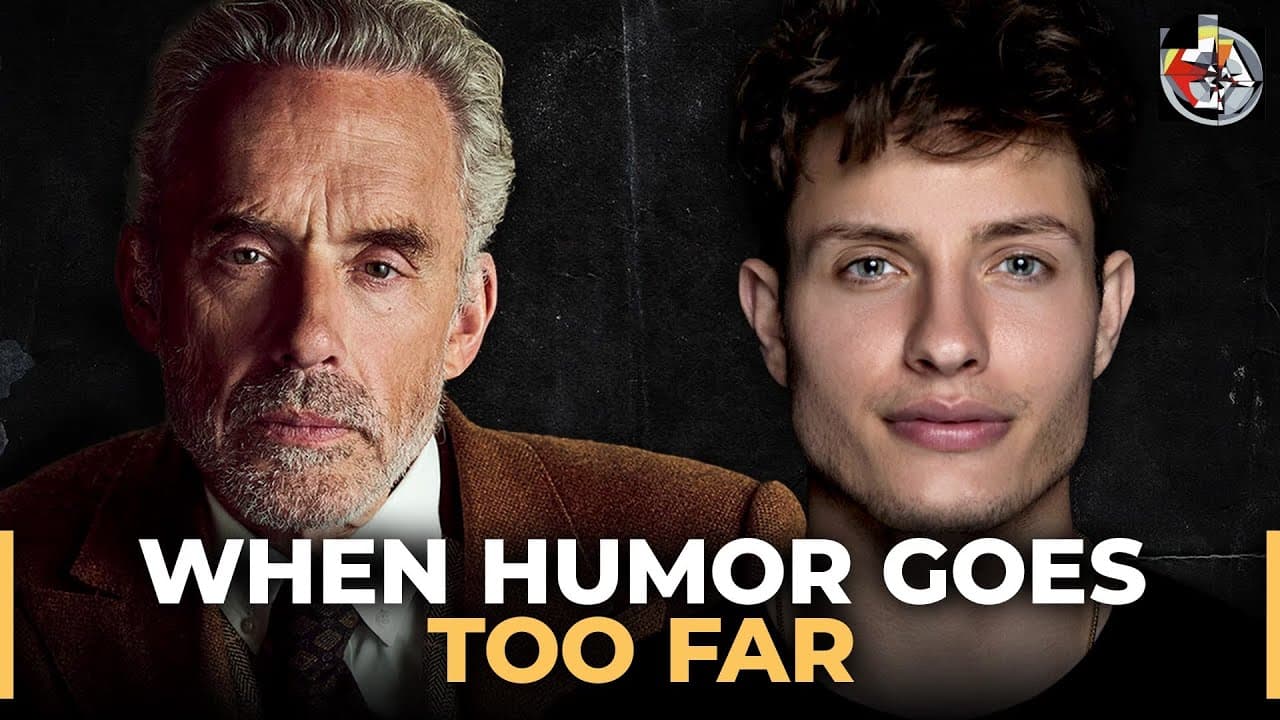
Matt Rife refused to apologize because he regards comedy as an attempt to share thoughts that make life happier, not as an endorsement of harmful behavior. He argues that offended viewers can simply disengage, while spontaneous crowd work requires immediate, uncensored instincts, precise timing, and acceptance of the risk that a joke may fail.
Transcript
it's a modern Twist on an old joke you know what I mean it was it was a real circumstance that happened an exaggerated instance that really happened and I went you know this is this is a classic joke why not give my own personal modern Twist on it and move on the joke's like a minute 30 seconds of people were like all he did was bash women and I pu... Read More
Key Insights
- Rife's refusal to apologize is based on his view that comedy should express what genuinely amuses the comedian. He says his jokes are products of imagination intended to create happiness or relief, rather than statements carrying a deeper meaning or demanding public endorsement.
- The controversial joke is an exaggerated modern variation on an older comedic premise rooted in a circumstance that Rife says actually happened. Its placement at the beginning of the special was intentional, giving viewers an immediate warning about his preferred style of humor.
- Rife's response to criticism used another joke instead of an apology. He promoted a website involving special-needs helmets for offended viewers, maintaining the same provocative comedic posture that caused the dispute and signaling that he would not accept the critics' framing of his material.
- Crowd work is a high-risk, high-reward form of comedy because the performer cannot fully prepare for audience interactions. Rife must react immediately to unexpected comments, making instinct, confidence, and precise timing essential to producing a pointed response before the moment disappears.
- Immediate comic instinct is central to Rife's spontaneous process. He believes that, for a naturally funny person, the first thought is often the funniest, while Peterson argues that filling the performer's mind with censorship concerns can make an improvised exchange stop being funny very quickly.
- The visible backlash represents only a small portion of the broader public, according to Rife. He estimates that a few dozen thousand people were upset and believes most of that group would neither attend his comedy shows nor connect with him personally anyway.
- Audience disengagement is Rife's preferred answer to offensive entertainment. He argues that people who dislike his comedy can turn away, explore other interests, and avoid discussing him, just as he gives no attention to heavy metal music because it does not appeal to him.
- Social media was a deliberate growth strategy for Rife's comedy career. The description says his stand-up and "red flag" crowd work repeatedly went viral on TikTok, helping him expand his name before releasing three YouTube specials from 2021 through 2023 and a Netflix special.
- Related book: 12 Rules for Life
- Related book: Beyond Order
- Export your Kindle highlights to Glasp: How to Download Highlights and Notes from Kindle
Install to Summarize YouTube Videos and Get Transcripts
Explore YouTube Video Summarizer or Get YouTube Transcript Extractor
Questions & Answers
Q: Why did Matt Rife refuse to apologize for his joke?
Matt Rife refused to apologize because he considers the disputed material to be comedy generated by his imagination, not a deeper declaration of values. He says he shares thoughts that make him happy in the hope that they also make other people's lives easier. From his perspective, apologizing would misrepresent both his intention and his understanding of what comedy is supposed to do.
Q: What was Matt Rife's controversial joke based on?
Rife says the joke grew from a real circumstance and became an exaggerated, modern variation on an old joke. He describes it as lasting about one minute and thirty seconds, despite critics characterizing the broader show as an attack on women. He intentionally put it first so viewers would immediately understand his comedic style and could stop watching if it was not for them.
Q: How did Matt Rife respond to being canceled?
Rife responded with another provocative joke instead of issuing an apology. He posted what Peterson describes as a joke advertisement directing offended people toward a website about special-needs helmets. The response reinforced Rife's position that the controversy should remain within the realm of comedy, while Peterson praised it as witty, risky, funny, and appropriately resistant to pressure from critics.
Q: Why is crowd work difficult for stand-up comedians?
Crowd work is difficult because audience comments and reactions cannot be fully predicted or rehearsed. Rife describes the method as high risk and high reward, since an improvised answer can be sharply funny or fail in real time. The comedian must recognize the most pointed response quickly, deliver it at exactly the right moment, and avoid hesitation that could destroy the timing.
Q: How does Matt Rife approach spontaneous comedy?
Rife approaches spontaneous comedy by trusting the first thought that comes into his mind. He believes that a naturally funny person's immediate reaction will often be the funniest available response. Because crowd work unfolds quickly, he cannot spend much time reconsidering each line. His method depends on intuition, fast timing, and willingness to let potentially intrusive thoughts become material.
Q: How large did Matt Rife believe the backlash was?
Rife estimates that the backlash involved a few dozen thousand people, which he contrasts with a world population of eight billion. He also believes that 90 percent of this already small group would not normally attend his comedy shows or connect with him personally. His point is that highly visible online criticism can appear broader than the actual audience supporting it.
Q: What does Matt Rife think offended viewers should do?
Rife thinks viewers who dislike his comedy should simply remove themselves from it. He argues that turning away leaves an entire planet of other people, activities, and interests to explore. As an analogy, he says he dislikes heavy metal music but spends none of his time thinking or talking about it. He sees disengagement as more reasonable than campaigning against unwanted entertainment.
Q: How did social media contribute to Matt Rife's career?
Social media helped Rife expand his name through stand-up clips and "red flag" crowd work that repeatedly went viral on TikTok. The description presents this as an innovative, consistent strategy rather than an accidental development. After building attention online, he produced three straight-to-YouTube comedy specials from 2021 to 2023, then debuted his first Netflix special, "Natural Selection," in 2023.
Summary & Key Takeaways
-
Matt Rife discusses the controversy surrounding a domestic assault joke in his Netflix special, "Natural Selection." He says the joke was based on a real circumstance, exaggerated into a modern version of an old comedic premise, and deliberately placed first so viewers could immediately decide whether his humor suited them or not.
-
Rife explains that comedy begins with thoughts his imagination produces and that sharing them may provide happiness or relief to others. He rejected an apology because he saw the disputed material as comedy rather than a deeper statement. His response instead directed offended people toward a website advertising special-needs helmets as a joke.
-
Crowd work became central to Rife's public profile through a deliberate social media strategy, although he describes live interactions as unpredictable and dependent on whoever speaks up. He emphasizes that spontaneous comedy demands immediate instincts and exact timing. Peterson connects that method to the danger of self-censorship, which can quickly undermine a performance.
Read in Other Languages (beta)
Share This Summary 📚
Summarize YouTube Videos and Get Video Transcripts with 1-Click
Try YouTube Summary with ChatGPT & Claude or YouTube Transcript Generator
Explore More Summaries from Jordan B Peterson 📚

Summarize YouTube Videos and Get Video Transcripts with 1-Click
Try YouTube Summary with ChatGPT & Claude or YouTube Transcript Generator