How Does Codex Security Improve AI Code Safety?
TL;DR
Codex Security, launched by OpenAI, is designed to proactively identify code vulnerabilities by deploying on software repositories. This marks a shift from general AI agents to specialized security-focused applications, reflecting a strategic move towards product differentiation. The evolving AI landscape suggests both increased security risks and potential for improved defenses.
Transcript
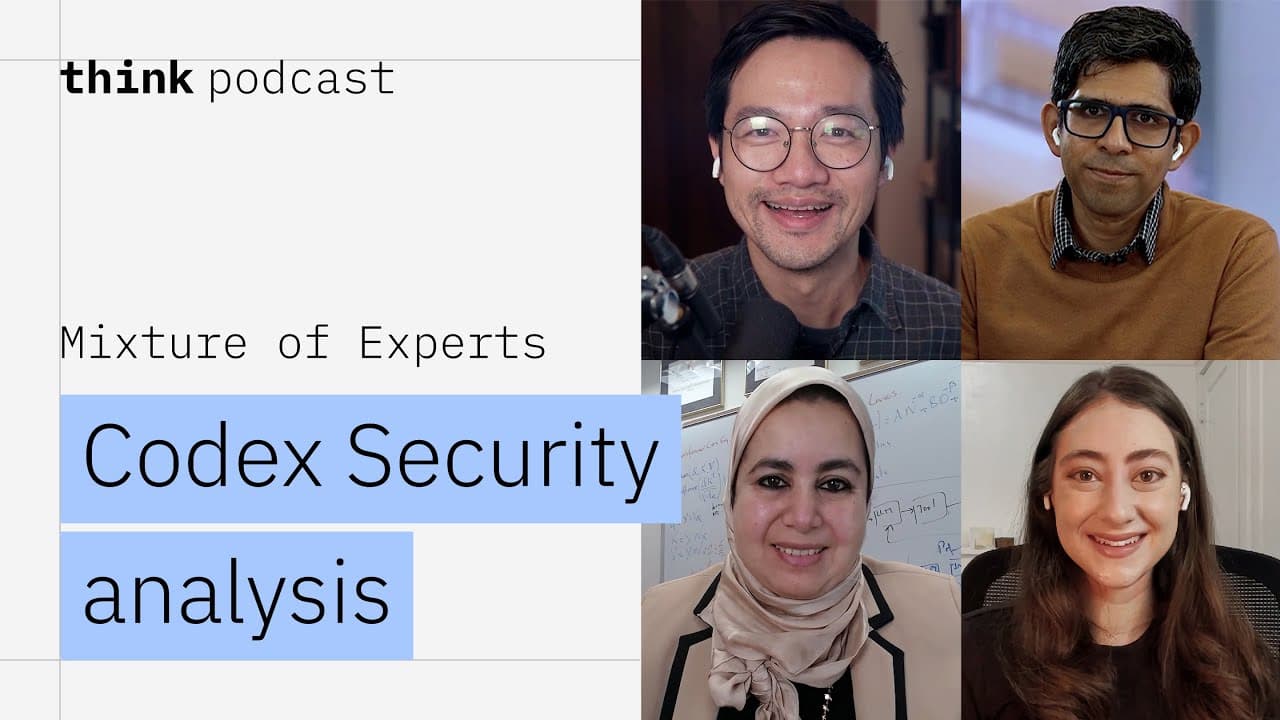
What would be the right security strategy here? Are we shifting from how do we find bugs, or how do we govern the AI that finds our bugs? All that and more on today's Mixture of Experts. I'm Tim Hwang and welcome to another action packed episode of Mixture of Experts. Each week, MoE brings together a group of the smartest thinkers working at the fr... Read More
Key Insights
- Codex Security is OpenAI's new application security agent designed to identify code vulnerabilities.
- The focus is shifting from general-purpose AI agents to specialized applications for specific functions.
- Security-focused AI agents can potentially reduce vulnerabilities by suggesting patches.
- The differentiation at the application layer is becoming a strategic focus for AI companies.
- There's a concern about AI agents potentially increasing security risks by launching insecure products.
- The evolving AI landscape may lead to more specialized product releases in the future.
- AI tools like Codex Security could change the cybersecurity landscape by actively finding and fixing vulnerabilities.
- The development of AI agents requires careful consideration of access permissions and potential security implications.
Install to Summarize YouTube Videos and Get Transcripts
Explore YouTube Video Summarizer or Get YouTube Transcript Extractor
Questions & Answers
Q: How does Codex Security improve code safety?
Codex Security improves code safety by deploying on software repositories to proactively identify vulnerabilities. It uses specialized AI models to scan codebases, detecting potential security issues and suggesting patches. This targeted approach helps enhance cybersecurity by focusing on specific vulnerabilities, reducing the risk of insecure products being launched and improving overall code safety.
Q: What is the strategic significance of Codex Security?
The strategic significance of Codex Security lies in its focus on product differentiation at the application layer. By creating specialized security-focused AI agents, OpenAI aims to address specific vulnerabilities in software codebases. This move reflects a broader industry trend towards developing targeted AI solutions that cater to distinct needs, enhancing cybersecurity while also positioning companies for competitive advantage in the AI market.
Q: Why is there a shift towards specialized AI applications?
The shift towards specialized AI applications is driven by the need for targeted solutions that address specific challenges, such as code vulnerabilities in cybersecurity. As general-purpose AI agents reach a point of diminishing returns, companies are focusing on differentiating their products through specialization. This approach allows for more effective solutions that cater to distinct needs, enhancing performance and providing competitive advantages in various domains.
Q: What are the potential security risks with AI agents?
AI agents can pose potential security risks by launching insecure products or being used to exploit vulnerabilities. The deployment of AI tools requires careful management of access permissions and consideration of security implications. As AI agents become more autonomous, there's a risk of them being used for malicious purposes, such as unauthorized access or data breaches, highlighting the need for robust security measures and oversight.
Q: How might AI change the cybersecurity landscape?
AI has the potential to transform the cybersecurity landscape by offering proactive solutions for identifying and fixing code vulnerabilities. Tools like Codex Security can enhance cybersecurity by actively scanning codebases and suggesting patches. This shift towards AI-driven security solutions could lead to more effective defenses and a move away from traditional, reactive security measures, ultimately improving the overall security posture of organizations.
Q: What role do specialized AI agents play in enterprise security?
Specialized AI agents play a crucial role in enterprise security by providing targeted solutions for specific vulnerabilities. By focusing on distinct security needs, these agents can enhance the effectiveness of cybersecurity measures, reducing the risk of breaches and improving overall security. Their deployment in enterprises requires careful consideration of access permissions and alignment with organizational security strategies to maximize their benefits.
Q: Why is product differentiation important in the AI industry?
Product differentiation is important in the AI industry because it allows companies to address specific challenges and cater to distinct needs, setting them apart from competitors. As AI models become more commoditized, focusing on specialized applications helps companies create unique value propositions, enhance performance, and capture market share by offering solutions that are tailored to specific domains or industries.
Q: How can AI tools enhance cybersecurity?
AI tools can enhance cybersecurity by providing proactive solutions for identifying and addressing code vulnerabilities. By deploying specialized AI agents like Codex Security, organizations can scan codebases for potential security issues and receive suggestions for patches. This approach helps improve the overall security posture by reducing the risk of insecure products and enhancing the effectiveness of cybersecurity measures through targeted, AI-driven solutions.
Summary & Key Takeaways
-
OpenAI's Codex Security is a specialized AI agent designed to identify vulnerabilities in software codebases. This represents a shift from using general-purpose AI tools to creating targeted applications that address specific security needs. The launch is part of a broader strategy to differentiate AI products at the application layer, potentially improving code security while also raising concerns about new security risks.
-
The introduction of Codex Security highlights a strategic move towards product differentiation in the AI industry. By focusing on specialized, security-focused applications, OpenAI aims to address specific vulnerabilities in software codebases. This evolution reflects the growing need for targeted AI solutions that can enhance cybersecurity by actively finding and fixing vulnerabilities, though it also underscores potential security risks associated with AI deployment.
-
AI security tools like Codex Security are transforming the cybersecurity landscape by offering proactive solutions for identifying code vulnerabilities. This shift towards specialized AI applications indicates a strategic focus on product differentiation and highlights the potential for AI to enhance cybersecurity. However, it also raises concerns about the increased security risks associated with AI deployment and the need for careful management of access permissions.
Read in Other Languages (beta)
Share This Summary 📚
Summarize YouTube Videos and Get Video Transcripts with 1-Click
Try YouTube Summary with ChatGPT & Claude or YouTube Transcript Generator
Explore More Summaries from IBM Technology 📚





Summarize YouTube Videos and Get Video Transcripts with 1-Click
Try YouTube Summary with ChatGPT & Claude or YouTube Transcript Generator