How AI Will Dominate Internet Actions Soon
TL;DR
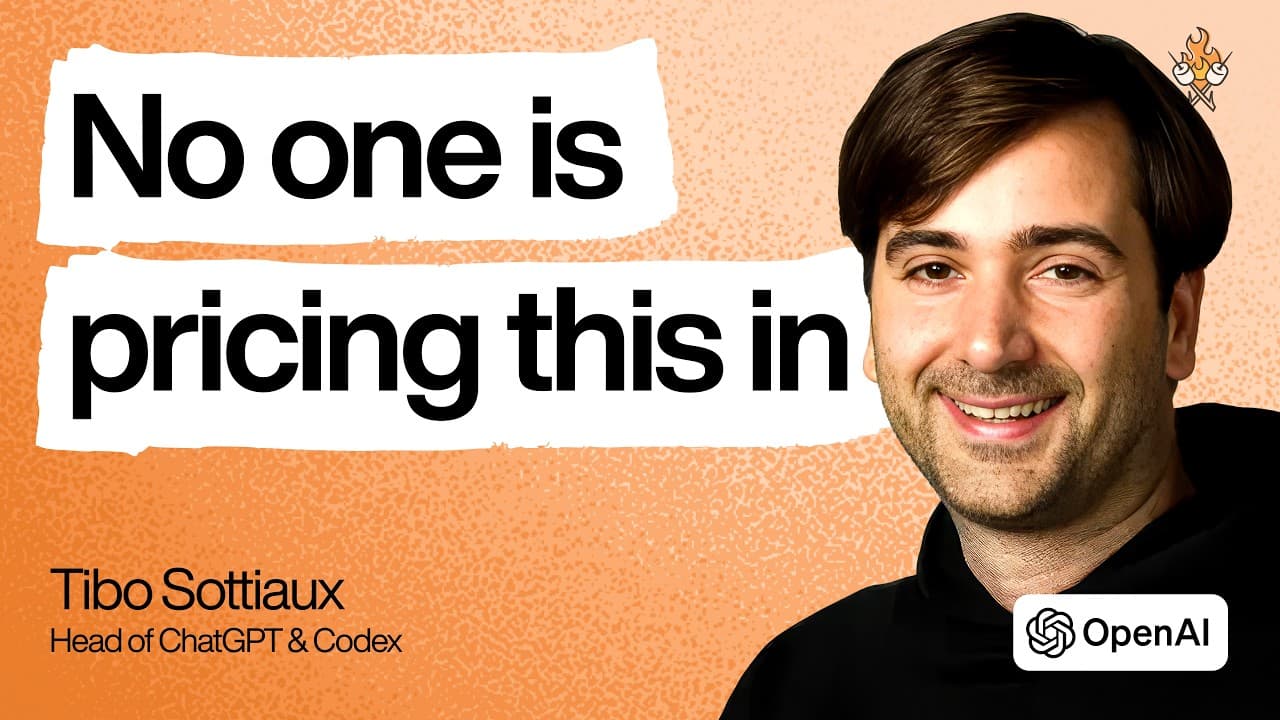
AI agents will soon perform most actions on the internet, requiring products to be built for scale and adaptability. OpenAI's Tibo Sottiaux discusses the shift towards intelligent agents like Dots, which learn from user preferences and feedback, aiming for seamless integration into daily life. The evolution of AI will continue to change work dynamics, emphasizing the importance of building with community feedback.
Transcript
Often when I look at what people are building out there, it's just like, "You're not quite getting it." Like, you know, if you were just like pushing yourself and just really imagining like all of this being roughly 10 times better than it is today, you know, like in a year, but you would build in a different way. >> What do you think people aren't... Read More
Key Insights
- AI agents will perform the majority of internet actions soon, requiring scalable product design.
- Dots, OpenAI's new AI assistant, aims to integrate seamlessly into users' daily lives by learning preferences.
- The evolution of AI will continue to change work dynamics, emphasizing adaptability and community feedback.
- OpenAI is merging Codex, ChatGPT, and Dots to create a unified AI user experience.
- OpenAI is committed to an open ecosystem, allowing plugin developers to share in revenue.
- AI safety and alignment are critical, with significant investment in monitoring and guardrails.
- Human creativity and taste remain valuable, with AI serving as an empowering extension.
- The pressure to do more with AI is balanced by the potential for increased focus and productivity.
Install to Summarize YouTube Videos and Get Transcripts
Explore YouTube Video Summarizer or Get YouTube Transcript Extractor
Questions & Answers
Q: How will AI agents change internet interactions?
AI agents are expected to perform the majority of actions on the internet, which will change how products are designed and used. Products will need to be built for scale and adaptability to accommodate AI agents, which will handle tasks automatically and seamlessly integrate into users' daily routines. This shift will require developers to rethink user interfaces and interactions to cater to intelligent agents.
Q: What is OpenAI's Dots, and how does it work?
Dots is OpenAI's new AI assistant platform designed to integrate into users' lives by understanding their preferences and goals. It operates continuously, learning from user feedback and adapting to their needs. Dots aims to provide a seamless experience by being available across devices and contexts, allowing users to interact with AI without being tied to specific technology or interfaces.
Q: Why is OpenAI focusing on an open ecosystem?
OpenAI is committed to creating an open ecosystem to encourage innovation and collaboration among developers. By allowing plugin developers to share in revenue, OpenAI incentivizes the development of high-quality applications that enhance the capabilities of their AI platforms. This approach fosters a diverse range of tools and services, making AI more accessible and beneficial to a broader audience.
Q: How does OpenAI ensure AI safety and alignment?
OpenAI invests heavily in AI safety and alignment by implementing robust monitoring systems and guardrails. They allocate significant compute resources to secondary monitoring to ensure AI agents operate safely and within acceptable risk levels. This includes preventing prompt injections and other malicious activities, ensuring that AI systems remain reliable and trustworthy for users.
Q: What role will human creativity play in the AI era?
Human creativity and taste will remain essential in the AI era, as AI serves as an extension of human capabilities rather than a replacement. AI can empower individuals by enhancing their creative processes and enabling them to achieve their goals more efficiently. While AI handles routine tasks, humans will continue to drive innovation and creativity, leveraging AI as a powerful tool.
Q: What are the potential challenges of increased AI use?
One challenge of increased AI use is the potential for context switching and loneliness, as individuals interact more with AI agents than other humans. There's also a pressure to do more because AI can handle more tasks simultaneously. Addressing these challenges involves designing AI systems that integrate naturally into human workflows and reduce the cognitive load on users.
Q: How does OpenAI plan to simplify AI interactions?
OpenAI aims to simplify AI interactions by reducing the complexity of model pickers and configurations. They are working towards a future where AI systems are intuitive and require minimal user input, allowing users to focus on their tasks without the need for technical expertise. This involves creating AI that can operate across multiple devices and contexts seamlessly.
Q: What is the future of AI according to OpenAI?
OpenAI envisions a future where AI agents dominate internet activity, performing most actions automatically. This will lead to more efficient and scalable product designs, with AI seamlessly integrated into daily life. OpenAI is focused on ensuring that AI systems are safe, aligned, and empowering for users, enhancing productivity while preserving human creativity and innovation.
Summary & Key Takeaways
-
AI agents are expected to take over most internet actions, necessitating scalable and adaptable product designs. OpenAI's Tibo Sottiaux highlights the importance of building with community input and the shift towards intelligent agents like Dots, which learn from user feedback and preferences.
-
OpenAI's approach involves merging Codex, ChatGPT, and Dots to provide a seamless AI experience. The company is also focusing on creating an open ecosystem, allowing plugin developers to share in revenue and encouraging innovative AI applications.
-
AI safety and alignment are top priorities for OpenAI, with significant investments in monitoring and guardrails. While AI can enhance productivity, human creativity and taste remain crucial, with AI serving as an empowering tool rather than a replacement.
Read in Other Languages (beta)
Share This Summary 📚
Summarize YouTube Videos and Get Video Transcripts with 1-Click
Try YouTube Summary with ChatGPT & Claude or YouTube Transcript Generator
Explore More Summaries from Lenny's Podcast 📚




Summarize YouTube Videos and Get Video Transcripts with 1-Click
Try YouTube Summary with ChatGPT & Claude or YouTube Transcript Generator