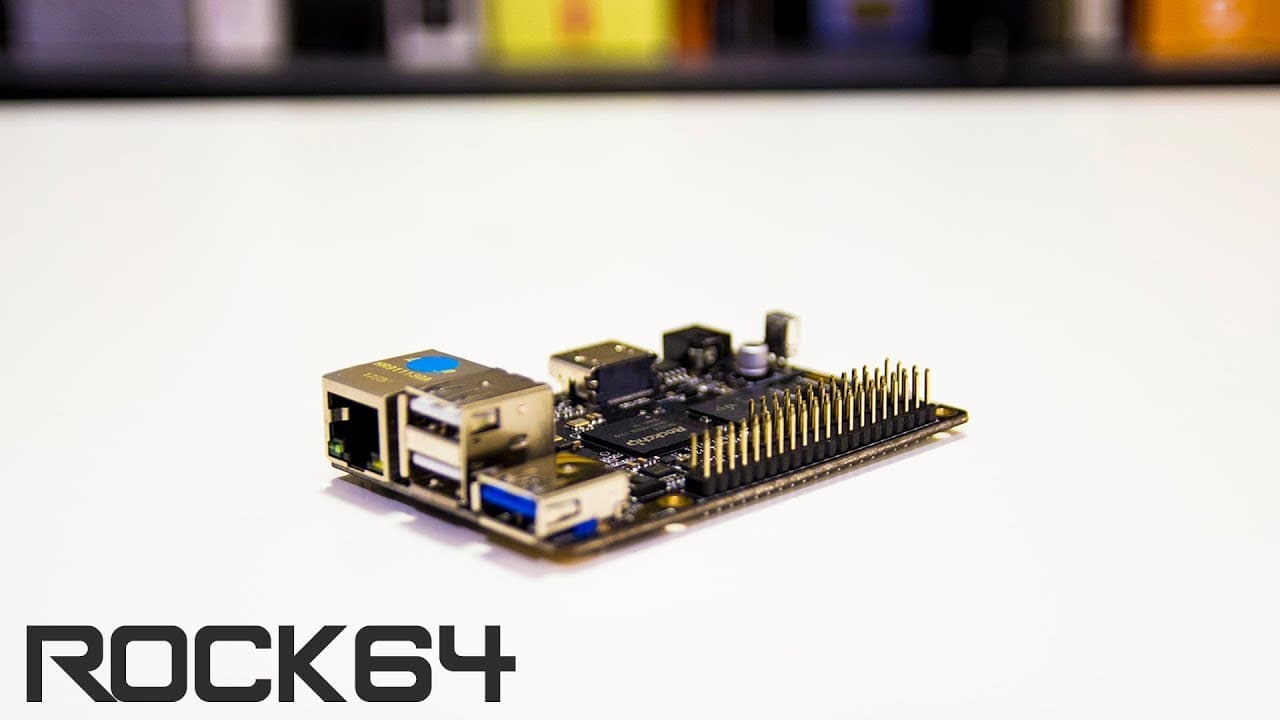
Rock 64 Review | Should I get one?
TL;DR
The Rock 64 board offers good specs but lacks Wi-Fi and has USB issues.
Transcript
hey guys what's going on it's down here from Nova spirits and today we will be taking a look at the rock 64 board by pine 64 so let's get started now I was really exciting when this board first came out on Kickstarter because it's the same footprint has a Raspberry Pi you see but it also includes all the stuff that the Raspberry Pi doesn't have whi... Read More
Key Insights
- 🥶 The Rock 64's underclocked CPU limits performance, making it comparable to the older Raspberry Pi 3 model.
- ✊ USB 3.0 functionality is inconsistent, often requiring additional power solutions to ensure reliability.
- 🏂 The absence of built-in Wi-Fi reduces the usability of the board for many IoT projects.
- 👤 Compatibility with Android and various Linux distributions gives users flexibility in operation, although reflashing can be challenging.
- 🤨 The shipping and customer service experience raise concerns about Pine 64's business model and support capabilities.
- 🥺 The board’s launch on Kickstarter generated initial excitement, but real-world performance and usability have led to mixed reviews.
- 🔉 The Rock 64 supports 4K output via HDMI, appealing to users needing high-resolution displays for media applications.
Install to Summarize YouTube Videos and Get Transcripts
Explore YouTube Video Summarizer or Get YouTube Transcript Extractor
Questions & Answers
Q: What are the main specifications of the Rock 64 board?
The Rock 64 board is powered by a Rockchip RK3328, a 64-bit processor running at 1.3 GHz (underclocked from 1.5 GHz), and it is available in three RAM variants: 1GB, 2GB, and 4GB. The board also includes USB 3.0 ports, Gigabit Ethernet, HDMI output, and a 4K video support, making it a competitive choice within the single-board computer market.
Q: Why is the USB 3.0 functionality problematic on the Rock 64 board?
Users have encountered multiple issues with the USB 3.0 ports, often failing to work after the boot process. This may require extra hardware or workarounds, such as using powered USB hubs or modifying device tree settings, complicating the user experience and hindering the board's intended ease of use.
Q: How does the Rock 64 board compare to the Raspberry Pi 3?
While the Rock 64 board has some advantages like USB 3.0 and Gigabit Ethernet, its performance is comparable to the Raspberry Pi 3 due to the underclocked CPU speed and other limitations. The lack of built-in Wi-Fi significantly reduces its appeal for users looking for a versatile single-board computer for projects.
Q: What is the impact of the missing Wi-Fi on the Rock 64 board’s usability?
The absence of built-in Wi-Fi is a substantial downside for a board intended for IoT and networked applications. Users accustomed to the convenience of Wi-Fi in devices like the Raspberry Pi might find the requirement for external USB Wi-Fi adapters cumbersome, particularly when building portable or space-constrained projects.
Q: Can the Rock 64 board run any operating systems?
Yes, the Rock 64 board can run various operating systems, including multiple Linux distributions and Android. Users can download and flash operating systems through a modified version of Etcher, although issues have been noted with reflashing due to the number of partitions created during the initial flash.
Q: What challenges did the reviewer face when trying to get the Rock 64 board?
The reviewer faced significant challenges with communication from Pine 64, including delays in shipping and lack of support responses. After ordering the board, it took two and a half months to arrive, raising concerns about customer service and product availability for potential buyers.
Q: How did the benchmark test results for the Rock 64 board perform?
In benchmark tests, the Rock 64 board achieved a mining speed of 10.1, which is only slightly faster than the Raspberry Pi, but significantly slower than other boards like the Tinker Board. The underclocked speed and lack of graphic acceleration support contributed to these limited performance results.
Q: What recommendations does the reviewer provide regarding the Rock 64 board?
The reviewer suggests that potential buyers consider the lack of built-in Wi-Fi a major drawback, indicating that the board may not fully meet the needs of hobbyists who require wireless connectivity. They also express disappointment that the board seems unclear in its target market, suggesting a need for a clearer focus in future designs.
Summary & Key Takeaways
-
The Rock 64 board by Pine 64 features a 1.5 GHz processor and various RAM options, but it is underclocked to 1.3 GHz, limiting speed.
-
Users have reported significant issues with the USB 3.0 functionality, which can fail to work at boot, requiring additional hardware to resolve the problem.
-
The absence of built-in Wi-Fi is a major drawback, reducing the board's appeal for IoT projects, despite other strong features like Gigabit Ethernet.
Read in Other Languages (beta)
Share This Summary 📚
Summarize YouTube Videos and Get Video Transcripts with 1-Click
Try YouTube Summary with ChatGPT & Claude or YouTube Transcript Generator
Explore More Summaries from Novaspirit Tech 📚


Summarize YouTube Videos and Get Video Transcripts with 1-Click
Try YouTube Summary with ChatGPT & Claude or YouTube Transcript Generator