How to prevent age related muscle loss with protein
TL;DR
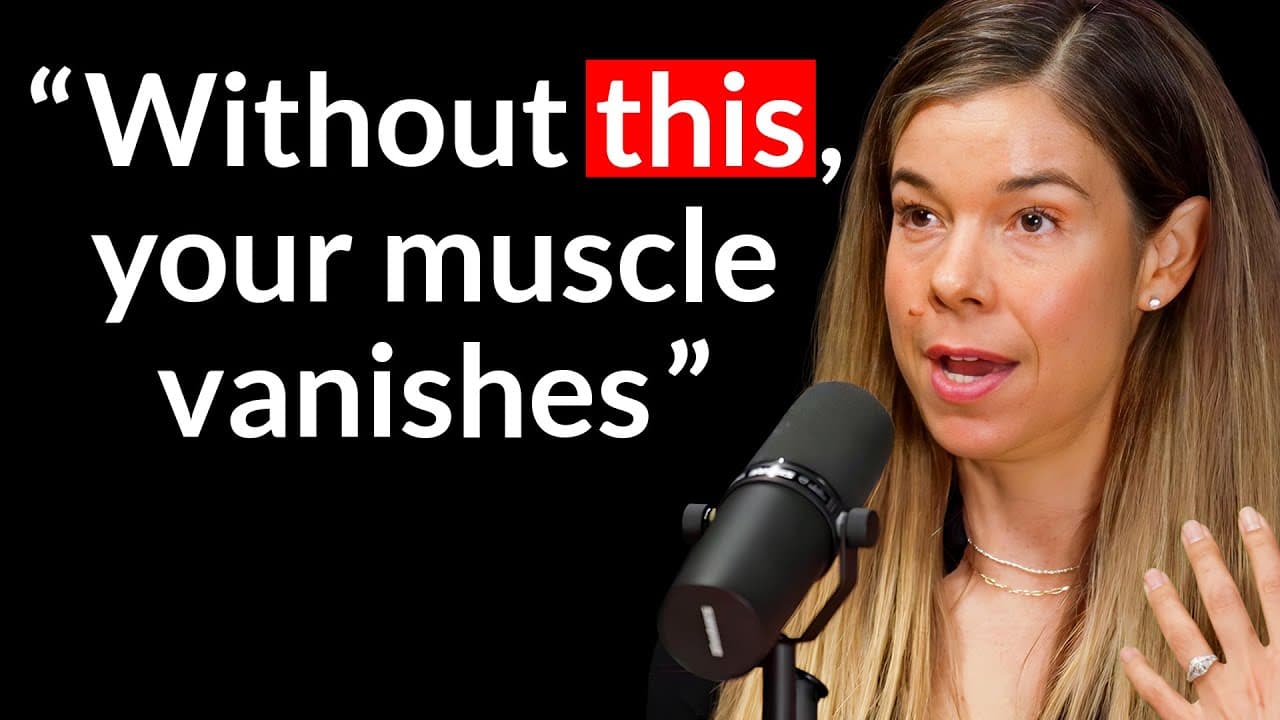
Increasing protein intake to 1.2 g per kg of body weight per day can help older adults reduce age related muscle loss and frailty. The evidence suggests moving the protein floor up from current levels to this amount, and resistance training is crucial to maximize benefits.
Transcript
So here's an interesting question Rhonda. So we know the rates at which muscle mass, skeletal mass um are declining by decade in an aging population. Um is there any way we can estimate I'm guessing the answer is no, but on the off chance you would know. Is there any way we can estimate what percent of that decay is simply being driven by uh insuff... Read More
Key Insights
-
- Protein intake of 1.2 g/kg/day is recommended to mitigate age related muscle loss in older adults.
-
- Anabolic resistance is heightened by inactivity, which reduces muscle protein synthesis in response to amino acids.
-
- Resistance training can restore a young-like anabolic response to protein in older adults.
-
- Relative to lower protein intake, increasing protein intake shifts the balance toward a positive protein state in aging muscles.
-
- The RDA for protein is argued to be too low for older adults based on the discussed evidence.
-
- In older women, higher protein intake relates to a lower frailty risk, about 30% reduction in frailty.
-
- Inactivity is a major driver of anabolic resistance, more than aging alone, according to the discussion.
-
- Public health messaging should emphasize training alongside adequate protein to combat muscle loss and frailty.
Install to Summarize YouTube Videos and Get Transcripts
Explore YouTube Video Summarizer or Get YouTube Transcript Extractor
Questions & Answers
Q: A real search query question about the video (e.g. 'How to...', 'What is...', 'Why does...', 'When should...'). Question 1
How does increasing protein intake impact aging muscle health and what is the recommended daily amount for older adults? The discussion indicates that older adults should aim for 1.2 grams of protein per kilogram of body weight per day. This intake helps nearly eliminate age related muscle loss by counteracting anabolic resistance and improving the balance of protein synthesis. It is presented as a shift from current recommendations and a floor rather than a ceiling.
Q: Question 2
What is anabolic resistance and how does inactivity influence it? Anabolic resistance refers to reduced sensitivity of muscle tissue to amino acids, leading to lower muscle protein synthesis after protein intake. Inactivity exacerbates this effect, making resistance training crucial because it helps restore the muscle’s anabolic response and improve protein utilization even at higher protein intakes.
Q: Question 3
Why is resistance training highlighted as essential for older adults in this discussion? Resistance training directly stimulates muscle protein synthesis through mechanical signals and works with amino acid availability to improve muscle mass and strength. The speakers note that physically active older adults can achieve a similar anabolic response to protein as younger individuals, underscoring training as a central intervention.
Q: Question 4
How does protein intake relate to frailty risk in older adults, particularly women? The conversation notes that older women consuming 1.2 g/kg/day of protein have about a 30% lower risk of frailty in old age, suggesting higher protein intake contributes to better muscle health and reduced frailty outcomes in this group.
Q: Question 5
What is the argument about changing the protein RDA for older adults? The dialogue argues that the current RDA is too low for older adults and that increasing the floor to 1.2 g/kg/day would support muscle health and reduce age related muscle loss, though it distinguishes these levels from optimal intake.
Q: Question 6
How do aging and inactivity interact to affect muscle protein synthesis? Aging can be associated with anabolic resistance, but inactivity is identified as a primary driver. When older adults remain physically inactive, their muscles respond less to amino acids, whereas activity can largely counteract this resistance.
Q: Question 7
What evidence connects protein intake to muscle protein synthesis differences between young and older individuals? The discussion cites that older adults need about double the protein intake to achieve similar muscle protein synthesis as younger people, illustrating how anabolic resistance reduces responsiveness unless protein intake is increased or activity is enhanced.
Q: Question 8
What practical guidance emerges for public health messaging from this talk? The key takeaway is that increasing protein intake to 1.2 g/kg/day coupled with regular resistance training offers a practical strategy to reduce age related muscle loss and frailty, rather than relying on supplements or pills alone.
Summary & Key Takeaways
-
Older adults may prevent muscle loss by raising daily protein intake to 1.2 g per kg of body weight, which helps reduce age related muscle decline. The approach targets both anabolic resistance and net protein balance.
-
Resistance training is essential; it can align the anabolic response of older adults with younger individuals when protein intake is adequate, making exercise a key component of aging muscle health.
-
Frailty risk can be reduced by higher protein intake, particularly in older women, with a reported 30 percent lower frailty risk when meeting the 1.2 g/kg/day target.
Read in Other Languages (beta)
Share This Summary 📚
Summarize YouTube Videos and Get Video Transcripts with 1-Click
Try YouTube Summary with ChatGPT & Claude or YouTube Transcript Generator
Explore More Summaries from FoundMyFitness Clips 📚
Summarize YouTube Videos and Get Video Transcripts with 1-Click
Try YouTube Summary with ChatGPT & Claude or YouTube Transcript Generator