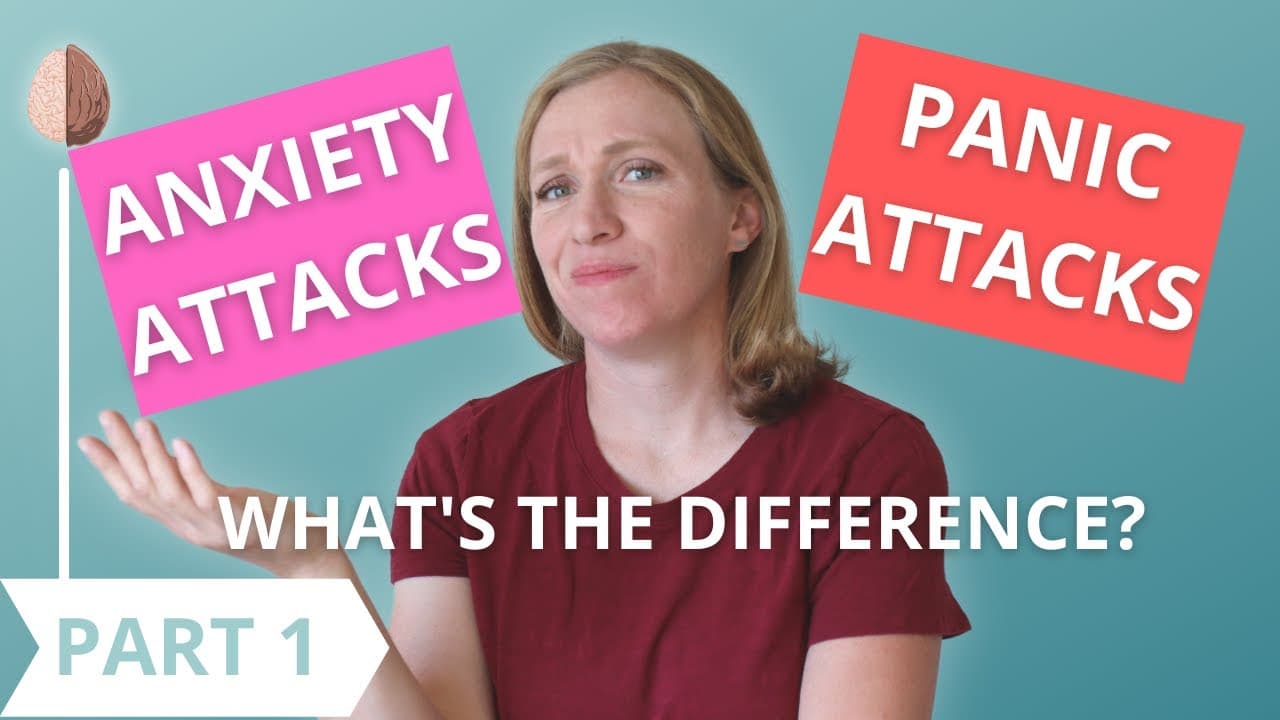
How Do Panic and Anxiety Attacks Differ?
TL;DR
Anxiety attacks generally build gradually around anticipated stress, while panic attacks bring sudden, overwhelming fear and usually peak more quickly. Repeated panic attacks can develop into panic disorder, where fearing and resisting bodily sensations may reinforce the cycle. Although both conditions share fight, flight, or freeze symptoms, their management approaches can differ.
Transcript
what's the difference between a panic attack an anxiety attack and panic disorder this is important because people sometimes use these terms interchangeably they both have a lot of overlapping symptoms but the treatment for each of them is different so in this video we'll talk about the difference in the next video we'll talk about the good and... Read More
Key Insights
- Anxiety attacks are not formally defined in the DSM-5 according to the transcript, so definitions can vary. They are described as episodes in which worry, physical discomfort, and fear build around anticipated stress until the accumulated anxiety reaches a breaking point.
- Anxiety attacks usually develop gradually rather than appearing without warning. Stress related to work, family events, finances, exams, or several problems at once may accumulate over hours or days, while the acute anxiety attack itself usually lasts less than 30 minutes.
- Panic attacks are sudden episodes of overwhelming fear that resemble a balloon popping rather than a bathtub gradually overflowing. They usually last less than 10 minutes and share many physical symptoms with anxiety attacks, including rapid heartbeat, dizziness, nausea, sweating, shaking, and shortness of breath.
- Panic attacks can be expected or unexpected. Unexpected attacks seem to arise from nowhere, while expected attacks occur in response to a known phobia, such as encountering a snake when someone is afraid of snakes.
- Panic disorder involves repeated panic attacks and can include derealization, fear of a heart attack, or fear of hyperventilating and passing out. Derealization is described as feeling numb, detached, or floaty during the experience.
- Anxiety attacks and panic attacks can occur together. Anxiety about an upcoming exam may build gradually into an anxiety attack, then culminate in a sudden panic attack during the test itself.
- Recurring panic attacks are driven by anxiety about anxiety, or fear of fear. When uncomfortable sensations begin, thinking that a panic attack must not happen can increase stress chemicals, strengthen the sense of danger, and perpetuate the cycle.
- Acceptance is presented as a prerequisite for changing recurring panic attacks. Deep breathing or distraction may help some people, but using any technique specifically to force recurring panic away can reinforce the belief that anxiety is dangerous and must be avoided.
Install to Summarize YouTube Videos and Get Transcripts
Explore YouTube Video Summarizer or Get YouTube Transcript Extractor
Questions & Answers
Q: What is the difference between a panic attack and an anxiety attack?
An anxiety attack generally develops as worry and stress build around an anticipated event, sometimes over hours or days, before reaching a breaking point. It usually lasts less than 30 minutes. A panic attack brings overwhelming fear more suddenly, like a balloon popping, and usually lasts less than 10 minutes. Both can produce similar fight, flight, or freeze symptoms.
Q: What symptoms do panic attacks and anxiety attacks share?
Both panic attacks and anxiety attacks can create fear, discomfort, and activation of the fight, flight, or freeze response. Shared physical symptoms include a fast heartbeat, shortness of breath, throat tightness, dizziness, nausea, sweating, dry mouth, and shaking. Because the symptoms overlap substantially, the timing, trigger, pattern of onset, and recurrence help distinguish the experiences.
Q: How long do anxiety attacks and panic attacks usually last?
Anxiety may accumulate over hours or days as stress becomes increasingly overwhelming, but an anxiety attack itself usually lasts less than 30 minutes. Panic attacks come on much more suddenly and usually last less than 10 minutes. These durations reflect the distinction between a gradual buildup that overflows and an abrupt surge of overwhelming fear.
Q: What causes expected and unexpected panic attacks?
Unexpected panic attacks seem to appear from nowhere, without an obvious immediate trigger. Expected panic attacks occur in response to a particular phobia or feared situation. For example, a person who is afraid of snakes may experience a panic attack after suddenly encountering one. Both types involve a rapid onset of overwhelming fear and uncomfortable physical sensations.
Q: What is panic disorder and how is it related to panic attacks?
Panic disorder occurs when a person experiences repeated panic attacks. The transcript associates it with derealization, which can feel numb, detached, or floaty, as well as fear of having a heart attack or fear of hyperventilating and passing out. Recurrence can be maintained when fear of another attack makes ordinary anxiety sensations seem dangerous and unacceptable.
Q: Can anxiety attacks and panic attacks happen at the same time?
Anxiety attacks and panic attacks can occur within the same stressful experience. A person may worry about an upcoming exam while anxiety gradually accumulates over time. That buildup can become an anxiety attack, then culminate in a sudden panic attack during the test. The overlap does not erase the distinction between gradual anxiety escalation and abrupt overwhelming panic.
Q: Why can trying to stop recurring panic attacks make them worse?
Trying to force a recurring panic attack away can send the brain the message that anxiety is dangerous and must be stopped. Fearful thoughts such as believing an attack cannot happen now can increase stress and attention to uncomfortable sensations. This creates anxiety about anxiety, strengthens avoidance, and may cause attacks to return more strongly the next time.
Q: How can anxiety attacks and recurring panic attacks be managed?
Overall anxiety may be reduced through therapy, exercise, sleep, relaxation, meditation, breathing techniques, support, laughter, organization, boundaries, processing unavoidable stress, and cutting alcohol and nicotine. These methods may prevent anxiety and panic attacks. For recurring panic attacks, however, using calming techniques to force panic away may reinforce fear, so acceptance must come before change.
Summary & Key Takeaways
-
Anxiety attacks and panic attacks can both involve fear, discomfort, a fast heartbeat, shortness of breath, throat tightness, dizziness, nausea, sweating, dry mouth, and shaking. Their main differences concern how they begin, how long they usually last, whether a trigger is apparent, and which management approach is appropriate.
-
Anxiety attacks typically arise as worry and stress accumulate around anticipated events such as work demands, family situations, financial trouble, or an exam. The buildup may unfold over hours or days before reaching a breaking point. Calming practices, organization, boundaries, exercise, support, and processing unavoidable stress may lower overall anxiety.
-
Panic attacks arrive suddenly and may be unexpected or triggered by a phobia. When attacks recur, attempts to force them away can communicate danger to the brain and intensify fear of bodily sensations. The proposed therapeutic principle is paradoxical: acceptance must come before change, particularly when addressing recurring panic attacks or panic disorder.
Read in Other Languages (beta)
Share This Summary 📚
Summarize YouTube Videos and Get Video Transcripts with 1-Click
Try YouTube Summary with ChatGPT & Claude or YouTube Transcript Generator
Explore More Summaries from Therapy in a Nutshell 📚




Summarize YouTube Videos and Get Video Transcripts with 1-Click
Try YouTube Summary with ChatGPT & Claude or YouTube Transcript Generator