How to Use Break and Retest Strategy in Trading
TL;DR
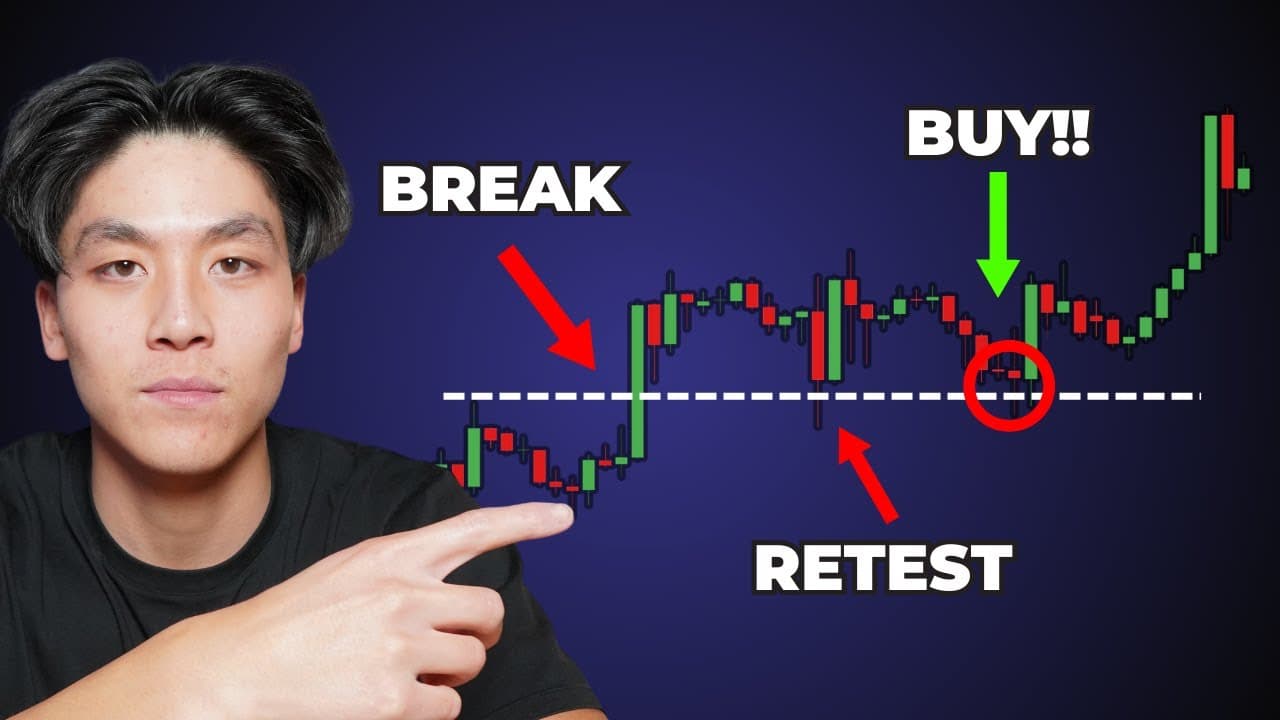
The break and retest trading strategy involves identifying key patterns on higher time frames and executing trades based on these setups. It emphasizes simplicity over complexity, focusing on three main patterns: continuation, consolidation, and flat top break and retest. The strategy includes specific entry criteria, displacement analysis, and intraday setups for effective trade execution.
Transcript
I've been trading for over five plus years now and I've tested hundreds of different strategies supply and demand ICT SMC Traders believe that there's no other way to become profitable if you don't trade these Concepts problem is majority of these concepts are overly complex and don't work I've come to the realization that complication equals unpro... Read More
Key Insights
- Break and retest strategy focuses on simplicity, avoiding overly complex trading concepts.
- Three main patterns are used: continuation, consolidation, and flat top break and retest.
- Higher time frame analysis is crucial for identifying reliable break and retest patterns.
- Displacement is a key factor, indicating strong moves above or below key levels.
- Intraday setups include previous day high/low and opening range break and retest.
- Entry models vary from aggressive limit orders to conservative confirmation-based entries.
- Risk management involves clear stop-loss placement and target setting for trades.
- Backtesting and developing an edge are essential for profitability with this strategy.
Install to Summarize YouTube Videos and Get Transcripts
Explore YouTube Video Summarizer or Get YouTube Transcript Extractor
Questions & Answers
Q: What is the break and retest trading strategy?
The break and retest trading strategy involves identifying key price levels where the market breaks and then retests the same level, providing an opportunity to enter a trade. This strategy focuses on patterns such as continuation, consolidation, and flat top break and retest, often observed on higher time frames for better reliability.
Q: How can displacement affect a break and retest setup?
Displacement refers to the strength of the market move above or below a key level during a break and retest setup. Strong displacement indicates a high probability of continuation in the breakout direction, providing a more reliable entry signal. Lack of displacement may suggest a weaker setup, potentially leading to reversals.
Q: What are the main patterns in the break and retest strategy?
The main patterns in the break and retest strategy include the continuation break and retest, where previous resistance becomes support; the consolidation break and retest, where price breaks out of a range; and the flat top break and retest, characterized by multiple touches at a resistance level before breaking out.
Q: How do intraday setups work in break and retest trading?
Intraday setups in break and retest trading focus on shorter time frames, such as the previous day high/low and the opening range break and retest. These setups involve identifying key levels from the previous trading session or the market open, providing opportunities for quick entries and exits based on price action.
Q: What entry models are used in break and retest trading?
Break and retest trading uses three main entry models: aggressive limit orders placed at the retest level, conservative entries based on strong price action signals like hammer candles, and the most conservative approach, waiting for confirmation with a bullish or bearish candle before entering the trade.
Q: Why is risk management important in break and retest trading?
Risk management is crucial in break and retest trading to protect capital and ensure long-term profitability. It involves setting clear stop-loss levels to limit potential losses and determining realistic profit targets. Effective risk management helps traders handle market volatility and maintain a favorable risk-reward ratio.
Q: How can traders improve their success with break and retest strategy?
Traders can improve success with the break and retest strategy by thoroughly backtesting the patterns and setups to identify an edge in the market. Understanding different entry models, practicing discipline in risk management, and continuously refining the strategy based on market conditions are key to enhancing profitability.
Q: What are the challenges of using the break and retest strategy?
Challenges of using the break and retest strategy include identifying genuine breakouts versus false ones, managing trades during volatile market conditions, and maintaining discipline in following entry and exit criteria. Traders must also adapt to changing market dynamics and continuously evaluate the effectiveness of their strategy.
Summary & Key Takeaways
-
The break and retest strategy emphasizes simplicity, using three main patterns: continuation, consolidation, and flat top break and retest. These patterns are identified on higher time frames for reliable setups.
-
Displacement is crucial, indicating strong moves above or below key levels. Intraday setups include previous day high/low and opening range break and retest, offering opportunities on lower time frames.
-
Entry models range from aggressive limit orders to conservative confirmation-based approaches. Effective risk management, including stop-loss placement and target setting, is vital for successful trading.
Read in Other Languages (beta)
Share This Summary 📚
Summarize YouTube Videos and Get Video Transcripts with 1-Click
Try YouTube Summary with ChatGPT & Claude or YouTube Transcript Generator
Explore More Summaries from Jdub Trades 📚






Summarize YouTube Videos and Get Video Transcripts with 1-Click
Try YouTube Summary with ChatGPT & Claude or YouTube Transcript Generator