How to Trade the 5-Minute Opening Range Scalping Strategy
TL;DR
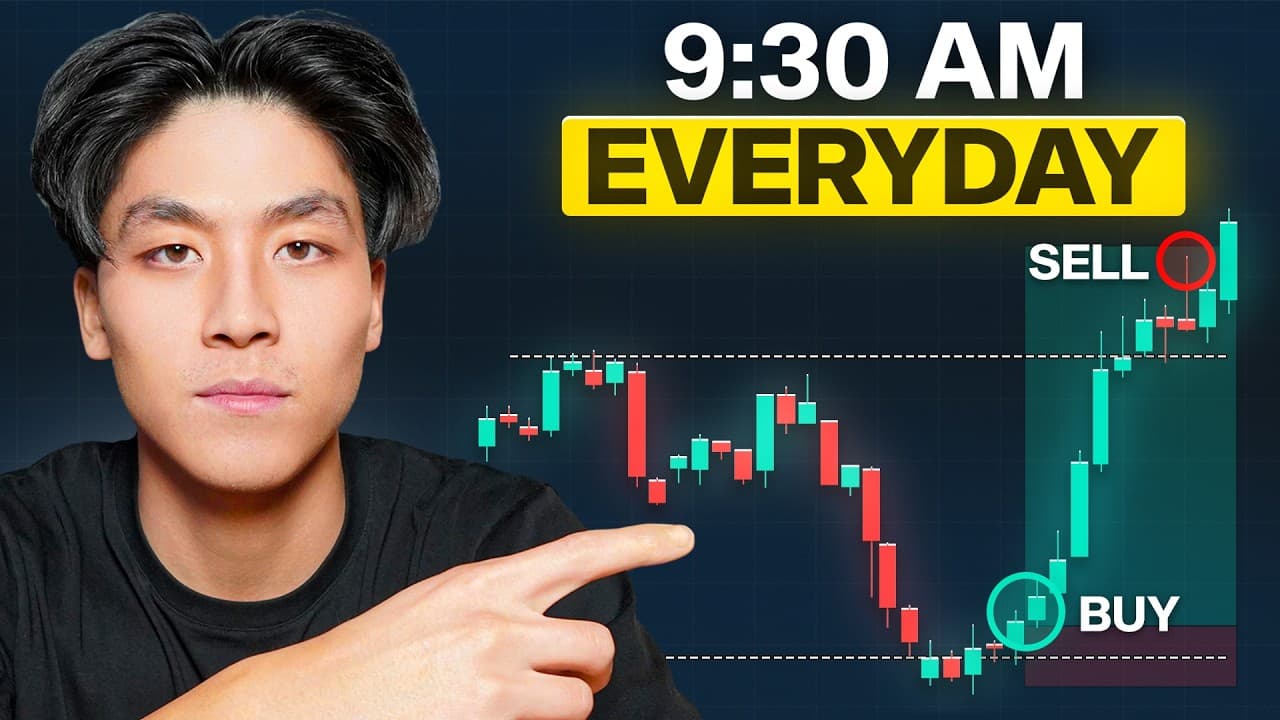
Trade the 5-minute opening range by marking the first candle’s high and low after the 9:30 a.m. EST New York open, then using the 1-minute chart to confirm a break. Enter after a retest or a displacement-based breakout, place the stop beyond the opposite side of the range, and target at least 1:2 risk-to-reward. Read on to compare both entry models and their conditions.
Transcript
In today's video, I'll reveal a simple yet effective trading strategy that I use on a daily basis to make consistent profits in the market. This strategy sets up every single day within the first 90 minutes of market open. It requires no bias or any fancy indicators and is completely rules-based. I'm going to show you the full strategy along with a... Read More
Key Insights
- The 5-minute opening range strategy sets up every day within the first 90 minutes of market open, requires no daily bias or fancy indicators, and is fully rules-based so it removes guesswork and needs minimal discretion.
- The New York open at 9:30 a.m. Eastern Standard Time is the chosen session because trading stocks and indices there carries the most volume and volatility, which is when the strategy works best versus the London or Asia sessions.
- The first candle of the New York session defines the setup: mark its high and low on the 5-minute chart to create the 'five-minute opening range' that all entries reference.
- Entry confirmation comes from switching to the 1-minute time frame and waiting for a candle to close above or below the 5-minute range, since one 5-minute candle equals five 1-minute candles.
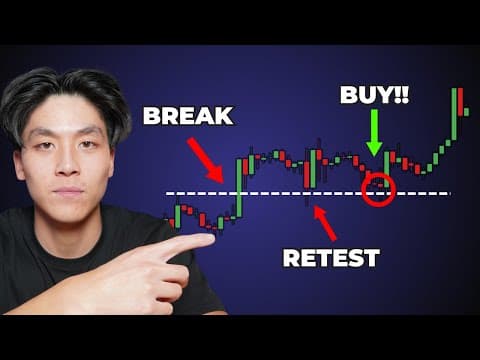
- The break-and-retest entry model waits for price to break the range, return to retest the level, and show rejection or confirmation candles before entering in the direction of the break.
- The breakout entry model is more aggressive: enter on a candle that breaks the range with displacement, shown by a fair value gap (a three-candle sequence with a gap between the first candle's high and the third candle's low).
- Stops are placed just beyond the opposite side of the 5-minute range, and every trade targets a minimum 1:2 risk-to-reward, meaning risking $100 to make at least $200.
- The presenter reported making over $90,000 in the last 30 days (August 1 to September 1) using this strategy and is hosting a free trading event on September 13 at 12:00 p.m. Eastern Standard Time.
Install to Summarize YouTube Videos and Get Transcripts
Explore YouTube Video Summarizer or Get YouTube Transcript Extractor
Questions & Answers
Q: What is the 5-minute opening range scalping strategy?
It is a rules-based strategy built around the high and low of the first 5-minute candle after the New York open. On the 1-minute chart, wait for a candle to close above or below that range, then look for continuation in the direction of the break. The presenter says the setup requires no daily bias or fancy indicators and appears within the first 90 minutes after the market opens.
Q: What time does the 5-minute opening range strategy start?
The strategy starts at the New York open at 9:30 a.m. Eastern Standard Time. The presenter prefers this session for stocks and indices because, in their experience, it has the volume and volatility under which the strategy works best. Traders elsewhere should adjust their clocks to Eastern Standard Time.
Q: How do you mark the 5-minute opening range?
Open the 5-minute chart and identify the first candle beginning at the 9:30 a.m. EST New York open. Mark that candle’s high and low; those two levels define the 5-minute opening range. They become the reference points for breaks, entries, and stop placement.
Q: How is a break of the opening range confirmed?
After marking the range, switch to the 1-minute chart, where five candles equal one 5-minute candle. Wait for a 1-minute candle to close above the range high or below the range low. That close confirms the break and allows you to begin looking for an entry.
Q: How does the break-and-retest entry model work?
After a candle closes outside the opening range, wait for price to return to the broken level. Look for rejection candles and a confirmation candle, then enter in the direction of the break. The presenter uses this entry model on a day-to-day basis.
Q: How does the displacement breakout entry model work?
This more aggressive model is intended for cases where price may not retest the opening range. Wait for a break with displacement, identified by a three-candle fair value gap between the first candle’s high and the third candle’s low, then enter when the third candle closes. The presenter suggests using it when a higher-time-frame thesis or another edge supports continued movement.
Q: Where should stops and profit targets be placed?
Place the stop just beyond the opposite side of the 5-minute range, such as above the range for a short or below it for a long. Target a minimum 1:2 risk-to-reward ratio. The presenter’s example risks $100 for a minimum potential reward of $200.
Q: When should you use a 5-minute rather than a 15-minute opening range?
The presenter uses the 5-minute opening range when there is a higher-time-frame thesis or market conditions suggest greater volatility. When the market is ranging, the presenter prefers the 15-minute opening range. The transcript does not provide the full 15-minute setup.
Summary & Key Takeaways
-
The strategy is a rules-based scalping system that sets up every day within the first 90 minutes after the New York open at 9:30 a.m. EST. It needs no bias or fancy indicators, making it mechanical, repeatable, and requiring minimal discretion to execute consistently.
-
The core steps are: wait for the New York open, mark the high and low of the first 5-minute candle to form the opening range, then drop to the 1-minute chart and wait for a candle to close above or below that range before looking for an entry.
-
Two entry models exist. The break-and-retest waits for price to return and confirm the level, while the more aggressive breakout model enters on a displacement candle forming a fair value gap. Both use stops just past the range and target a minimum 1:2 risk-to-reward.
Read in Other Languages (beta)
Share This Summary 📚
Summarize YouTube Videos and Get Video Transcripts with 1-Click
Try YouTube Summary with ChatGPT & Claude or YouTube Transcript Generator
Explore More Summaries from Jdub Trades 📚




Summarize YouTube Videos and Get Video Transcripts with 1-Click
Try YouTube Summary with ChatGPT & Claude or YouTube Transcript Generator