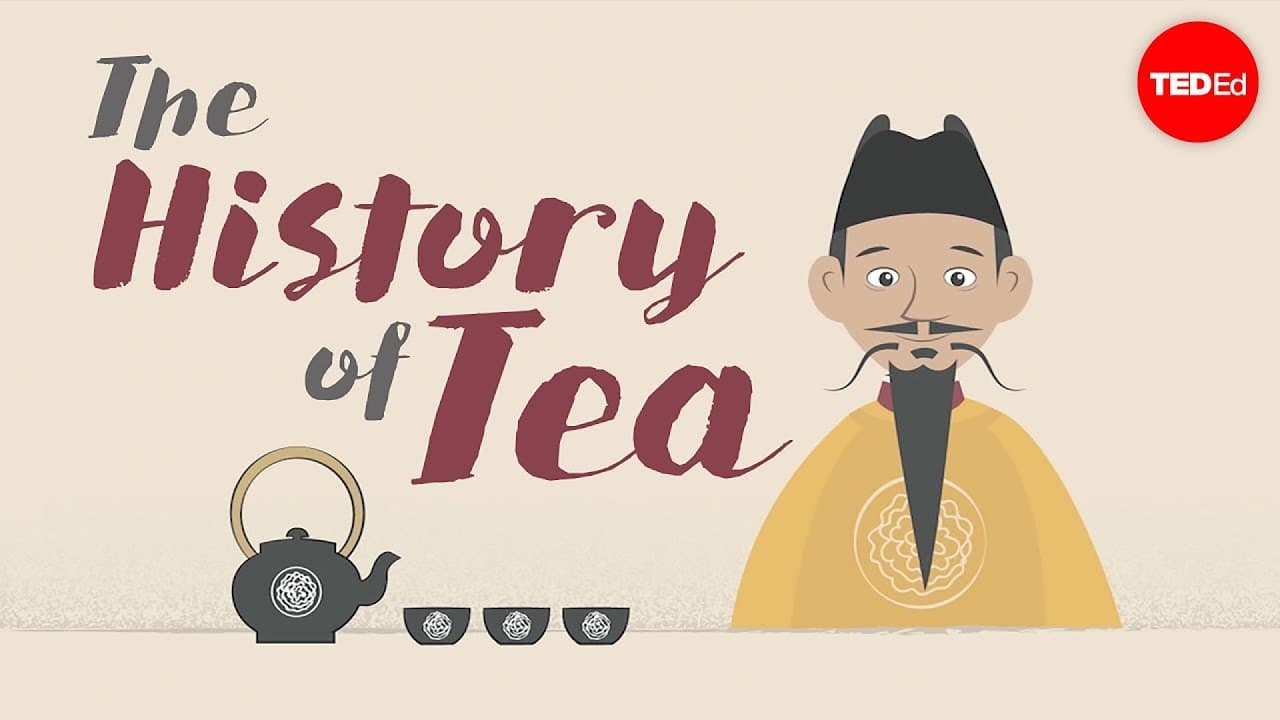
The history of tea - Shunan Teng
TL;DR
Tea originated in ancient China 6,000 years ago, initially consumed as food before evolving into a drink with the invention of matcha. Its spread to Japan and beyond shaped cultural practices, while China's monopoly on trade influenced global economics, leading to significant historical events like the Opium Wars. Today, tea is the second most consumed beverage worldwide.
Transcript
During a long day spent roaming the forest in search of edible grains and herbs, the weary divine farmer Shennong accidentally poisoned himself 72 times. But before the poisons could end his life, a leaf drifted into his mouth. He chewed on it and it revived him, and that is how we discovered tea. Or so an ancient legend goes at least. Tea doesn't ... Read More
Key Insights
- 🧋 Tea has a long history, with its discovery dating back 6,000 years in ancient China.
- 🧋 The Chinese developed matcha, a popular powdered tea, leading to the emergence of Chinese tea culture.
- 🧋 The spread of tea to Japan contributed to the creation of the Japanese tea ceremony.
- 🔋 China's monopoly on tea trade gave them power and influenced global economics and politics.
- 🇮🇴 The British revolutionized tea trade by paying with opium, triggering conflicts and weakening China's standing.
- 🇮🇴 The British East India Company played a significant role in spreading tea cultivation outside of China.
- 🧃 Tea is now the second most consumed beverage globally, with various cultural and regional preparations.
Install to Summarize YouTube Videos and Get Transcripts
Explore YouTube Video Summarizer or Get YouTube Transcript Extractor
Questions & Answers
Q: How did tea transition from being consumed as food to becoming a popular drink?
Over time, people realized that a combination of heat and moisture could create a complex taste from tea leaves, leading to the shift from eating tea as food to brewing it as a drink.
Q: How did tea spread to Japan?
A Japanese monk brought the first tea plant to Japan during the Tang Dynasty in the 9th century. This eventually led to the development of the Japanese tea ceremony.
Q: How did tea trade impact global politics and economics?
China's monopoly on tea trade gave them power and economic influence. Tea became one of China's essential export goods alongside porcelain and silk. The British paid for tea with silver and later suggested trading opium, leading to the First Opium War and weakening China's global standing.
Q: How did tea become a global commodity?
The British East India Company commissioned botanist Robert Fortune to steal tea plants from China and smuggle them to India. This helped further spread tea cultivation, making it a widely consumed commodity today.
Key Insights:
- Tea has a long history, with its discovery dating back 6,000 years in ancient China.
- The Chinese developed matcha, a popular powdered tea, leading to the emergence of Chinese tea culture.
- The spread of tea to Japan contributed to the creation of the Japanese tea ceremony.
- China's monopoly on tea trade gave them power and influenced global economics and politics.
- The British revolutionized tea trade by paying with opium, triggering conflicts and weakening China's standing.
- The British East India Company played a significant role in spreading tea cultivation outside of China.
- Tea is now the second most consumed beverage globally, with various cultural and regional preparations.
- Tea has shaped trade, global power dynamics, and cultural practices throughout history.
Summary
Tea has a long and fascinating history, dating back thousands of years in China. It started as a vegetable but eventually became a popular drink called matcha. Tea culture emerged, and it became a valuable export for China. Europe, led by Britain, became obsessed with tea and developed the clipper ship to transport it faster. However, Britain's desire for tea led to the Opium Wars with China, diminishing China's global standing. The British East India Company wanted to control the tea market, leading to a covert operation to steal tea plants from China and establish plantations in India. Today, tea is consumed worldwide, with various preparations reflecting different cultures.
Questions & Answers
Q: How did tea transition from being eaten as a vegetable to becoming a popular drink?
Tea shifted from food to drink because people discovered that heating the leaves and combining them with hot water created a complex and varied taste. This realization led to the development of matcha, a powdered form of tea that became hugely popular in ancient China.
Q: How did tea become an integral part of Chinese culture?
Tea became a subject of books and poetry, the favored drink of emperors, and a medium for artists. In fact, artists would create intricate foam pictures on the surface of the tea, much like espresso art seen today in coffee shops. This cultural significance cemented tea as an essential part of Chinese society.
Q: How did tea spread from China to Japan?
A Japanese monk introduced the first tea plant to Japan during the 9th century, leading to the development of unique tea rituals and the famous Japanese tea ceremony. This marked the beginning of tea's influence in Japan and its eventual integration into Japanese culture.
Q: What impact did the shift from tea cakes to loose leaf tea have in China?
In the 14th century, during the Ming Dynasty, the Chinese emperor changed the standard from tea pressed into cakes to loose leaf tea. This shift allowed for greater flexibility in brewing and drinking tea, and it marked a significant change in tea culture in China.
Q: How did tea become a valuable export for China?
China held a virtual monopoly on tea trees, making tea one of the three essential Chinese export goods, along with porcelain and silk. This gave China significant power and economic influence as tea drinking spread globally.
Q: How did tea make its way to Europe?
Dutch traders brought tea to Europe in large quantities during the early 1600s, initiating its spread across the continent. Queen Catherine of Braganza, a Portuguese noblewoman, is often credited with popularizing tea among the English aristocracy when she married King Charles II in 1661.
Q: How did the tea trade impact Britain's colonial expansion?
The tea trade played a significant role in Britain's expansion as a colonial power. Tea became a symbol of British dominance and wealth. By the 1700s, tea in Europe was ten times more expensive than coffee, indicating its high demand and the interest it generated.
Q: What were the causes and consequences of the Opium Wars?
Due to Britain's desire for tea and the high cost of silver payment, they suggested trading opium for tea with China. The addiction to opium created a public health crisis in China. This led to the First Opium War when a Chinese official ordered the destruction of British opium shipments. China's defeat weakened its global standing for over a century while British influence increased significantly.
Q: How did the British East India Company try to control the tea market?
The British East India Company commissioned botanist Robert Fortune for a covert operation to steal tea plants from China. Fortune disguised himself and embarked on a dangerous journey through China's tea regions. He managed to smuggle tea trees and experienced tea workers into Darjeeling, India, which expanded tea's growth as a commodity.
Q: How popular is tea today?
Tea is currently the second most consumed beverage globally, following water. Its popularity spans across cultures, with various ways of preparing tea reflecting the diversity of people's tastes and traditions worldwide.
Takeaways
Tea's journey from a vegetable to a popular drink has been a captivating one, shaped by discoveries, cultural significance, economic influence, wars, and covert operations. It has become an ingrained part of numerous cultures and occupies a prominent place in people's daily lives worldwide. Whether enjoyed as a moment of relaxation, a social ritual, or a creative outlet, tea continues to be a beloved and cherished beverage.
Summary & Key Takeaways
-
Tea was first cultivated in China 6,000 years ago and initially consumed as a vegetable or cooked with grain porridge.
-
The Chinese developed matcha, a powdered form of tea, and it became a popular beverage, leading to the emergence of Chinese tea culture.
-
Tea spread to Japan through a monk, leading to the creation of the Japanese tea ceremony. In the 14th century, China shifted from pressed tea cakes to loose leaf tea.
Read in Other Languages (beta)
Share This Summary 📚
Summarize YouTube Videos and Get Video Transcripts with 1-Click
Try YouTube Summary with ChatGPT & Claude or YouTube Transcript Generator
Explore More Summaries from TED-Ed 📚





Summarize YouTube Videos and Get Video Transcripts with 1-Click
Try YouTube Summary with ChatGPT & Claude or YouTube Transcript Generator