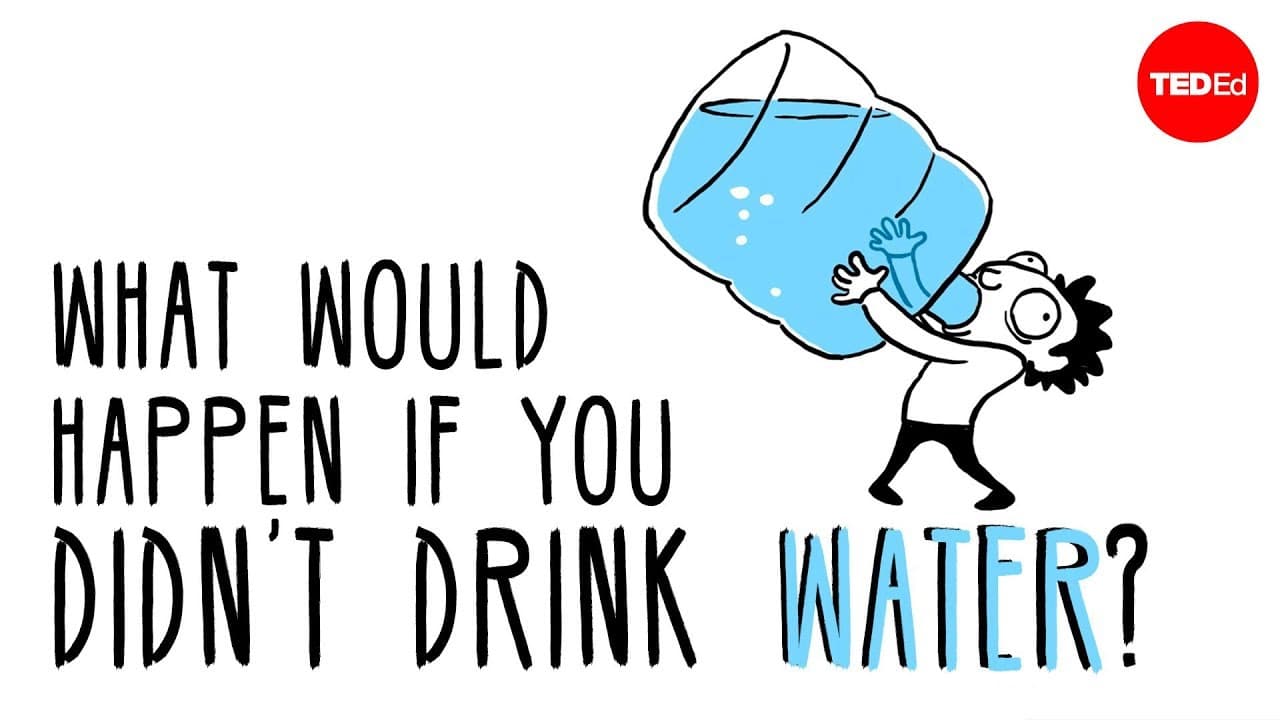
What would happen if you didn’t drink water? - Mia Nacamulli
TL;DR
If you don’t drink enough water, dehydration can reduce your energy, mood, skin moisture, blood pressure, and cognitive performance. The body loses two to three liters of water daily through sweat, urine, bowel movements, and breathing, although food supplies about a fifth of daily intake. Read on to understand how the body conserves water, how much fluid you may need, and why excessive intake can also be dangerous.
Transcript
Water is virtually everywhere, from soil moisture and ice caps, to the cells inside our own bodies. Depending on factors like location, fat index, age, and sex, the average human is between 55-60% water. At birth, human babies are even wetter. Being 75% water, they are swimmingly similar to fish. But their water composition drops to 65% by their f... Read More
Key Insights
- The human body is composed of 55-60% water, which is essential for various bodily functions.
- Water helps cushion joints, regulate body temperature, and nourish the brain and spinal cord.
- Humans lose 2-3 liters of water daily through sweat, urine, and breathing, necessitating regular intake.
- Dehydration can lead to decreased energy, mood changes, and cognitive impairment.
- Over-hydration, or hyponatremia, can occur from excessive water intake, diluting sodium levels and causing cells to swell.
- Recommended daily water intake varies: 2.5-3.7 liters for men and 2-2.7 liters for women, adjusted for weight and activity level.
- Water-rich foods like fruits and vegetables contribute to overall hydration and nutrient intake.
- Proper hydration can lower the risk of stroke, aid in diabetes management, and potentially reduce cancer risks.
Install to Summarize YouTube Videos and Get Transcripts
Explore YouTube Video Summarizer or Get YouTube Transcript Extractor
Questions & Answers
Q: What happens if you don’t drink enough water?
Dehydration can cause drops in energy, mood, skin moisture, and blood pressure, along with cognitive impairment. A dehydrated brain must work harder to accomplish the same tasks and can temporarily shrink from insufficient water.
Q: How does the body respond to dehydration?
Sensory receptors in the brain’s hypothalamus detect low water levels and signal the release of antidiuretic hormone. In the kidneys, this creates aquaporins that help the blood absorb and retain more water, producing concentrated, dark urine.
Q: How much water does the body lose each day?
The body loses two to three liters of water every day. This fluid leaves through sweat, urine, bowel movements, and even breathing, so it must be replenished.
Q: How much water should men and women consume daily?
The recommended daily intake is 2.5–3.7 liters for men and about 2–2.7 liters for women. Individual needs vary with weight, environment, health, activity, age, and overheating.
Q: Why is water essential to the human body?
Water cushions and lubricates joints, regulates temperature, and nourishes the brain and spinal cord. The average human body is 55–60% water, while an adult brain and heart are almost three-quarters water.
Q: Can food, coffee, and tea contribute to hydration?
Yes. Coffee, tea, and other beverages replenish fluids, while water in food supplies about a fifth of daily water intake. Strawberries, cucumbers, and broccoli are each over 90% water and also provide nutrients and fiber.
Q: What happens if you drink too much water?
Drinking excessive water in a short period can cause over-hydration, or hyponatremia, which dilutes sodium electrolytes and makes cells swell. Severe water intoxication may cause headache, vomiting, and, rarely, seizures or death.
Q: What long-term benefits may proper hydration provide?
Studies cited in the transcript indicate that optimal hydration can lower the chance of stroke, help manage diabetes, and potentially reduce the risk of certain cancers. Getting the right amount of fluid also affects how you feel, think, and function each day.
Summary
Water plays a crucial role in our bodies, from cushioning joints and regulating temperature to nourishing the brain and spinal cord. While our bodies are made up of mostly water, we still need to drink enough to compensate for daily fluid loss through sweat, urine, and breathing. Maintaining a balanced water level is essential to avoid dehydration or over-hydration, both of which can have negative effects on our health. The recommended daily intake of water varies based on factors such as weight, environment, and activity level. Other beverages and water-rich foods can also contribute to our daily water intake. Drinking enough water has been linked to long-term benefits such as reduced risk of stroke, improved diabetes management, and lower risk of certain cancers.
Questions & Answers
Q: Why is water important in our bodies?
Water is crucial in our bodies as it performs various functions, including cushioning and lubricating joints, regulating body temperature, and nourishing the brain and spinal cord. It is not only present in our blood but also in essential organs such as the brain and heart.
Q: How much water is there in the human body?
The average human is composed of approximately 55-60% water. However, this percentage can vary based on factors such as location, fat index, age, and sex. At birth, babies are even wetter, with a water composition of 75%, but it drops to around 65% by their first birthday.
Q: Why do we still need to drink water if our bodies are made of water?
Our bodies constantly lose water through sweat, urine, bowel movements, and even breathing. To compensate for this fluid loss, we need to drink enough water to maintain a balanced water level and avoid dehydration or over-hydration. Being made of water does not mean we can sustain ourselves without replenishing it.
Q: What happens if our water levels are too low?
When our bodies detect low water levels, sensory receptors in the hypothalamus signal the release of antidiuretic hormone. This hormone reaches the kidneys and creates special channels called aquaporins, which allow blood to absorb and retain more water, resulting in concentrated, dark urine. Increased dehydration can lead to drops in energy, mood, skin moisture, and blood pressure, as well as cognitive impairment.
Q: What happens if we drink too much water?
Over-hydration, also known as hyponatremia, can occur when we consume excessive amounts of water in a short period. Athletes are particularly vulnerable to over-hydration due to difficulties in regulating water levels in extreme physical conditions. This condition dilutes sodium electrolytes in the body, causing cells to swell. Severe cases can lead to water intoxication, with symptoms such as headache, vomiting, seizures, or even death.
Q: How much water should we drink on a daily basis?
The recommended daily intake of water varies based on factors such as weight, environment, and activity level. Generally, the range is between 2.5-3.7 liters for men and 2-2.7 liters for women. This range can be adjusted if individuals are healthy, active, elderly, or in hot environments.
Q: Are other beverages besides water hydrating?
Yes, other beverages can contribute to our daily fluid intake and hydrate our bodies. Even beverages with caffeine, like coffee or tea, can replenish fluids. Additionally, around a fifth of our daily water intake comes from water-rich foods such as fruits, vegetables, which also provide essential nutrients and fiber.
Q: What are the long-term benefits of drinking enough water?
Optimal hydration has been associated with lower stroke risk, improved diabetes management, and potential risk reduction for certain types of cancer. Ensuring the right amount of hydration can have a positive impact on how we feel, think, and function on a day-to-day basis.
Takeaways
Water is essential for our bodies, performing vital functions such as joint cushioning, temperature regulation, and brain nourishment. Despite being mostly water, we still need to drink enough to compensate for daily fluid loss. The recommended daily intake of water depends on factors like weight, activity level, and environment. Other beverages and water-rich foods can contribute to our hydration. Maintaining optimal hydration can have long-term benefits for our health, including reducing the risk of stroke, improving diabetes management, and potentially lowering the risk of certain cancers.
Summary & Key Takeaways
-
Water is vital for maintaining bodily functions such as joint cushioning, temperature regulation, and brain nourishment. Daily water loss through sweat, urine, and breathing requires replenishment to avoid dehydration, which can impair cognition and mood. Over-hydration, often affecting athletes, dilutes sodium and can cause severe health issues.
-
Daily water needs vary based on individual factors like weight and environment, with men requiring 2.5-3.7 liters and women 2-2.7 liters. Foods high in water content, like fruits and vegetables, also contribute to hydration. Proper hydration supports overall health and can lower risks of stroke and certain diseases.
-
While conventional wisdom suggested eight glasses of water daily, current recommendations are more personalized. Water-rich foods and beverages, including caffeinated drinks, aid in hydration. Maintaining the right balance of fluid intake is crucial for optimal physical and cognitive functioning.
Read in Other Languages (beta)
Share This Summary 📚
Summarize YouTube Videos and Get Video Transcripts with 1-Click
Try YouTube Summary with ChatGPT & Claude or YouTube Transcript Generator
Explore More Summaries from TED-Ed 📚





Summarize YouTube Videos and Get Video Transcripts with 1-Click
Try YouTube Summary with ChatGPT & Claude or YouTube Transcript Generator