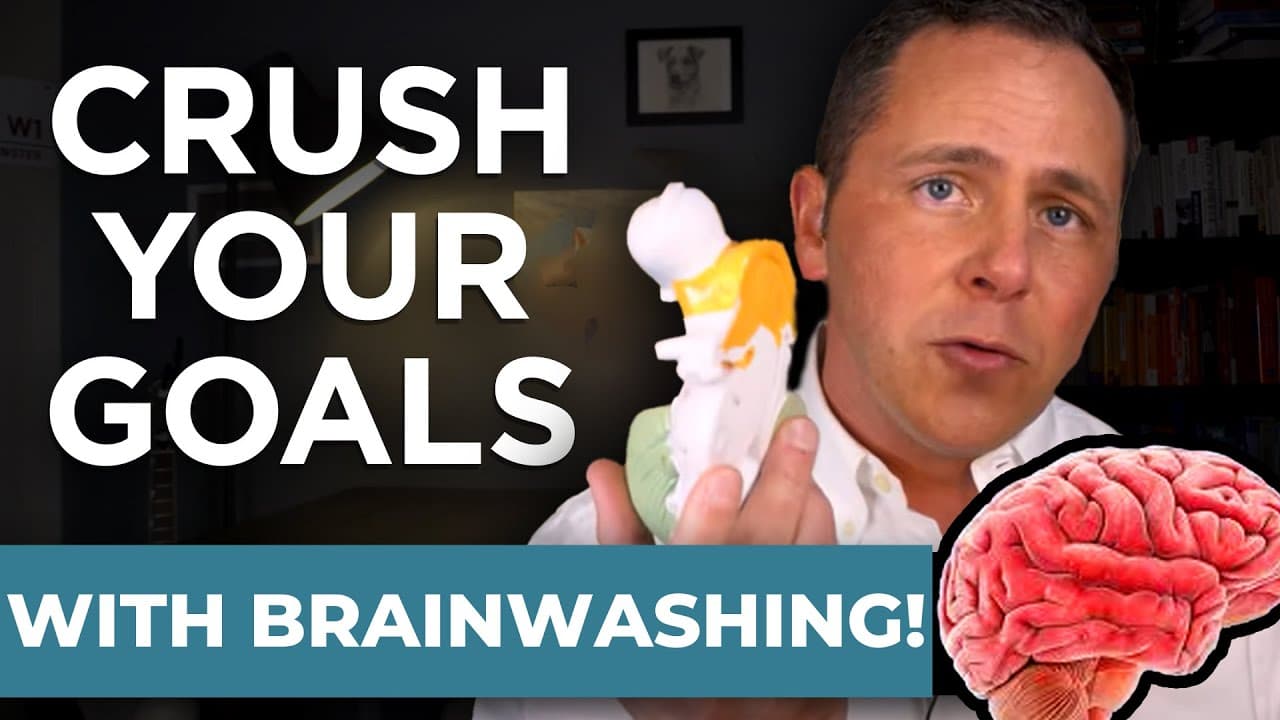
How to set goals with brainwashing techniques
TL;DR
The core idea is to use a four part FEAR framework to train the brain for goal achievement. Focus your attention on future benefits, trigger emotional involvement with vivid visualization, agitate routines to signal change, and repeat actions to create lasting habits. Set goals in four categories and use a worksheet to guide progress.
Transcript
hey it's chase hughes there's going to be a lot of goal setting videos coming out but i want to show you a quick and easy way to do this and i'm going to expose to you some of the ways that brainwashing is actually used on people and the exact formula to do it and the reason i want to do this is because i want you to be able to use these brainwashi... Read More
Key Insights
- The triune brain theory divides the brain into brain stem, mammalian brain, and neocortex.
- The mammalian brain responds best to visuals, emotions, and nonverbal cues rather than words.
- The reticular activating system acts as a focus flashlight, signaling importance and guiding attention.
- Delaying gratification is a key predictor of long term success.
- Discipline is the result of forming repeatable habits, not a one off effort.
- The FEAR framework stands for focus, emotional involvement, agitation, repetition.
- Agitation disrupts routines to signal the brain that change is needed.
- Vision boards can be powerful when made sensory rich and emotionally engaging.
- Habit formation occurs through repetition that strengthens neural pathways, creating automatic behavior.
Install to Summarize YouTube Videos and Get Transcripts
Explore YouTube Video Summarizer or Get YouTube Transcript Extractor
Questions & Answers
Q: A real search query question about the video (e.g. 'How to...', 'What is...', 'Why does...', 'When should...'). Question 1
How can I apply the FEAR framework to set and achieve personal goals effectively. The video explains FEAR as a four part method: focus on undivided attention, involve strong emotions through visualization, agitate by changing environments or routines, and repeat to build durable neural connections. Implementing all four elements together helps convert intentions into habits and drives sustained progress.
Q: Question 2
What does the triune brain imply for goal setting and communication with the brain. The content describes three brain parts: brain stem, mammalian brain, and neocortex. It emphasizes that the mammalian brain processes visuals and emotions rather than language, so successful goal setting should use vivid images and emotional cues to engage this part and steer behavior.
Q: Question 3
Why is delaying gratification highlighted as important for success in the video. It states that studies of successful people show the ability to delay gratification is a major factor, linking this to prioritizing the future self over present rewards and framing discipline as a habit that supports long term achievement rather than momentary impulses.
Q: Question 4
How does agitation contribute to behavior change according to the video. Agitation involves altering routines, environments, or conditions to disrupt normal patterns, which signals the brain to pay more attention. This shift helps make new goals salient and increases the likelihood of adopting new habits over time.
Q: Question 5
What role do vision boards play in the brainwashing inspired goal setting. The speaker suggests that vision boards, when sensory rich, help translate goals into concrete mental images and emotions, aiding the animal brain to form lasting representations and increasing motivation through vivid, multi sensory cues.
Q: Question 6
What is meant by habit versus discipline in this approach. The video argues that discipline is largely a function of habit formed by repeated actions, leading to neural pathways that make the behavior automatic. What looks like discipline is actually a well established habit supported by repetition.
Q: Question 7
How many goals should someone set and in which areas. The guidance includes four categories: brain, body, business, and behavior, with two or three goals per category. This structure helps balance cognitive, physical, professional, and behavioral objectives for comprehensive personal development.
Q: Question 8
What practical steps accompany the goal setting worksheet mentioned. The content mentions using a worksheet to apply the brainwashing formula to goals, asking the user to implement focus, emotion, agitation, and repetition, and to reach back with results to refine the approach for better outcomes.
Summary & Key Takeaways
-
The video explains the triune brain concept, detailing how the brain evolved in three parts and how the mammalian brain processes visuals and emotions more readily than language. It emphasizes communicating with the brain’s animal part through images and feelings to influence behavior.
-
A central claim is that success hinges on delaying gratification, with discipline defined as prioritizing future self over present desires. Habits form when a behavior is repeated enough to create neural pathways that automate action over time.
-
The presenter offers a practical brainwashing inspired goal setting method, including a worksheet and a four category goal system. It advocates environmental agitation and sensory rich visualization to reinforce motivation and action, culminating in turning disciplined effort into durable habits.
Read in Other Languages (beta)
Share This Summary 📚
Summarize YouTube Videos and Get Video Transcripts with 1-Click
Try YouTube Summary with ChatGPT & Claude or YouTube Transcript Generator
Explore More Summaries from Chase Hughes 📚






Summarize YouTube Videos and Get Video Transcripts with 1-Click
Try YouTube Summary with ChatGPT & Claude or YouTube Transcript Generator