How Do Intersectoral Approaches Enable Better Health? | Essentials of Global Health with Richard Skolnik
TL;DR
Intersectoral approaches enable better health by addressing social, behavioral, environmental, and governmental determinants that health ministries cannot manage alone. The examples of malnutrition, tuberculosis, and tobacco use show why education, finance, housing conditions, gender norms, safe water, sanitation, and health services all matter. Read on to understand health impact assessments and a health-in-all perspective for policymaking.
Transcript
welcome back today we're going to speak about intersectoral approaches to enabling Better Health by the time you finish the session you should be able to take a broad view of the factors that determine health and the range of measures across agencies that are needed to ensure Better Health articulate the value of health impact assessments and how t... Read More
Key Insights
- 🧑⚕️ The social determinants of health, including access to education, employment, and housing, play a significant role in determining health outcomes.
- ♿ Environmental factors, such as access to safe water and sanitation, indoor and outdoor air pollution, and exposure to hazardous substances, have a direct impact on health.
- 🖤 Behavioral factors, such as smoking, unhealthy diets, and lack of physical activity, contribute to the burden of disease.
- 🧑⚕️ Intersectoral approaches that involve collaboration between various ministries and agencies are essential for addressing the determinants of health effectively.
- 🧑⚕️ Taxes, regulations, and subsidies can be effective policy measures for improving health outcomes, but they require the involvement of multiple sectors.
- 🧑⚕️ Health impact assessments help evaluate the potential health effects of policies and projects and provide recommendations for mitigating risks.
- 🤩 Low-income countries can adopt intersectoral policy packages to address key health issues, but it requires the commitment and collaboration of multiple sectors.
Install to Summarize YouTube Videos and Get Transcripts
Explore YouTube Video Summarizer or Get YouTube Transcript Extractor
Questions & Answers
Q: What are intersectoral approaches to better health?
Intersectoral approaches address health through measures involving multiple government agencies and policy domains. They are needed because important health determinants, including education, employment, physical environments, behavior, and governance, extend beyond the Ministry of Health.
Q: Why can the Ministry of Health not ensure better health alone?
Many causes of preventable illness, disability, and premature death are shaped by factors outside the ministry's authority. Safe water, sanitation, education, working conditions, tobacco taxes, social norms, and broader government policies require action across sectors.
Q: What factors determine health?
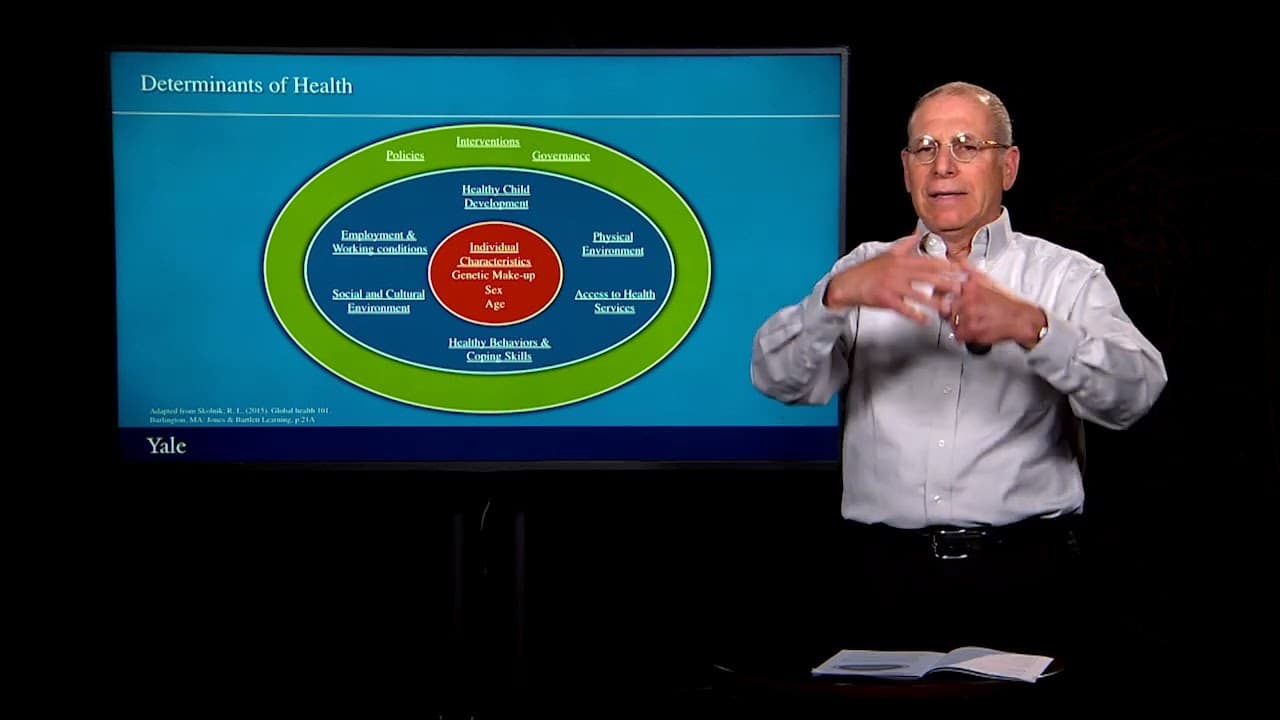
Health determinants include genetic makeup, sex, age, healthy child development, physical environment, behavior, coping skills, social and cultural factors, employment, working conditions, and access to health services. Governance, public priorities, policy choices, implementation, and attention to people most in need also affect health.
Q: Why is Juan malnourished and stunted?
Juan's family is poor, poorly educated, and lacks safe water and sanitation. His frequent infections and bouts of diarrheal disease make it difficult to sustain nutrition, while prolonged undernourishment may prevent his full cognitive potential from being realized.
Q: Why does Shanaz avoid seeking tuberculosis treatment?
Shanaz fears the stigma and discrimination associated with tuberculosis, including the possibility of being asked to leave her in-laws' home. Crowded living conditions increase her risk of contracting tuberculosis, while gender norms and limited education work against treatment seeking.
Q: What policy measure is most important for reducing tobacco consumption?
The single most important policy measure described is taxes on tobacco. Because taxation falls under the Ministry of Finance rather than the Ministry of Health, reducing tobacco consumption requires intersectoral action.
Q: What is a health-in-all perspective for government policymaking?
A health-in-all perspective considers health across government policies rather than treating it solely as the Ministry of Health's responsibility. It asks how policies in multiple domains affect health and whether governments prioritize well-being, education, effective interventions, and people most in need.
Q: What is the value of health impact assessments?
Health impact assessments help governments consider how policies may affect population health. The session presents their value and how they are conducted as part of broader intersectoral and health-in-all approaches.
Summary & Key Takeaways
-
Definition: Intersectoral approaches use measures across agencies to address the broad factors that determine health.
-
Who: Juan is a four-year-old boy in Guatemala whose poor family lacks education, safe water, and sanitation.
-
Compare: Juan's poverty, diarrheal disease, inadequate nutrition, and family education cannot be addressed effectively by the Ministry of Health alone.
-
Who: Shanaz is a 24 year old woman in Pakistan who fears tuberculosis stigma, discrimination, and removal from her in-laws' home.
-
Compare: Crowded housing, poverty, education, and gender norms shape tuberculosis risk and treatment seeking beyond the health sector.
-
Who: Joseph understands smoking risks and has received counseling and nicotine replacement patches, but feels unable to quit.
-
Compare: Tobacco taxes are described as the single most important policy measure, yet taxation belongs to the Ministry of Finance.
-
Definition: Health determinants include individual characteristics plus social, behavioral, environmental, employment, cultural, and health-service factors.
-
Definition: Governance matters through public priorities, policies, intervention choices, implementation quality, and attention to people most in need.
-
Tool: Health impact assessments help evaluate health effects within broader intersectoral and health-in-all policymaking.
Read in Other Languages (beta)
Share This Summary 📚
Summarize YouTube Videos and Get Video Transcripts with 1-Click
Try YouTube Summary with ChatGPT & Claude or YouTube Transcript Generator
Explore More Summaries from YaleCourses 📚


Summarize YouTube Videos and Get Video Transcripts with 1-Click
Try YouTube Summary with ChatGPT & Claude or YouTube Transcript Generator