What Are the Languages of South Africa?
TL;DR
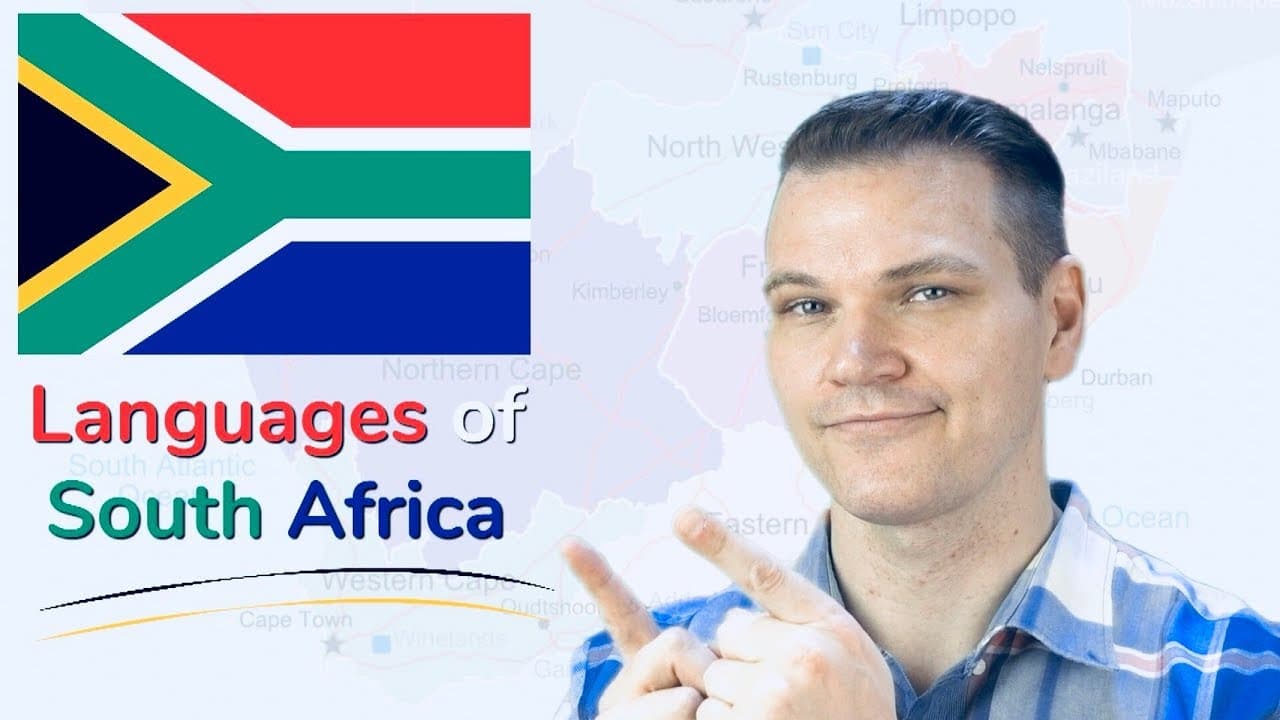
South Africa is home to 11 official languages, making it one of the most linguistically diverse countries. These languages include Zulu, Xhosa, Afrikaans, and English, among others. The linguistic landscape is shaped by historical events, such as colonialism and apartheid, which influenced language policies and the prominence of English and Afrikaans.
Transcript
Hello everyone. Welcome to the Langfocus channel and my name is Paul. Today's topic is the languages of South Africa. The Republic of South Africa covers much of the southern tip of the African continent and is a place where numerous native African cultures as well as former colonial populations have converged, resulting in a state of true linguist... Read More
Key Insights
- South Africa has 11 official languages, a reflection of its diverse cultural heritage.
- Zulu and Xhosa are the most spoken first languages, representing significant portions of the population.
- Afrikaans and English are Germanic languages introduced by European settlers.
- During apartheid, Afrikaans and English were prioritized in education, leading to protests like the Soweto uprising.
- The end of apartheid saw the inclusion of nine African languages as official languages.
- Bantu languages in South Africa are mostly part of the southern Bantu branch of the Niger-Congo family.
- Khoisan languages, known for their click consonants, are not official due to their limited number of speakers.
- Multilingualism is common, with many South Africans speaking multiple languages, including English and Afrikaans.
Install to Summarize YouTube Videos and Get Transcripts
Explore YouTube Video Summarizer or Get YouTube Transcript Extractor
Questions & Answers
Q: How many official languages does South Africa have?
South Africa has 11 official languages, which include Zulu, Xhosa, Afrikaans, and English, among others. This diverse linguistic landscape reflects the country's rich cultural heritage and history of colonialism and apartheid, which have significantly influenced language policies and education systems.
Q: What are the most spoken first languages in South Africa?
The most spoken first languages in South Africa are Zulu and Xhosa, with Zulu representing 23% and Xhosa 16% of the population. These languages belong to the Nguni subgroup of the southern Bantu languages, which are characterized by tonal and agglutinative features, as well as click consonants.
Q: Why are Afrikaans and English prominent in South Africa?
Afrikaans and English are prominent in South Africa due to their historical introduction by European settlers. English was promoted during British colonial rule, and Afrikaans evolved from Dutch, the language of the original Dutch settlers. Both languages were dominant during apartheid and remain influential in business and media.
Q: How did apartheid affect language education in South Africa?
During apartheid, language education in South Africa was segregated, with English and Afrikaans prioritized as the languages of instruction. This policy led to resistance, such as the Soweto uprising, as Afrikaans was seen as the oppressor's language. Post-apartheid, a new constitution recognized nine additional African languages as official.
Q: What is the role of Bantu languages in South Africa?
Bantu languages play a significant role in South Africa, with most belonging to the southern Bantu branch of the Niger-Congo family. They account for about 70% of the population and display features like SVO word order, tonal qualities, and agglutinative structures. Some Bantu languages also incorporate click sounds from Khoisan languages.
Q: Why are Khoisan languages not official in South Africa?
Khoisan languages are not official in South Africa due to their limited number of speakers. Historically, Khoisan people were the first inhabitants, but conflicts with Bantu and European settlers reduced their numbers. Today, Khoisan languages are endangered, with only a small population of speakers remaining, mainly in the Kalahari Desert.
Q: How common is multilingualism in South Africa?
Multilingualism is very common in South Africa, with many citizens speaking multiple languages. Most white and coloured South Africans are bilingual in English and Afrikaans, while many black South Africans speak several African languages alongside English and Afrikaans. This linguistic ability often extends to mutually intelligible languages within the same subgroup.
Q: What is the current status of Afrikaans in South Africa?
Afrikaans, once a dominant lingua franca alongside English, has seen a decline in its national influence, partly due to its association with apartheid. Despite this, Afrikaans remains widely spoken, especially in the Northern and Western Cape provinces, and continues to be a significant cultural and linguistic presence in South Africa.
Summary & Key Takeaways
-
South Africa's linguistic diversity is reflected in its 11 official languages, including Zulu, Xhosa, and Afrikaans. The country's colonial history heavily influenced the prominence of English and Afrikaans, especially during apartheid. Today, education policies allow for language choice, although English remains the dominant language in business and media.
-
The Bantu languages in South Africa are primarily from the southern Bantu branch, featuring tonal and agglutinative characteristics. The influence of Khoisan languages is evident in the presence of click sounds in some Bantu languages. Despite their historical significance, Khoisan languages are not widely spoken today.
-
Multilingualism is prevalent in South Africa, with many individuals speaking multiple languages. English and Afrikaans have historically been the lingua francas, but English has gained more prominence due to its global utility. The language landscape continues to evolve, reflecting the country's complex cultural and historical dynamics.
Read in Other Languages (beta)
Share This Summary 📚
Summarize YouTube Videos and Get Video Transcripts with 1-Click
Try YouTube Summary with ChatGPT & Claude or YouTube Transcript Generator
Explore More Summaries from Langfocus 📚
Summarize YouTube Videos and Get Video Transcripts with 1-Click
Try YouTube Summary with ChatGPT & Claude or YouTube Transcript Generator