How to revamp a startup brand and website effectively
TL;DR
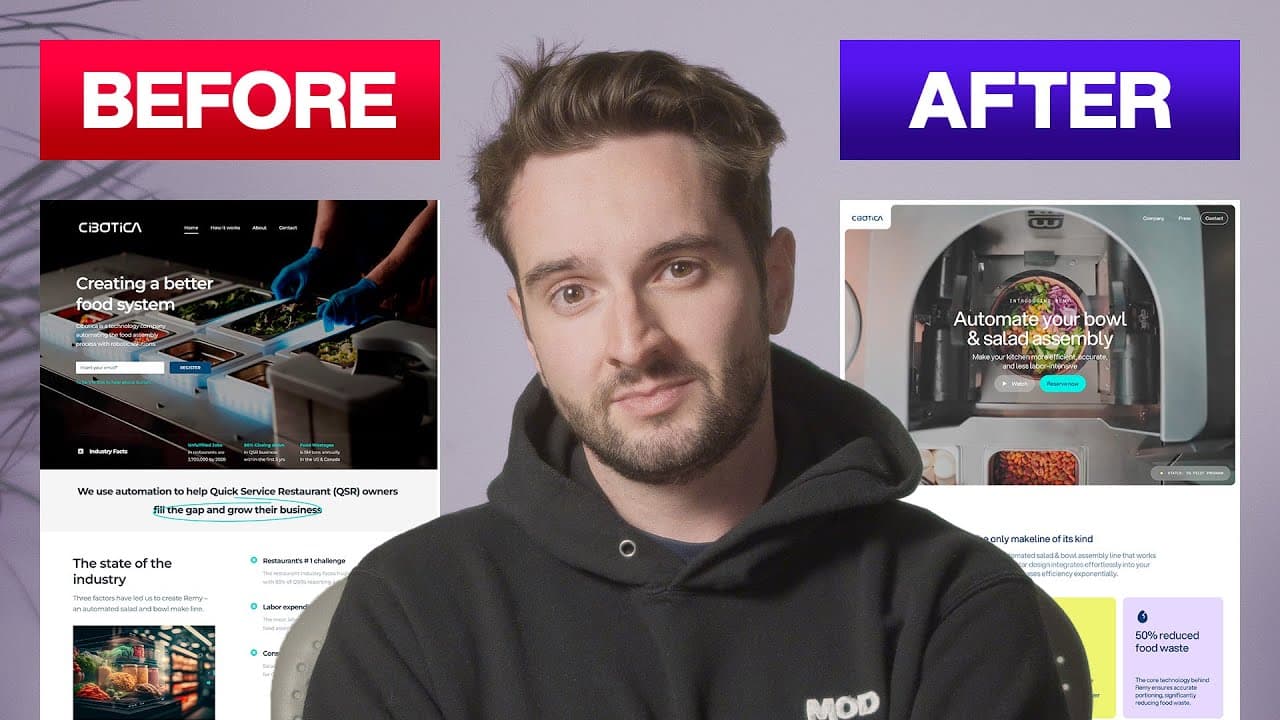
Start with a brand audit and content restructuring before design. The process aligns brand, product and marketing into a cohesive site structure, then integrates copy and visuals so the site communicates clearly and supports funding and customer goals. The result is a unified brand experience across channels.
Transcript
have you ever wondered what it takes to transform a company's brand and website to go from basically cookie cutter into an actually compelling digital presence so today I'm going to walk you through my process for that so we're going to start at an audit we're going to get into restructuring content going to get into crafting a cohesive visual syst... Read More
Key Insights
- Audit first, because it informs every later decision and helps align stakeholders.
- Three focus areas—brand, product, and marketing—provide a holistic view of the business and guide the website structure.
- Content planning creates a clear site map and wireframe that keeps messaging consistent across sections.
- Copywriting and wireframing are used early to shape the information architecture before visuals.
- Brand evolution is preferred over a full redesign to preserve essential identity while enabling growth.
- Visual style is chosen to balance a sophisticated tech feel with approachability for users and customers.
- Color, typography and accents are tuned for contrast and readability on multiple backgrounds.
- A single-page structure can evolve into more complex layouts as the product and offerings expand.
- More videos from this channel:
- More from this channel: Flux Academy
Install to Summarize YouTube Videos and Get Transcripts
Explore YouTube Video Summarizer or Get YouTube Transcript Extractor
Questions & Answers
Q: What is the first step in revamping a startup brand and website?
The first step is an audit of the brand, product, and marketing to understand current strengths, weaknesses and opportunities. This review helps define ground rules, what should be touched or unchanged, and how decisions will be justified to stakeholders. It sets the foundation for all subsequent design and content work.
Q: Why combine homepage and product pages in early site structure?
Combining the homepage and product pages helps startups present a unified message rather than separating identity from the product. This structure supports explaining what the company does and its value proposition in one coherent narrative, which is especially important for capturing attention and guiding early user and investor perceptions.
Q: How is content planning used before designing visuals?
Content planning maps out how information should be organized before design begins. It involves structuring sections, grouping benefits and features, and creating a high level site map. This ensures the design serves clear communication goals and that copy length and flow are balanced across the page.
Q: What role does a brand audit play in the process?
A brand audit informs all later work by identifying what parts of the current brand should be kept, revised, or discarded. It helps establish ground rules, aligns decision making, and provides a reference to justify changes. This ensures the brand evolves consistently across channels and touchpoints.
Q: How can a visual style support both tech leadership and approachability?
A visual style uses a calculated mix of typography, color and accents to convey sophistication and leadership while remaining friendly. Choosing fonts and color palettes that feel modern yet welcoming helps make the technology feel accessible to both funders and customers, supporting broader engagement.
Q: What is the benefit of iterating with a copywriter early?
Early copywriting creates a wireframe that defines how content flows and is distributed across the site. It helps ensure consistent lengths, logical ordering, and clear messaging, making the later design and development work more efficient and effective while reducing late-stage content revisions.
Q: Why is brand evolution sometimes preferred over a full redesign?
Brand evolution preserves core identity elements, maintaining recognition and continuity while enabling growth. It allows the company to refine its messaging, visuals and positioning gradually without losing what customers already know, reducing risk and enabling smoother alignment with new website capabilities and product offerings.
Q: How should color be used across backgrounds for readability?
Colors should be tuned for sufficient contrast on both dark and light backgrounds. Making careful adjustments to tone values and adding accent colors helps ensure readability in different contexts, such as marketing materials and product interfaces, while maintaining a cohesive brand look.
Summary & Key Takeaways
-
Branding and UX are redesigned in parallel to ensure cohesion across touchpoints and channels, not in isolation.
-
Content planning and restructuring precede visual design to clarify what the site should communicate and how it should be organized.
-
The process emphasizes a practical, unified approach that merges brand evolution with website and product considerations.
Read in Other Languages (beta)
Share This Summary 📚
Summarize YouTube Videos and Get Video Transcripts with 1-Click
Try YouTube Summary with ChatGPT & Claude or YouTube Transcript Generator
Explore More Summaries from Flux Academy 📚






Summarize YouTube Videos and Get Video Transcripts with 1-Click
Try YouTube Summary with ChatGPT & Claude or YouTube Transcript Generator