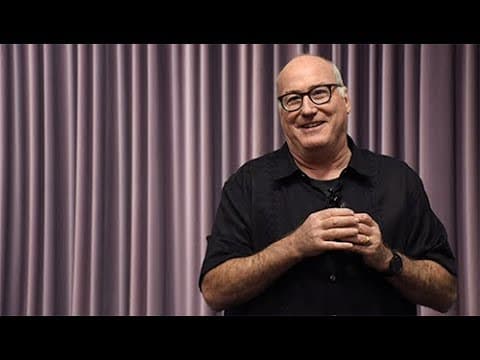
Olivia Fox Cabane: Build Your Personal Charisma [Entire Talk]

TL;DR
Charisma comes from specific behaviors across three components, not an innate gift. Presence anchors attention in the moment, power signals influence and status, and warmth builds trust. These behaviors can be learned and practiced to raise charisma levels in daily interactions.
Transcript
Thank you so much. And I'm honored and flattered to see that it's not just standing room only, but three rows deep. So the pressure is on. It was a sunny day in New York City 1955. The streets flowed with traffic, the sidewalks bustled with busy people. And Marilyn Monroe wanted to prove a point. With a photographer in tow, she walked down into Gra... Read More
Key Insights
- Presence is the core foundation of charisma and determines how authentic you appear in conversations.
- A momentary incongruence in expressions or reactions can destroy trust and charisma.
- Techniques to stay present include grounding attention on physical sensations in the toes and focused eye contact.
- Power is about perceived ability to influence the world, not about commanding others or wealth alone.
- Body language signals power through space control and posture, similar to alpha gorilla behavior.
- Warmth blends with presence and power to create charisma that makes others feel valued and understood.
- Charisma is learned and can be measured; it can rise or fall with specific behaviors, as shown in laboratory studies.
- Historical examples, like Disraeli and Gladstone, illustrate charisma as the art of making others feel intelligent and fascinating.
- More videos from this channel:
- More from this channel: Stanford eCorner
Install to Summarize YouTube Videos and Get Transcripts
Explore YouTube Video Summarizer or Get YouTube Transcript Extractor
Questions & Answers
Q: What is charisma and can it be learned or is it innate?
Charisma is described as the result of specific behaviors across three categories presence, power, and warmth. It is not an innate magical quality; instead, charisma levels can be raised or lowered by instructing people to display certain charismatic behaviors. The talk emphasizes that anyone can learn enough charisma to see a measurable difference in daily life.
Q: What does presence mean in the context of charisma?
Presence is described as the core component of charisma, making others feel that you are fully in the moment. It involves being attentive and avoiding incongruence between expressions and what you are saying. Techniques to stay present include focusing on the toes to ground attention and maintaining deep eye contact for connection.
Q: How does power influence charisma according to the talk?
Power in charisma is about perceived ability to affect the surrounding world, conveyed through appearance, demeanor, and body language. It is not about commanding force but about signaling capability and influence, which can be observed in how one sits, gestures, and occupies space, similar to how alpha animals assert territory.
Q: What role does warmth play in charismatic behavior?
Warmth is one of the three pillars of charisma and works with presence and power to create magnetism. It involves making others feel seen, respected, and understood, which helps foster trust and likability. The talk notes warmth as essential to ensuring charisma leads to genuine connection rather than mere perception.
Q: Can everyday people realistically imitate charismatic figures like Steve Jobs or Bill Clinton?
The talk acknowledges that not everyone will become iconic figures, but emphasizes that enough charisma can be learned to produce noticeable daily improvements. By studying and adopting the specific charismatic behaviors these figures exemplify, individuals can enhance their own presence, power, and warmth in ordinary interactions.
Q: What is a practical exercise to increase presence during conversations?
A practical exercise is to focus on the physical sensation in the toes to bring attention to the body and remain present in the moment. Additionally, paying close attention to the other person’s eye colors and maintaining attentive, authentic listening helps sustain presence. These steps help prevent mind wandering and incongruence.
Q: How can body language affect perceptions of power in a negotiation or pitch?
Body language affects perceived power by signaling space occupancy, confidence, and authority. Gestures such as sitting with one leg up, draping arms across furniture, or occupying multiple seats communicate dominance and control. These cues can influence the observer’s perception of the speaker’s ability to influence outcomes.
Q: What historical example illustrates a charisma effect on perception?
A historical example described involves the Victorian election between Gladstone and Disraeli, where the young woman noted a difference in how the rivals made others feel. She implied that Disraeli made others feel clever, which contributed to his appeal in the context of that era, illustrating charisma through social influence and warmth.
Summary
This video explores the topic of charisma and how it can be learned and developed. It begins with the story of Marilyn Monroe and her ability to transform from a regular person to a glamorous star simply by changing her demeanor. The speaker goes on to debunk the myth that charisma is an innate quality, explaining that it is actually the result of specific behaviors. Charisma is broken down into three components: presence, power, and warmth. The video provides techniques and tips for enhancing each of these components and offers insights on how charisma can affect personal and professional success.
Questions & Answers
Q: What did Marilyn Monroe's subway experiment demonstrate about charisma?
Marilyn Monroe's subway experiment showed that by changing her demeanor and attitude, she could transform from being unnoticed to being recognized and adored. This demonstrated that charisma is not an innate quality, but rather a result of specific behaviors and choices.
Q: Why do people often believe that charisma is an innate, magical quality?
Charisma is often seen as an innate, magical quality because people typically learn charismatic behaviors at a young age and are not consciously aware of the process. As a result, they assume that charisma is something that individuals are either born with or not.
Q: How can charisma impact personal and professional success?
Charisma can greatly impact personal and professional success. It helps people to be liked, trusted, and seen as leaders. Charismatic individuals are more likely to have their ideas adopted and are more effective in implementing projects. Charisma influences how others perceive and respond to a person, making it a powerful tool for achieving goals and influencing others.
Q: What motivated the speaker to study and teach charisma?
The speaker was motivated to study and teach charisma due to personal desperation. As a socially inept and awkward introvert, they realized that they had to either exile themselves to a desert island or learn to navigate the social world. They chose the latter and became fascinated with the topic of charisma.
Q: How can charisma levels be raised or lowered in controlled experiments?
In controlled experiments, researchers were able to raise or lower people's level of charisma by instructing them to display specific charismatic behaviors. This suggests that charisma can be learned and adjusted, further debunking the belief that it is an innate quality.
Q: What are the three categories of behaviors that create charisma?
The three categories of behaviors that create charisma are behaviors of presence, behaviors of power, and behaviors of warmth. All three components are critical for achieving charisma, but the strength of each component determines the type of charisma a person possesses.
Q: How does presence contribute to charisma?
Presence is the core component of charisma and the foundation upon which all other aspects are built. When someone has a strong presence, they make others feel like they are completely present in the moment. This creates a sense of connection and makes people feel valued and important.
Q: Why is it important to be fully present in conversations?
Being fully present in conversations is important because it allows for genuine connection and communication. When someone is not fully present, it can be noticed through subtle cues such as delayed reactions or glazed-over eyes. These incongruences can make others feel that something is off or inauthentic, damaging trust and charisma.
Q: What are some techniques for maintaining presence in conversations?
One technique for maintaining presence in conversations is to focus on the physical sensations in your toes, which helps to bring your attention to the present moment. Another technique is to focus on the colors in the eyes of the person you are speaking with, which can create deep eye contact and a powerful connection.
Q: How does power contribute to charisma?
Power is not about having actual power, but rather the perception of the ability to affect the world around you. Power is evaluated through body language and behavior. Powerful body language includes claiming space and making yourself physically bigger. This signals dominance and creates an impression of power.
Q: How can body language convey power?
Powerful body language includes claiming space by sitting or standing with a wide stance and putting your feet up, which makes you physically bigger. These gestures signal power and dominance. People look for cues of power in body language, and perceiving someone as powerful enhances their charisma.
Takeaways
Charisma is not an innate, magical quality but the result of specific behaviors that can be learned and developed. It is a combination of presence, power, and warmth. Being fully present in conversations and making others feel important and valued is crucial for charisma. Power is perceived through body language that signals dominance and the ability to affect the world around you. Warmth is conveyed through body language, behavior, and genuine connection with others. Charisma can greatly impact personal and professional success by making people like you, trust you, and want to be led by you.
Summary & Key Takeaways
-
Charisma is built from three components presence, power and warmth, not a fixed trait, and can be developed through deliberate practice.
-
Presence is the foundation of charisma and involves being fully in the moment, with minimal incongruence between words and facial reactions.
-
Power is perceived through body language and demeanor, signaling your ability to affect the world around you and assert space in interactions.
Read in Other Languages (beta)
Share This Summary 📚
Summarize YouTube Videos and Get Video Transcripts with 1-Click
Try YouTube Summary with ChatGPT & Claude or YouTube Transcript Generator
Explore More Summaries from Stanford eCorner 📚
![Alexander Osterwalder: Tools for Business Model Generation [Entire Talk] thumbnail](/_next/image?url=https%3A%2F%2Fi.ytimg.com%2Fvi%2F8GIbCg8NpBw%2Fhqdefault.jpg&w=750&q=75)
![Chinedu Echeruo: Creativity Unleashes Value for the World [Entire Talk] thumbnail](/_next/image?url=https%3A%2F%2Fi.ytimg.com%2Fvi%2FVE97yX0rdiQ%2Fhqdefault.jpg&w=750&q=75)


![Dana Mead: Understanding Venture Capital [Entire Talk] thumbnail](/_next/image?url=https%3A%2F%2Fi.ytimg.com%2Fvi%2FA9oojO6ztKk%2Fhqdefault.jpg&w=750&q=75)
Summarize YouTube Videos and Get Video Transcripts with 1-Click
Try YouTube Summary with ChatGPT & Claude or YouTube Transcript Generator