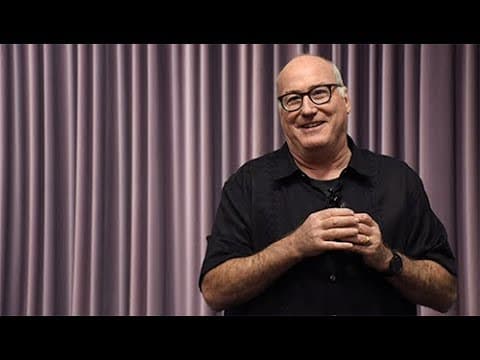
Steve Jurvetson: Forecasting the Future of Technology [Entire Talk]

TL;DR
Forecasting technology requires humility about products and companies while tracking persistent capability trends such as artificial intelligence’s continued progress. Steve Jurvetson misjudged Amazon and Netflix, and Astro Teller dismissed camera phones, yet Teller correctly anticipated AI’s growth through a decade-long AI winter. Their successes and failures reveal practical ways to evaluate emerging technologies, making the full discussion worth reading.
Transcript
So I get to have the fun of asking the questions to this really great panel with three, I'd like to point out, really different points of view. Steve's venture capital funding, cool new ideas. Astro's running probably one of the most inventive labs, but I think is it fair to say managing a lot these days. Maybe still there inventing. And Christina,... Read More
Key Insights
- Forecasting technology is inherently uncertain because even experienced investors, inventors, and researchers can misjudge consumer behavior, company evolution, and the speed of scientific progress. Reviewing failed predictions provides a practical source of humility when making new forecasts.
- Company evolution is difficult to anticipate because businesses can expand, pivot, or adapt beyond their original products. Steve Jurvetson expected Amazon to become obsolete and Netflix to fail, but acknowledged that he did not foresee how those companies would navigate broader industry transitions.
- The search for valuable innovations requires accepting that most ideas will be wrong. Astro Teller describes progress as clawing through piles of ideas to find rare gems, using his mistaken rejection of camera phones as a reminder against excessive certainty.
- Artificial intelligence capabilities can progress despite periods of public pessimism. Teller observed a predictable exponential increase in AI abilities during an AI winter, followed by continuing benefits in machine translation, speech-to-text systems, computer vision, robotics, and related areas.
- Machine learning is turning industrial sectors into software-centered businesses. Jurvetson identifies rockets, drones, robots, and satellites as examples where software and repurposed off-the-shelf hardware can transform industries that previously appeared to be unattractive industrial businesses.
- Robots are systems that combine sensing, computation, and actuation, not merely machines shaped like walking people. Teller applies this broader definition to stratospheric balloons, airborne wind turbines, self-driving cars, and self-flying package-delivery vehicles.
- Biology can inform the engineering of complex intelligent systems. Jurvetson suggests that biological processes provide both an existence proof and metaphorical inspiration for iterating on algorithms, accumulating intelligence, and increasing complexity over time.
- Academic research should address long-term foundational problems rather than focusing only on outcomes two to five years away. Christina Smolke recommends looking 10 to 20 years ahead, choosing transformative questions, and pursuing work that merits a researcher’s full commitment.
Install to Summarize YouTube Videos and Get Transcripts
Explore YouTube Video Summarizer or Get YouTube Transcript Extractor
Questions & Answers
Q: How can technology leaders forecast the future more effectively?
They can examine past mistakes, remain humble about individual ideas, and distinguish sustained capability trends from uncertain product or company outcomes. Astro Teller says almost everyone’s ideas are wrong most of the time, so the real challenge is searching through many ideas to find the valuable ones.
Q: Why did Steve Jurvetson incorrectly forecast the futures of Amazon and Netflix?
Jurvetson expected distributed, federated, personalized systems to make Amazon obsolete and internet video to undermine Netflix’s mailed-DVD business. He says he failed to anticipate how companies could expand, pivot, or grow during industry transitions.
Q: What does Astro Teller’s camera-phone prediction teach about forecasting?
Teller was certain people would not take pictures with phones or become obsessed with sending those pictures to friends. He now treats that mistake as a recurring reminder of how confidently forecasters can misjudge consumer behavior.
Q: Why did Astro Teller expect artificial intelligence to survive the AI winter?
Teller observed that AI capabilities were following a predictable exponential increase even while people claimed the field was dead. He says that pessimism did not change the trajectory, and AI continued producing benefits in machine translation, speech-to-text, computer vision, and robotics.
Q: How is machine learning transforming industrial businesses?
Jurvetson says deep learning and machine-learning techniques are turning rockets, drones, robots, and satellites into software-centric businesses. These sectors can reuse off-the-shelf hardware from cellphones instead of relying exclusively on specialized industrial components.
Q: What technology trends did Christina Smolke find surprising?
Smolke highlights de-extinction, which people are seriously pursuing even though it has not yet been achieved. She also points to cloud laboratories in biology, where experiments can be outsourced to companies and conducted more systematically.
Q: Why are company-level technology predictions especially difficult?
A company may begin in one market but later expand, pivot, or grow into a broader industry transition. Jurvetson’s Amazon and Netflix predictions show that correctly anticipating a technological shift does not guarantee correctly predicting which businesses will succeed within it.
Q: Which fields does the panel identify as evidence of continuing technological progress?
The discussion identifies artificial intelligence applications such as machine translation, speech-to-text, computer vision, and robotics. It also covers machine-learning-driven changes in rockets, drones, robots, and satellites, alongside biological developments such as cloud laboratories and de-extinction research.
Summary
This is a panel discussion with Steve, Astro, and Christina about their perspectives on the past, present, and future. They discuss their past predictions, what they got wrong and what they got right. They also talk about the future technologies they find exciting, the importance of a broad education for engineers, and their responsibilities regarding societal implications of their work.
Questions & Answers
Q: What is one thing that didn't happen 10 years ago that you were sure was going to happen?
Steve reflects on several mistakes he made in predicting the future, such as thinking Amazon would be obsolete and that Netflix would fail.
Q: What did you predict 10 years ago that is happening now?
Astro shares his belief in the future of artificial intelligence and how it has continued to steadily progress in various areas.
Q: What is something that has happened and is changing the world that you couldn't have even imagined?
Christina mentions de-extinction as a topic that people are seriously working on, as well as the concept of cloud laboratories within biology.
Q: What is the coolest thing in the pipeline right now?
Steve discusses the transformations happening in various industries through deep learning and machine learning techniques. He also talks about the revolution of learning in life sciences and its impact on the future of engineering.
Q: How do you choose what to focus on and work on in the lab?
Christina emphasizes the importance of passion and choosing problems that will make transformative changes in the world. She also mentions the value of interdisciplinary teams and the freedom to explore new directions.
Q: How does policy play into future innovations?
Steve mentions the role of government in sponsoring projects but also states that they rarely rely on policy to make investments work. He sees government grants to universities as a way of helping the tech world.
Q: How do you educate the engineer of the 21st century?
Christina highlights the importance of teaching students how to choose what to work on and focusing on foundational research. She also mentions interdisciplinary collaboration and the need for broad literacy in biology.
Q: How important is domain expertise in today's rapidly changing world?
Astro believes that the ability to learn quickly and adapt is more important than specific domain expertise. He encourages the development of skills such as teamwork and communication.
Q: How do you think about linking technology, innovation, and societal responsibility?
Steve discusses the responsibility of engineers to be transparent and educate the public sector about the implications of their technologies. He also emphasizes the importance of anticipating and solving future problems.
Q: To what extent does technology drive our value system?
Steve discusses how technology can have an impact on our values and societal norms, but also mentions the importance of investors aligning their values with the technologies they support.
Takeaways
The panelists emphasize the need for continuous learning and adaptation in a rapidly changing world. They discuss the importance of interdisciplinary collaboration and the responsibility of engineers to consider the societal implications of their work. They also highlight the importance of transparency and education in shaping the future. Overall, they see technology as a driver of progress and innovation, but acknowledge the need for careful consideration of ethical and societal impacts.
Summary & Key Takeaways
-
Past forecasting errors reveal how difficult it is to predict which companies, products, and industry transitions will succeed. Steve Jurvetson underestimated Amazon and Netflix, while Astro Teller dismissed camera phones. Teller argues that most ideas are wrong, so progress depends on searching through many possibilities to identify the few valuable ones.
-
Machine learning is transforming fields that were previously dominated by specialized industrial hardware. Rockets, drones, robots, satellites, energy systems, and autonomous vehicles can increasingly combine off-the-shelf components with sensing, computation, actuation, and sophisticated control. This shift makes intelligence embedded in products a reusable approach across many sectors.
-
Biology offers both practical opportunities and intellectual models for future engineering. The panel discusses cloud laboratories, de-extinction research, engineered life forms, transplant organs, and biological inspiration for building complex systems. Academic researchers should pursue problems they deeply care about while developing foundational technologies with horizons extending 10 to 20 years.
Read in Other Languages (beta)
Share This Summary 📚
Summarize YouTube Videos and Get Video Transcripts with 1-Click
Try YouTube Summary with ChatGPT & Claude or YouTube Transcript Generator
Explore More Summaries from Stanford eCorner 📚
![Drew Houston: Finding Your Way as an Entrepreneur [Entire Talk] thumbnail](/_next/image?url=https%3A%2F%2Fi.ytimg.com%2Fvi%2FYmPCy_SXuuQ%2Fhqdefault.jpg&w=750&q=75)
![Heidi Roizen: Adventures in Entrepreneurship [Entire Talk] thumbnail](/_next/image?url=https%3A%2F%2Fi.ytimg.com%2Fvi%2FdtDxDmhUuiM%2Fhqdefault.jpg&w=750&q=75)
![David Eagleman: A Brainy Approach to Innovation [Entire Talk] thumbnail](/_next/image?url=https%3A%2F%2Fi.ytimg.com%2Fvi%2F9N00kDGMB5w%2Fhqdefault.jpg&w=750&q=75)
![Kevin Systrom: From Stanford to Startup [Entire Talk] thumbnail](/_next/image?url=https%3A%2F%2Fi.ytimg.com%2Fvi%2FN-C0wApn1vI%2Fhqdefault.jpg&w=750&q=75)
![Mike Maples Jr.: Dare to Do Legendary Things [Entire Talk] thumbnail](/_next/image?url=https%3A%2F%2Fi.ytimg.com%2Fvi%2FyRgI6-LJVKc%2Fhqdefault.jpg&w=750&q=75)
Summarize YouTube Videos and Get Video Transcripts with 1-Click
Try YouTube Summary with ChatGPT & Claude or YouTube Transcript Generator