How to Become Resilient: Feel Pain and Act Anyway
TL;DR
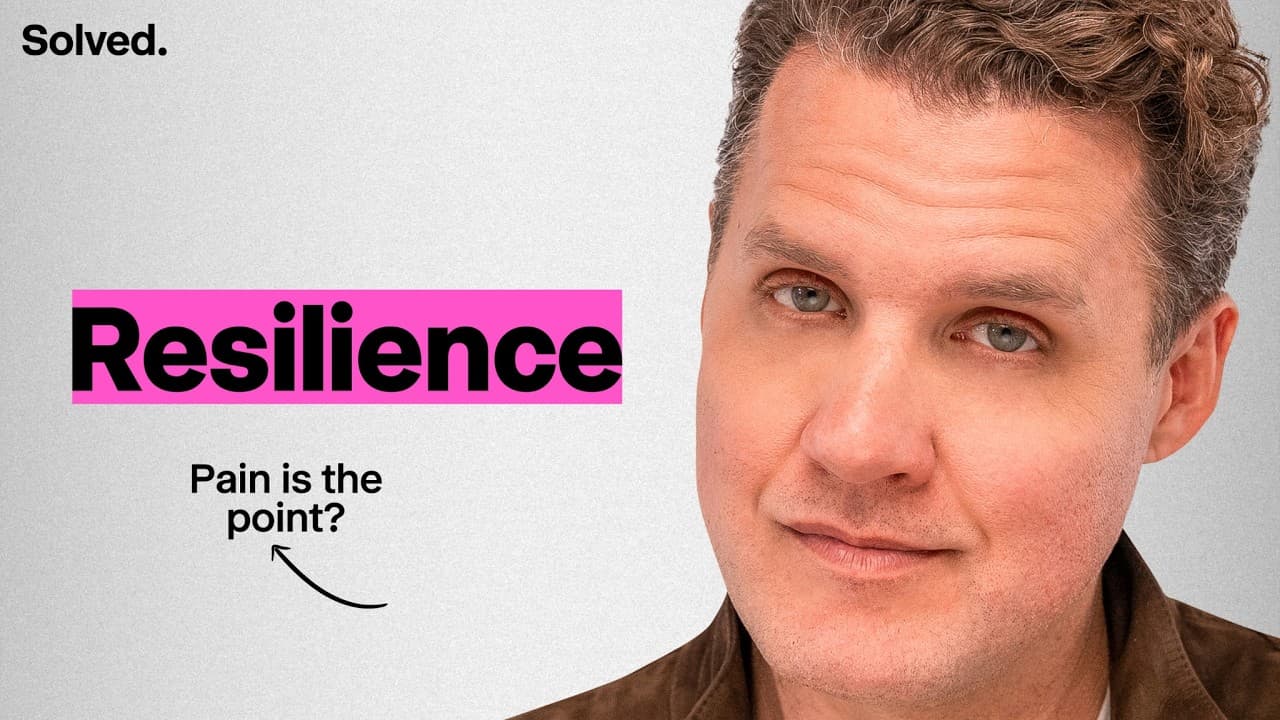
Resilience is not about suppressing pain or being emotionless; it is feeling your feelings deeply while still acting in your best interest despite them. It is a trainable skill, not something you either have or lack. Ernest Shackleton's crew survived two years stranded in Antarctica because they endured hardship without being hijacked by despair.
Transcript
Welcome back everybody to the Solved Podcast, the most overressearched and evidence-based life advice podcast in the world. I am Mark Manson, number one New York Times bestselling author. This is my co-host, producer, and intrepid lead researcher, Drew Bernie. And for those of you who are new to the show, the point of Solved is to go so deep,... Read More
Key Insights
- Resilience is not about being impervious to challenges or not feeling pain. It is about feeling the pain deeply and being good at dealing with it, acting in your best interest despite difficult emotions rather than being consumed by them.
- Resilience is trainable, not a fixed trait you either have or do not have. Mark Manson argues there is a moral duty to train it within ourselves, within children and young people, and within society.
- Resilient people are not those who suppress, ignore, or lack feelings. They feel deeply but are not hijacked by their emotions; they dictate their actions through their thoughts and feelings rather than letting feelings dictate their actions.
- You do not have to be emotionless or stoic to be resilient. Feeling wrecked while going through something is normal, and you can still work through it and be resilient during that struggle.
- Ernest Shackleton's 1914 classified ad read 'Men wanted for hazardous journey, small wages, bitter cold, long months of complete darkness, constant danger, safe return doubtful,' and 5,000 men applied for the posting.
- Shackleton's Endurance expedition recruited 28 men who set sail in January 1915. Their ship became trapped in ice flows, and they waited 10 months watching it slowly get crushed before it finally sank in November 1915.
- After the ship sank, the stranded men waited 5 months for rescue, then sailed 800 miles through treacherous waters, survived hurricanes, and Shackleton took five men another 800 miles in a 20-foot lifeboat to reach help. Every single man survived.
- Shackleton himself wrote many times that he thought his men would die in Antarctica, and crew journal entries show they were despondent. Their survival demonstrates that resilience coexists with fear and despair rather than eliminating them.
Install to Summarize YouTube Videos and Get Transcripts
Explore YouTube Video Summarizer or Get YouTube Transcript Extractor
Questions & Answers
Q: What is resilience really about?
Resilience is not about not feeling pain or being impervious to challenges and setbacks. According to Mark Manson, it is feeling the pain and just being good at dealing with it. Resilient people feel their feelings very deeply but are able to act despite them in their best interest. They are not hijacked or consumed by negative feelings, and they do not let their thoughts and feelings dictate their actions to them.
Q: Is resilience something you are born with or can you develop it?
Resilience is trainable. It is not something that you either have or you do not have. Mark Manson emphasizes this as the biggest point about the topic, arguing there is a moral duty to train it within ourselves, within children and young people, and even within society. Anyone can develop it, practice it, and get better at it over time, which is why the episode focuses heavily on actions and behaviors.
Q: Do you have to suppress your emotions to be resilient?
No. Resilience is not about people who suppress their feelings, ignore their feelings, or are delusional and do not have feelings. You do not have to be emotionless or stoic. It is normal to feel a little bit wrecked when going through something, and you can still be resilient through that. Resilient people feel deeply but act in their best interest despite those feelings rather than being controlled by them.
Q: What is the story of Ernest Shackleton's expedition?
In 1914 Ernest Shackleton posted a famous classified ad seeking men for a hazardous journey with safe return doubtful, and 5,000 men applied. He recruited 28 men who set sail in January 1915 for Antarctica. Their ship became trapped in ice and was crushed after 10 months, sinking in November 1915. The men were stranded for nearly two years but every single one survived.
Q: How did Shackleton's men survive being stranded in Antarctica?
After their ship sank, the men waited 5 months hoping another expedition would arrive. When none came, they built makeshift boats from the ship's remains and sailed 800 miles through treacherous waters full of icebergs, killer whales, sharks, and storms, surviving hurricanes. Shackleton then took five men another 800 miles in a 20-foot lifeboat, climbed an uncharted mountain, and signaled for help, eventually rescuing all his men.
Q: Why does the Shackleton story illustrate resilience?
The journal entries of many of Shackleton's men show they were absolutely despondent, and Shackleton himself wrote many times that he thought they were going to die in Antarctica. Yet they kept acting in their best interest despite their despair. This shows resilience is not about suppressing fear or feelings, but about feeling them deeply while still being able to take action and survive.
Q: How is this podcast episode structured?
Unlike most Solved episodes that put theory, definitions, and science in the front half and implementation and practices in the back half, this resilience episode is structured differently because resilience is so action-based. It is broken into three sections, beginning with a biology section about the biology of resilience. The hosts note it is difficult to discuss resilience without talking about the behaviors and actions you should be doing.
Q: What resources does the Solved podcast offer listeners?
Each episode includes a free PDF guide summarizing the episode with all research and citations; the resilience guide is over 100 pages with 164 citations. It can be downloaded at solvedpodcast.com/resilience. Listeners who want to implement what they learn can join the membership at membership.solvepodcast.com, which has a community of a few thousand people. The podcast is also moving to twice a month, with a stoicism episode featuring Ryan Holiday on October 15th.
Summary & Key Takeaways
-
Solved is an evidence-based life advice podcast hosted by Mark Manson with lead researcher Drew Bernie. Each episode goes exhaustively deep on one topic and includes a free PDF guide; the resilience guide has over 100 pages and 164 citations, with hundreds more cut during research.
-
The core message is that resilience is not about suppressing pain or being impervious to setbacks. It is feeling emotions deeply while still being able to act in your best interest, not being hijacked or consumed by negative feelings. Importantly, it is a trainable skill anyone can develop.
-
Ernest Shackleton's Endurance expedition serves as the episode's case study. His 28 men were stranded in Antarctica for nearly two years after their ship was crushed by ice, yet through Shackleton's rules and practices, all 28 men survived without a single death.
Read in Other Languages (beta)
Share This Summary 📚
Summarize YouTube Videos and Get Video Transcripts with 1-Click
Try YouTube Summary with ChatGPT & Claude or YouTube Transcript Generator
Explore More Summaries from Mark Manson 📚




Summarize YouTube Videos and Get Video Transcripts with 1-Click
Try YouTube Summary with ChatGPT & Claude or YouTube Transcript Generator