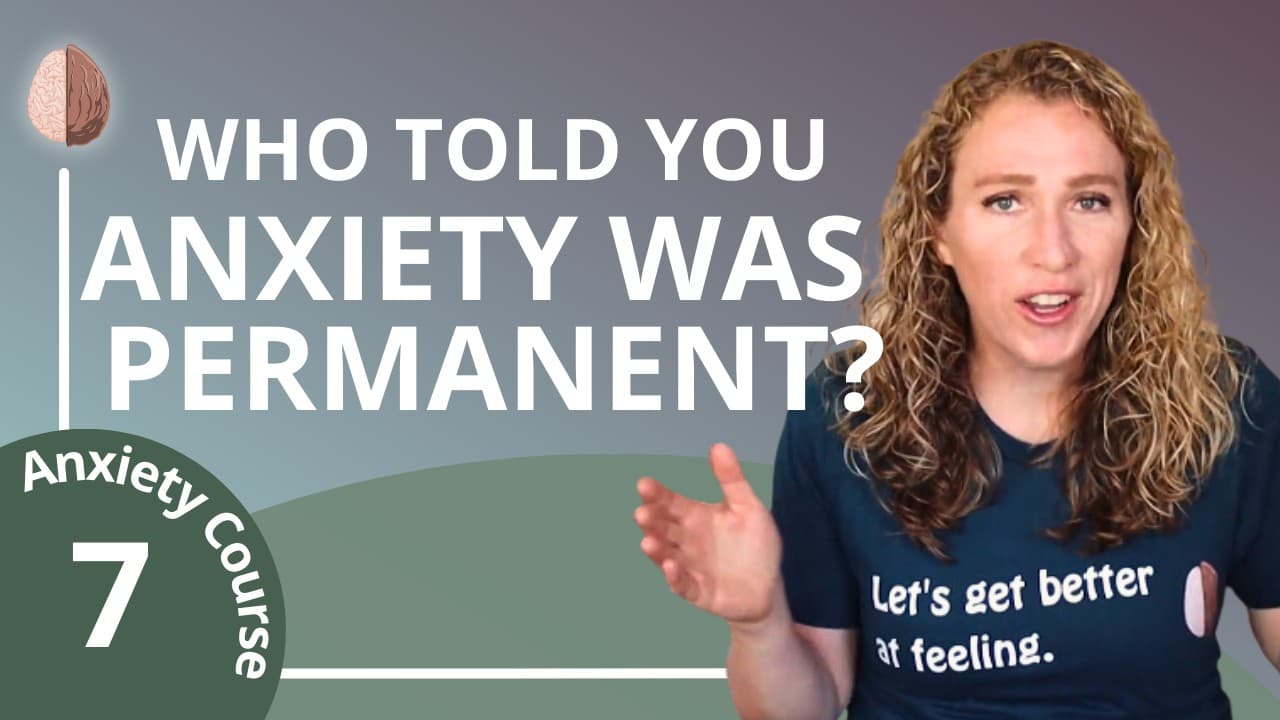
What Does a Mental Health Diagnosis Really Mean?, Mental Health Diagnoses and Learned Helplessness, Anxiety Course 7/30
TL;DR
A mental health diagnosis identifies a cluster and severity of symptoms, not their cause, permanence, or a person’s identity. For example, having at least five of nine specified symptoms can lead to a depression diagnosis, while biological, psychological, behavioral, and social factors may all contribute. Understanding this distinction replaces learned helplessness with realistic options for treatment and change. Read on to see which factors and interventions may matter.
Transcript
Sometimes when I teach a mental health skill, like how exercise treats depression or how mindfulness is a powerful tool to decrease anxiety, people will tell me, "Oh, that's cool, but I have clinical depression." And what they usually mean by that is that they've been diagnosed with depression and they assume that their diagnosis means that the... Read More
Key Insights
- A mental health diagnosis is a label for a cluster and severity of symptoms, not an explanation of what caused them. Meeting depression criteria indicates that specified symptoms are present, while leaving their biological, psychological, behavioral, and social origins unresolved.
- The medical model fits mental health imperfectly because depression is not diagnosed through a brain scan or brain-fluid test in the account presented. Unlike an influenza test that identifies a virus, a depression assessment primarily measures reported experiences and applies a clinical cutoff.
- Learned helplessness is a belief that change is impossible because previous attempts failed or earlier circumstances were overpowering. The elephant story illustrates how an old limitation can persist psychologically even after the individual has developed enough strength or resources to respond differently.
- Depression is described as a real experience with many possible causes rather than one single disease state. Contributing factors can include genetics, nutrient deficiency, insufficient sleep, trauma, abuse, thinking patterns, inflammation, allergies, loneliness, physical health, and patterns of action.
- Genetic influence is presented as partial rather than destiny. The transcript reports depression as around 35% heritable and anxiety estimates between 27% and 40%, while also explaining that life circumstances such as trauma or abuse may activate a predisposition.
- Recovery from depression is presented as possible with or without formal treatment. The transcript states that more than 30% recover without treatment within six to eight weeks and 80% within a year, while acknowledging that outcomes and contributing factors differ among individuals.
- Treatment can target several parts of the biopsychosocial system. Medication, social connection, physical health, changed thinking patterns, trauma processing, nutrition, exercise, mindfulness, daily structure, and professional support are all presented as ways symptoms may be reduced.
- Identity fusion with a diagnosis can restrict perceived options by turning an experience into a permanent self-description. Saying that someone is experiencing depression or anxiety preserves the possibility that symptoms can change and that the person may eventually stop meeting diagnostic criteria.
Install to Summarize YouTube Videos and Get Transcripts
Explore YouTube Video Summarizer or Get YouTube Transcript Extractor
Questions & Answers
Q: What does a mental health diagnosis really mean?
A mental health diagnosis means that a person has a recognized cluster of symptoms at a specified severity. It does not necessarily identify the cause, prove the condition is genetic, or establish that it will be permanent. If symptoms change enough that the criteria are no longer met, the person no longer qualifies for that diagnosis.
Q: How is a depression diagnosis different from a flu diagnosis?
A flu diagnosis can identify the influenza virus as the cause after a sample is tested. A depression diagnosis instead labels a symptom cluster that may include sadness, low energy, frequent crying, hopelessness, and suicidal feelings. It does not reveal which biological, psychological, behavioral, or social factors caused those symptoms.
Q: How is depression assessed and diagnosed?
The transcript says a doctor may diagnose depression when someone has at least five of nine specified symptoms. An assessment can also rank symptoms numerically; for example, a Beck Depression Inventory score over 20 indicates moderate depression or higher. These results describe the presence and severity of symptoms rather than their cause.
Q: Why can the medical model create learned helplessness?
The medical model can create learned helplessness when a diagnosis is interpreted as a permanent biological defect or fixed identity. That belief may discourage people from trying skills or treatments that could help. The transcript compares this to a strong elephant that remains tied by a small rope because it learned when young that escape was impossible.
Q: What factors can contribute to depression and anxiety?
Depression and anxiety can reflect interacting biological, psychological, behavioral, and social influences. The listed contributors include genetics, nutrient deficiency, insufficient sleep, trauma, abuse, thinking patterns, inflammation, allergies, loneliness, physical health, nutrition, and patterns of action. Because each person’s combination can differ, the diagnosis alone cannot specify the cause.
Q: Does genetic influence make depression or anxiety permanent?
No; genetic influence is presented as partial rather than destiny. The transcript reports depression as around 35% heritable and anxiety estimates between 27% and 40%, while noting that trauma or abuse may activate a predisposition. Other contributing influences can also be addressed to reduce symptoms.
Q: Can people recover from depression, anxiety, or PTSD?
The transcript says depression, anxiety, or PTSD can be completely resolved for many people, while others can experience substantial symptom reduction. It reports that more than 30% recover from depression without treatment within six to eight weeks and 80% recover within a year. It also describes a residential program where 93% of clients no longer met the criteria for their original issue at discharge.
Q: What treatments and changes may reduce depression or anxiety symptoms?
The approaches described include medication, exercise, mindfulness, improved sleep and nutrition, social connection, physical healthcare, changed thinking patterns, trauma processing, daily structure, and professional support. Residential clients received hundreds of interventions each week, but the transcript emphasizes that change can also happen little by little by applying one new skill at a time. Treatment can therefore target several contributing parts of the biopsychosocial system.
Summary & Key Takeaways
-
Mental health diagnoses differ from diagnoses such as influenza because they usually describe observable symptoms rather than identifying a specific cause. A depression assessment may classify symptom severity using a clinical cutoff, but it does not establish whether genetics, trauma, sleep, nutrition, inflammation, loneliness, thinking patterns, or other factors produced those symptoms.
-
The biopsychosocial model presents depression and anxiety as experiences shaped by multiple interacting influences. The transcript describes depression as a possible shutdown response when the mind and body become overwhelmed by adversity. Because contributing factors vary among individuals, treatment can address biological health, behavior, thoughts, relationships, trauma, nutrition, and other relevant areas.
-
Treating a diagnosis as a permanent identity can produce learned helplessness, illustrated by an elephant that remains tied by a weak rope because earlier experiences taught it escape was impossible. A more flexible approach asks what contributed to current symptoms and what changes are available. Small interventions can accumulate and eventually change diagnostic status.
Read in Other Languages (beta)
Share This Summary 📚
Summarize YouTube Videos and Get Video Transcripts with 1-Click
Try YouTube Summary with ChatGPT & Claude or YouTube Transcript Generator
Explore More Summaries from Therapy in a Nutshell 📚

Summarize YouTube Videos and Get Video Transcripts with 1-Click
Try YouTube Summary with ChatGPT & Claude or YouTube Transcript Generator