How Can Asking Deep Questions Improve Conversations?
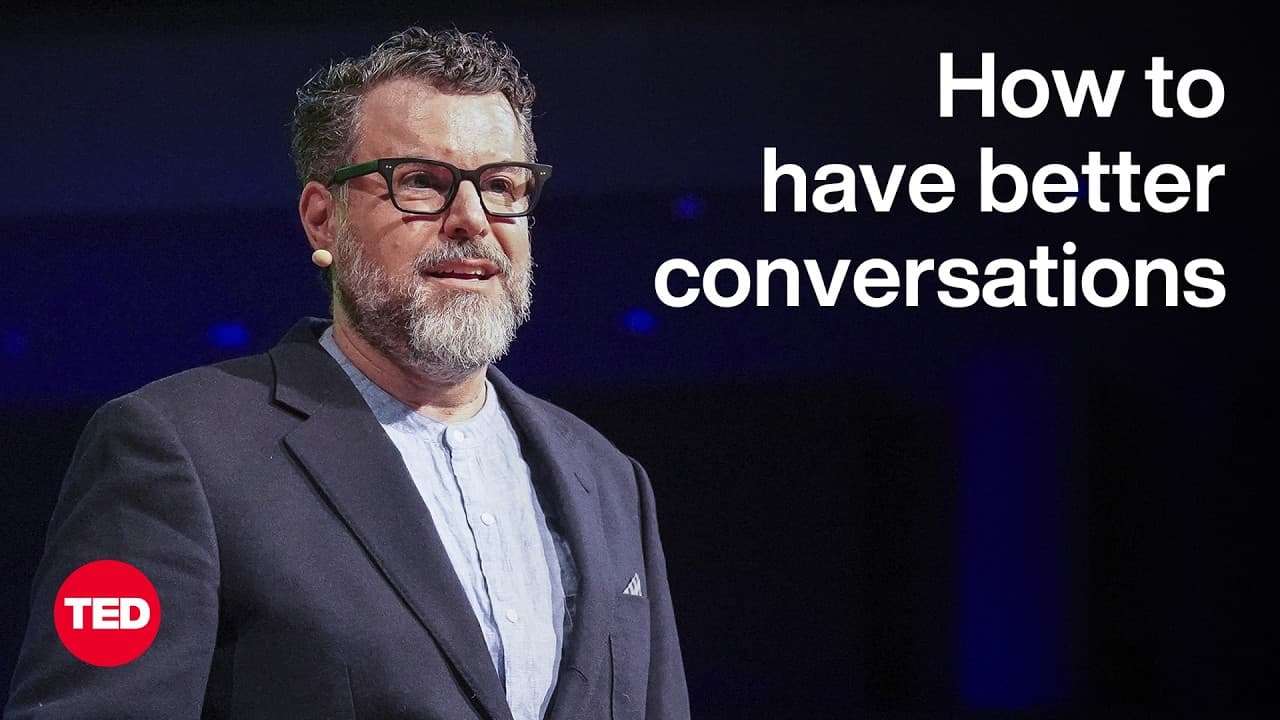
TL;DR
Asking deep questions fosters genuine connections by shifting conversations from surface-level exchanges to meaningful discussions about values and emotions. Understanding the types of conversations—practical, emotional, and social—can enhance communication and relationships. Studies show that engaging with others on deeper topics leads to greater emotional connections and can even influence important decisions.
Transcript
So I'm going to ask you to participate in an experiment, which is that when you leave this room, when you go out into the world, today, tomorrow, whenever you feel like it, I'd like you to ask and answer one question of someone who's a stranger. You might meet them on the bus or walking down the street. And I'm going to show you the question that I... Read More
Key Insights
- 🥺 Many people struggle with effective communication, often participating in misaligned conversations that lead to frustration and disconnection.
- 🛩️ Initiating dialogue with deep questions can help individuals bypass small talk and dive into more meaningful discussions, promoting genuine relationships.
- 😚 Understanding the matching principle in communication can significantly enhance relationship dynamics, especially in close personal conversations.
- 💱 Emotional awareness is crucial during exchanges; recognizing when a conversation is emotional versus practical is fundamental for effective interpersonal communication.
- 👻 The concept of reciprocal vulnerability suggests that sharing feelings allows others to feel safe doing the same, creating a supportive environment.
- 😷 Conducting simple experiments such as asking about emotional experiences can dramatically improve how strangers perceive and relate to each other.
- 🔬 The science of communication studies reveals that learning and practicing the skills of deep questioning can help anyone become a better communicator.
- 🎙️ More videos with Charles Duhigg:
Install to Summarize YouTube Videos and Get Transcripts
Explore YouTube Video Summarizer or Get YouTube Transcript Extractor
Questions & Answers
Q: What is the purpose of the suggested experiment at the beginning?
The experiment encourages individuals to ask a stranger when they last cried in front of someone. The goal is to initiate deep conversations that foster genuine connections and improve interpersonal communication, which can enhance overall emotional understanding and solidarity between people.
Q: Why do people generally feel apprehensive about this experiment?
Many participants express hesitance due to the vulnerability and discomfort associated with discussing deep emotional experiences, such as crying. The fear of opening up to a stranger often discourages involvement, as vulnerability can be intimidating, yet it's essential for authentic connections.
Q: What are the three types of conversations mentioned in the content?
The three types of conversations are practical conversations, focused on logistics and facts; emotional conversations, centered around feelings and empathy; and social conversations, which relate to identity and societal connections. Understanding these types can facilitate deeper communication by helping people match their conversational intentions.
Q: How did Dr. Ehdaie's approach to patient conversations change?
Dr. Ehdaie shifted from giving advice to asking deep questions about his patients’ emotions and experiences regarding their cancer diagnosis. This approach helped the patients express their feelings, building emotional trust and improving their receptivity to medical advice and options.
Q: What role does vulnerability play in communication according to the speaker?
Vulnerability is key to establishing deep connections during conversations. When one person shares their vulnerabilities, it often encourages reciprocal vulnerability from the other party, leading to empathy, understanding, and a stronger emotional bond, enhancing the overall quality of the interaction.
Q: How can deep questions facilitate better understanding in conversations?
Deep questions shift the focus from surface-level information to underlying values and feelings, allowing individuals to engage more personally in discussions. This approach helps reveal what each person truly wants from the conversation, fostering better understanding and connection.
Summary & Key Takeaways
-
The speaker suggests a social experiment where individuals ask strangers about their emotional experiences, which can lead to meaningful conversations.
-
The importance of recognizing different types of conversations—emotional, practical, and social—is highlighted, emphasizing that misaligned conversations hinder effective communication.
-
The speaker shares a story about a surgeon who learned to ask deep questions to better connect with patients, ultimately improving their decision-making and emotional well-being.
Read in Other Languages (beta)
Share This Summary 📚
Summarize YouTube Videos and Get Video Transcripts with 1-Click
Try YouTube Summary with ChatGPT & Claude or YouTube Transcript Generator
Explore More Summaries from TED 📚





Summarize YouTube Videos and Get Video Transcripts with 1-Click
Try YouTube Summary with ChatGPT & Claude or YouTube Transcript Generator