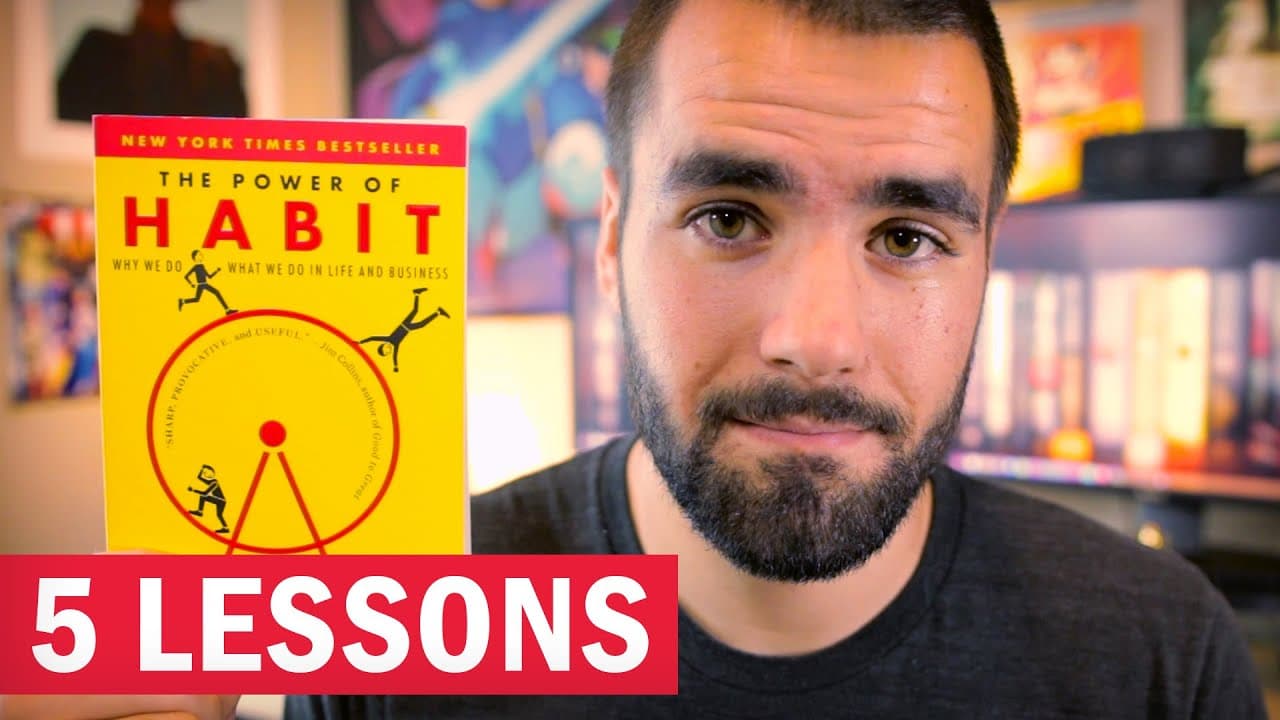
What Are the Key Lessons from 'The Power of Habit'?
TL;DR
The key lessons from 'The Power of Habit' include understanding that all habits consist of cues, routines, and rewards, and recognizing five categories of cues can help change bad habits. Planning for difficult situations increases success in breaking habits, while keystone habits can create momentum for positive changes.
Transcript
Hey there, guys! Today I wanted to give you five lessons that I learned from reading the book, The Power of Habit by Charles Duhigg. Now, I read this book a little while ago. I took a lot of notes on it and learned a ton from it and it actually helped me start to change a lot of my habits which led to some pretty drastic changes in my life. ... Read More
Key Insights
- ⛑️ Habits can be broken down into cues, routines, and rewards. Recognizing and manipulating cues is crucial for changing habits.
- 👯 There are five categories of cues: location, time, emotional state, actions of other people, and the immediately preceding action.
- 🥺 Craving is a powerful component of the habit loop, which leads to a need for the reward.
- 🦡 Planning in advance for difficult situations increases the chances of successfully breaking bad habits.
- 😉 Keystone habits can lead to small wins and provide momentum for building more positive habits.
- 🤙 This video is part of a series called Five Lessons, where the creator shares lessons learned from books.
- 📔 The creator emphasizes the importance of taking notes and reading books thoroughly to share valuable lessons.
- 🎙️ More videos with Charles Duhigg:
Install to Summarize YouTube Videos and Get Transcripts
Explore YouTube Video Summarizer or Get YouTube Transcript Extractor
Questions & Answers
Q: What are the three steps to breaking down habits?
The three steps to breaking down habits are cues, routine, and rewards. Cues trigger the habit, the routine is the habitual behavior, and rewards provide motivation for the habit to continue.
Q: How can recognizing cues help change bad habits?
Recognizing cues allows individuals to pinpoint the triggers for their bad habits, making it easier to avoid those cues or replace them with cues that trigger good habits.
Q: What is the fourth component of the habit loop?
The fourth component is craving, which occurs when the cue triggers a spike of activity in the brain, creating a need for the reward.
Q: How does planning in advance help break bad habits?
Planning in advance allows individuals to anticipate difficult situations and have a predetermined plan of action, increasing the likelihood of successfully breaking bad habits.
Q: What are keystone habits and how do they help create positive change?
Keystone habits are habits that have a tendency to spawn other habits. They create small wins and boost motivation, allowing individuals to tackle other patterns and build more positive habits.
Summary & Key Takeaways
-
All habits can be broken down into a three-step process: cues, routine, and rewards.
-
Almost all cues fall into one of five categories: location, time, emotional state, actions of other people, or the immediately preceding action. Recognizing these cues can help change bad habits.
-
There is a fourth component to the habit loop, which is craving. Craving occurs when the cue triggers a spike of activity in the brain, creating a need for the reward.
-
Planning in advance for difficult situations can help individuals break bad habits and make positive changes.
-
Keystone habits, such as keeping a daily food journal, can lead to small wins and motivate individuals to build more positive habits.
Read in Other Languages (beta)
Share This Summary 📚
Summarize YouTube Videos and Get Video Transcripts with 1-Click
Try YouTube Summary with ChatGPT & Claude or YouTube Transcript Generator
Explore More Summaries from Thomas Frank 📚




Summarize YouTube Videos and Get Video Transcripts with 1-Click
Try YouTube Summary with ChatGPT & Claude or YouTube Transcript Generator