What Supplements Actually Help With Anxiety?
TL;DR
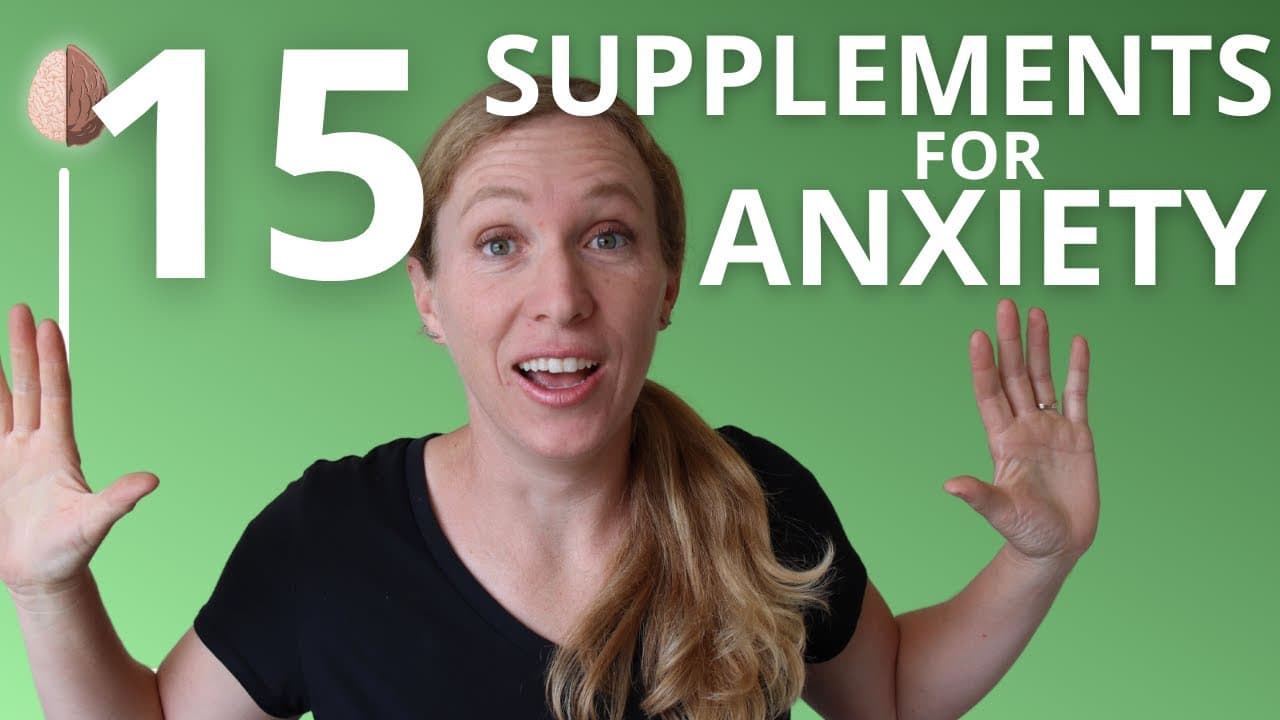
Only about 15 supplements have rigorous research supporting their use for anxiety, including vitamins (D, B6, B12), magnesium, zinc, and omega-3 fish oil. Most are safe, cheap, and low-risk, but 'natural' does not mean safer, and supplements are not FDA-regulated. Always work with a doctor, since taking any supplement is essentially running an experiment on yourself.
Transcript
hey guys Emma McAdam here today we're gonna talk about natural options for treating anxiety now when people are looking to treat their anxiety without medication what they usually mean is they wanna know what herbs and supplements are gonna work for them and because I get asked this a lot I did a ton of research last year on the topic so in this vi... Read More
Key Insights
- Anxiety is treatable, not purely genetic. While there is a biological factor, roughly 20 other factors contribute, so the belief that a diagnosis means lifelong unavoidable suffering is an unhelpful misconception rather than a fixed reality.
- 'Natural' does not mean safer or side-effect-free. Snake venom, lead, and arsenic are all natural yet poisonous, and supplements are not FDA-evaluated for purity, safety, or effectiveness, so they actually have less regulation behind them.
- The placebo or expectancy effect explains many supplement testimonials. When people believe they will feel better, their system changes and they do feel better, often at the exact same level as those taking a sugar pill, meaning belief drove the change.
- Good research requires multiple studies, high participant numbers, randomized groups, placebo comparison, and minimized bias, meaning the person running the study is not the person selling the supplement. Such controlled studies are expensive and often limited for supplements.
- Vitamins top the list because they are safe, cheap, and low in side effects. Deficiencies in vitamins A, B6, B12, C, D, and E can contribute to anxiety and depression, and supplementing D, B6, or B12 can help some people.
- Vitamin D deficiency is common, affecting around 40 percent of Americans, and is closely associated with depression. You can get tested, supplement with vitamin D, and get sunlight, which helps your body process and absorb it.
- Magnesium is essential for hundreds of bodily functions and every cell needs it. In a randomized controlled trial of depressed older adults, 440mg of magnesium daily improved mood as effectively as an antidepressant drug.
- Zinc deficiency is associated with OCD, panic attacks, and generalized anxiety, and a couple of studies show supplementing with zinc improved anxiety symptoms. Zinc is common, inexpensive, easy to find, and has few side effects.
Install to Summarize YouTube Videos and Get Transcripts
Explore YouTube Video Summarizer or Get YouTube Transcript Extractor
Questions & Answers
Q: What natural supplements are actually backed by research for anxiety?
Only about 15 supplements have rigorous research support for anxiety. The ones highlighted include vitamins such as D, B6, and B12, multivitamins, magnesium, zinc, and omega-3 fish oil. These were selected because they have multiple studies, high participant numbers, randomized groups, and placebo comparisons. Hundreds of other supplements make claims for anxiety, but most lack the large, rigorous trials needed to determine whether they are safe or effective, which is why most doctors do not prescribe them.
Q: Is anxiety purely genetic and impossible to change?
No. A widespread misconception is that being diagnosed with anxiety or depression means you were born with it and nothing can be done. While there is a biological factor, there are about 20 other factors too. The condition is not your fault, but it is treatable. Emma McAdam warns against the unhelpful belief that you must simply suffer through life, noting that changing your thinking and actions can actually change your brain chemistry.
Q: Does 'natural' mean a supplement is safe?
No. Just because something is natural does not mean it is safer or has fewer side effects. Snake venom, lead, and arsenic are all natural substances that will poison or kill you. Supplements are not evaluated by the FDA, so they are not rigorously tested for purity, safety, or effectiveness. For example, homeopathic teething tablets sold at Walmart contained varying amounts of belladonna, and some babies died. Natural products often have less research and regulation behind them, not more.
Q: Why do supplement testimonials from friends or family not prove effectiveness?
Testimonials rely on anecdotal evidence, meaning a friend, sister-in-law, or acquaintance used a supplement and it helped. While that may be true, it does not determine whether it works for most people. The placebo or expectancy effect plays a large role: when people believe they will feel better from taking something, their system changes and they do feel better temporarily. With many supplements, people report improvement at the exact same level as those taking a sugar pill, showing belief, not the substance, created the change.
Q: How much magnesium helped with mood in the research mentioned?
In a randomized controlled trial of depressed older adults, 440mg of magnesium daily improved mood as effectively as an antidepressant drug. Magnesium is essential for hundreds of bodily functions, including energy creation, protein formation, gene maintenance, and nervous cell regulation. It is naturally found in dark leafy greens, nuts, avocados, and bananas. It is relatively safe and inexpensive, though a common side effect of taking too much is diarrhea, which the speaker notes is not the worst side effect.
Q: How common is vitamin D deficiency and how is it linked to mental health?
Vitamin D deficiency is really common, affecting around 40 percent of Americans, and is closely associated with depression. You can get tested for a deficiency and then choose to supplement with vitamin D. Getting sunlight also helps your body process and absorb vitamin D. There is decent research showing that for some people, supplementing with vitamin D, B6, or B12 can positively impact anxiety and depression. The best overall source for vitamins is a healthy diet high in plants and low in processed food.
Q: Can zinc help with anxiety symptoms?
Yes, there is some evidence. Zinc is a naturally occurring element that you can get from food. A couple of studies show that a zinc deficiency is associated with OCD, panic attacks, and generalized anxiety, and a couple of studies show that supplementing with zinc has improved anxiety symptoms. Zinc is considered a relatively safe supplement because it is common, easy to find, inexpensive, and has few side effects, making it a reasonable option to consider with a doctor's guidance.
Q: Is fish oil or omega-3 effective for anxiety?
The results are mixed. Omega-3 fatty acids are important for the body and brain, and few nutrients have been studied as thoroughly, so they are considered very safe. Some studies show a positive impact on brain health, depression, and anxiety, while others show little to no benefit. The speaker's interpretation is that some people are deficient and really benefit, while the majority do not notice a difference. A downside is that fish oil harvesting can negatively impact the environment.
Summary & Key Takeaways
-
Emma McAdam, a therapist who reads and summarizes research, covers 15 research-backed natural treatments for anxiety, focusing on supplements. She stresses anxiety is treatable and not simply genetic, and points to her course on alternatives to medication for changing brain chemistry through thinking and actions.
-
Four disclaimers frame the video: she is not a doctor and not anti-medication, natural does not mean safe, testimonials are anecdotal, and the placebo effect can mimic real benefit. FDA-approved medications passed rigorous risk-benefit testing that unregulated supplements have not.
-
Effective, well-researched options include vitamins, especially D, B6, and B12, plus multivitamins; magnesium, which improved mood as well as an antidepressant at 440mg daily; zinc, linked to reduced anxiety; and omega-3 fish oil, which shows mixed but generally safe results.
Read in Other Languages (beta)
Share This Summary 📚
Summarize YouTube Videos and Get Video Transcripts with 1-Click
Try YouTube Summary with ChatGPT & Claude or YouTube Transcript Generator
Explore More Summaries from Therapy in a Nutshell 📚


Summarize YouTube Videos and Get Video Transcripts with 1-Click
Try YouTube Summary with ChatGPT & Claude or YouTube Transcript Generator