How to Read Faster and Finish More Books
TL;DR
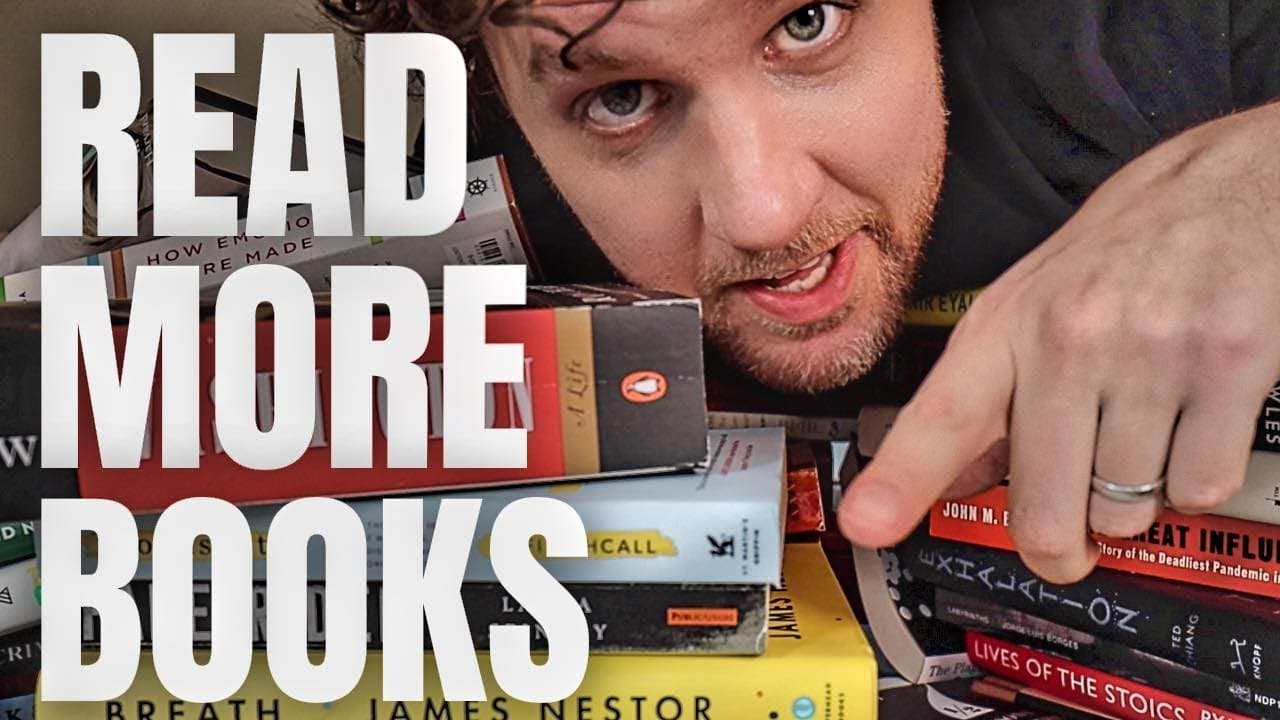
Read more books by reducing subvocalization, guiding your eyes with a finger, skipping material that offers little value, and reserving consistent time for reading. Keeping several books in progress can also sustain attention because you can switch whenever one becomes tiresome, then return to it with renewed interest.
Transcript
these are all the books that i read in 2010 10 years ago that's 14 books not too bad but these are the books i read in 2020 [ __ ] that's 81 books watch this video to get five tips on how to read more books each year and how to remember what the [ __ ] you read what's up everybody mark manson here you know harry s truman onc... Read More
Key Insights
- Subvocalization is the habit of mentally pronouncing each word while reading. It develops when children learn to sound out syllables, but it can restrict adult reading speed because the eyes can move through familiar words faster than the internal voice can articulate them.
- Finger-guided reading works by giving the eyes a stable point to follow across each line. Because eyes naturally jump around, this technique can reduce losing one’s place, rereading the same line, or mistakenly inserting a word from a nearby line.
- Selective nonfiction reading is a practical way to prioritize useful information. When chapters repeat the same central idea, example, study, or anecdote, readers can skip ahead rather than treating every page as an obligation that must be completed.
- The purpose of reading is to serve the reader’s needs, not to satisfy an imagined duty to the book. A reader can inspect the table of contents, choose the most interesting chapters, and return for additional material only if those selections prove valuable.
- A 10 percent trial is the speaker’s rule for deciding whether to continue a book. For a 200-page book, that means reading 20 pages, reviewing the table of contents for anything promising, and putting the book aside if interest remains low.
- Daily consistency is the central mechanism for finishing more books. At an average pace of one page every two minutes, 60 minutes of reading yields about 30 pages per day and can produce one completed 300-page book every 10 days.
- Reading opportunities are available throughout an ordinary day because books and articles are portable. Commutes, lunch breaks, gym rests, and other small openings can contribute reading time even before a dedicated session is placed on the schedule.
- Reading multiple books at once can make attention easier to sustain. Switching to another book when the current one becomes tiresome creates renewed interest, while returning later can restore enthusiasm for material that had temporarily become difficult to continue.
Install to Summarize YouTube Videos and Get Transcripts
Explore YouTube Video Summarizer or Get YouTube Transcript Extractor
Questions & Answers
Q: How can I read faster without sounding out every word?
Reduce the inner monologue that mentally pronounces every word. This habit comes from learning to read by sounding out syllables, but familiar words do not need to be internally spoken for their meanings to register. Practice moving your eyes through the text without enunciating each word in your mind. The process initially feels unusual, but reading speed can increase as the habit becomes more natural.
Q: Why does using a finger help me read faster?
A finger gives your eyes a moving reference point beneath the text. Eyes do not travel across a line with perfect stability, so they can jump around, lose their place, repeat a line, or pull a word from the line below. Following a finger helps stabilize that movement and maintain focus. The technique works with printed books, tablets, and computer screens, even if it initially feels awkward.
Q: Should I finish every nonfiction book I start?
No, finishing every nonfiction book is not necessary when the material is repetitive, unhelpful, or uninteresting. The speaker often skips repeated chapters, examples, and anecdotes, and sometimes reads only selected chapters identified through the table of contents. Reading should provide value to the reader. If a book is not serving that purpose, putting it aside creates time for something more useful.
Q: How long should I try a book before abandoning it?
The speaker uses a personal rule of reading at least 10 percent before deciding whether to stop. With a 200-page book, that trial covers 20 pages. If the book is still unappealing, the next step is to inspect the table of contents for a promising chapter. When nothing looks interesting, the book can be put away without guilt and replaced with another choice.
Q: How should I handle repetitive chapters in nonfiction books?
Skip chapters or passages that merely restate an idea you already understand. The speaker also skips familiar studies, anecdotes, examples, and stories encountered repeatedly across books. A useful approach is to scan the table of contents, choose the chapters that look most relevant, and read those first. If they are valuable, you can return to other sections rather than proceeding through every page in order.
Q: How much can I read by setting aside one hour a day?
The transcript estimates that an average reader completes roughly one page every two minutes. At that pace, 60 minutes produces about 30 pages per day. If an average book contains about 300 pages, that schedule completes one book every 10 days, or approximately 37 books per year. Skipping weak books and repetitive chapters can raise the number to around 40 or 50 books.
Q: Where can I find time to read during a busy day?
Use both scheduled sessions and small openings already present in the day. The speaker suggests reading or listening to an audiobook during a commute, reading during lunch, and taking a book to the gym for breaks between sets. These opportunities can provide at least 30 minutes without formal scheduling. Adding dedicated reading time can bring the daily total to approximately 60 minutes.
Q: Is it helpful to read more than one book at a time?
Yes, the speaker finds multiple books easier to sustain than a single book. When attention fades or one book becomes tiresome, switching to another provides something fresh and interesting. Later, returning to the first book can renew enthusiasm for it. This rotation supports continued reading without forcing concentration on material that does not fit the reader’s current mood or level of interest.
Summary & Key Takeaways
-
Reading speed can improve when you stop mentally pronouncing every word and use a finger to guide your eyes across each line. Subvocalization limits reading to the pace of an internal voice, while physical guidance helps stabilize eye movement, maintain your place, and reduce accidental rereading or confusion between lines.
-
Efficient nonfiction reading does not require completing every page. Readers can skip repetitive examples, select promising chapters from the table of contents, and abandon books that remain uninteresting after reading 10 percent. Fiction calls for a simpler choice: read every word when the story is good, or stop when it is not.
-
Consistency matters more than exceptional reading speed. At roughly two minutes per page, reading for 60 minutes daily produces about 30 pages, enough to complete a 300-page book every 10 days. Keeping multiple books active can make that routine easier by allowing readers to switch when attention or enthusiasm declines.
Read in Other Languages (beta)
Share This Summary 📚
Summarize YouTube Videos and Get Video Transcripts with 1-Click
Try YouTube Summary with ChatGPT & Claude or YouTube Transcript Generator
Explore More Summaries from Mark Manson 📚


Summarize YouTube Videos and Get Video Transcripts with 1-Click
Try YouTube Summary with ChatGPT & Claude or YouTube Transcript Generator