How to Build Systems That Run a Business for You
TL;DR
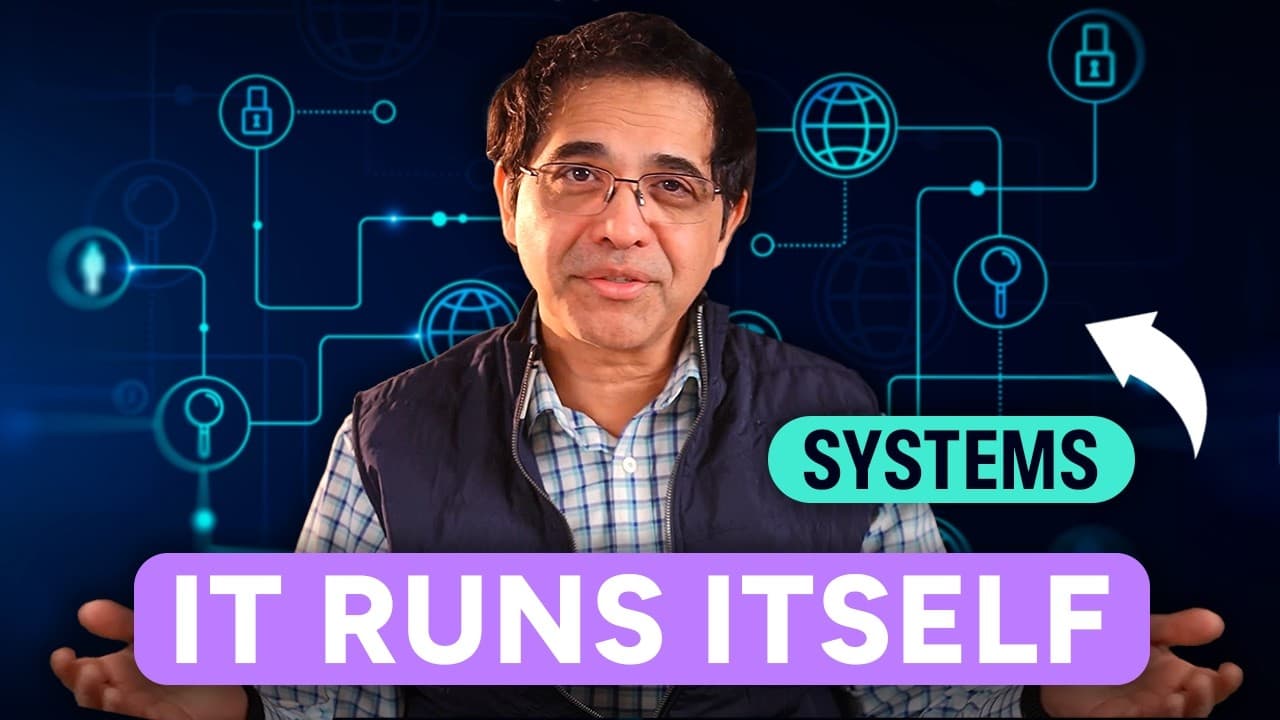
Build systems only after proving what customers want, then use them to amplify reliable signals rather than early noise. Hire exceptional people, manage recruiting and sales as measurable funnels, limit priorities through connected OKRs, establish communication rituals, shape a curiosity-driven culture, and give employees enough context to make decisions close to the problem.
Transcript
Every breakthrough in your life or business starts with one thing, a system. I have built and scaled companies to $100 million. And every single time it came down to just two things. Hire the right people and then build the right systems so they can make the right decisions. If you're trying to grow your business or build a team that can actually r... Read More
Key Insights
- Systems are multipliers that should scale validated demand rather than untested assumptions. Early-stage companies benefit from customer interactions, direct selling, support calls, and rapid adaptation before investing heavily in dashboards, formal documentation, consultants, or complex operating infrastructure.
- Exceptional talent can create disproportionate business impact. The transcript cites McKinsey research claiming that top performers deliver 800% more impact than average performers, supporting the recommendation to hire builders who can investigate problems, make decisions, and ship results before detailed systems exist.
- Recruiting is a measurable growth funnel rather than an occasional administrative task. Companies can track cold outreach, interview conversion, offer volume, hiring cycle time, successful closes, onboarding time, and talent churn because future growth depends heavily on the quality of incoming employees.
- The sales pipeline is the most direct feedback loop for business health. Target customers, acquisition channels, conversion rates, closing time, payment timing, and customer churn reveal whether marketing, compensation, and operating decisions are translating into revenue over a meaningful period.
- Culture determines whether similar tools and strategies produce trust or internal friction. A learn-it-all environment rewards curiosity, while an ego-based culture turns meetings into negotiations and projects into power struggles. Decision narratives and direct concern-sharing channels can reinforce constructive cultural behavior.
- Focused OKRs connect strategy with execution across organizational levels. Setting three or four companywide objectives each quarter, then cascading measurable results through departments, teams, and individuals, prevents excessive priorities from weakening clarity and ensures local work supports shared company goals.
- Communication rituals create predictability, coordination, and execution speed. Daily standups, weekly executive meetings, companywide updates, cross-department sessions, monthly business reviews, quarterly OKR reviews, and board meetings form a recurring rhythm that helps teams surface problems and build trust.
- Context-based leadership moves decisions toward the people closest to the problem. Leaders should explain goals and constraints, connect the right people, and let employees act without seeking approval for every choice. Centralizing every decision around one leader creates an organizational traffic jam.
Install to Summarize YouTube Videos and Get Transcripts
Explore YouTube Video Summarizer or Get YouTube Transcript Extractor
Questions & Answers
Q: When should a startup begin building formal systems?
A startup should begin formalizing systems after it has identified a reliable market signal, including what customers will buy, the price they will accept, and how the product meets their needs. Before that point, founders should emphasize direct selling, customer support, observation, and rapid refinement. Systems multiply existing behavior, so premature systems can scale noise rather than validated demand.
Q: Why should early-stage founders embrace operational chaos?
Early operational chaos allows founders to adapt quickly while learning directly from customers. Cold calls, sales conversations, support sessions, and real-time product fixes provide information that dashboards and formal procedures cannot create on their own. The goal is not permanent disorder. It is to avoid locking untested assumptions into scalable processes before product-market fit and repeatable customer demand become clear.
Q: Why should companies hire people who can work without systems?
People who can work effectively without extensive systems are valuable during uncertain stages because they can investigate, solve, build, and ship without waiting for complete documentation or rigid procedures. The transcript describes an engineer who identified a subtle anomaly pattern and changed the platform's trajectory despite limited onboarding and product documentation. Strong early hires can help create the business that later systems will scale.
Q: How can a company treat recruiting like a revenue funnel?
A company can manage recruiting by measuring each stage as carefully as it measures sales. Relevant measures include cold outreach, interview conversion, the number of offers, the time required to hire, accepted offers, onboarding time, and talent churn. Amazon's bar raiser example also illustrates how an interviewer outside the hiring team can help protect a consistent talent standard.
Q: What sales metrics provide the clearest view of business health?
The transcript identifies target customers, acquisition channels, conversion rates, time to close, time until customers begin paying, and customer churn as core indicators. Together, these measures show whether sales and marketing activity is producing revenue and whether customers remain. Compensation plans and other commercial decisions should connect directly to their expected effect on the sales pipeline and revenue visibility.
Q: How does company culture affect business performance?
Company culture affects whether employees share information, trust one another, and collaborate without turning every interaction into a contest for influence. A curiosity-driven, learn-it-all culture encourages adaptation, while an ego-driven culture makes meetings feel like negotiations and projects become power struggles. Cultural systems can include structured decision narratives and channels that let employees send major concerns directly to leadership.
Q: How should a company use OKRs to limit priorities?
A company should set three or four companywide objectives and key results per quarter, then connect them to department, team, and individual goals. For example, a company goal to reduce operating costs by 10% can cascade into a marketing goal to lower cost per lead by 20%. Keeping the list tight prevents many competing priorities from making strategy unclear.
Q: What communication rituals help a company run consistently?
A consistent cadence can include short daily standups, weekly executive meetings, companywide all-hands updates, and cross-department coordination sessions. Monthly reviews can cover business performance, products, technology, hiring health, and financial runway, while quarterly sessions can review OKRs and board matters. The exact schedule can vary, but a dependable rhythm makes work predictable, strengthens trust, and supports faster execution.
Q: What does it mean to lead with context instead of control?
Leading with context means giving employees the goals, information, and boundaries needed to make sound decisions near the problem instead of routing every choice through the leader. The Zappos example allowed frontline employees to send flowers or cookies and spend extended time resolving customer problems. Leaders should connect people and coach judgment rather than become the required approval point for every action.
Summary & Key Takeaways
-
Effective systems begin with product-market fit, not premature infrastructure. Early founders should prioritize customer conversations, sales, support, and rapid product refinement. Once repeatable demand becomes visible, systems can scale that signal. Installing dashboards, documentation, and formal processes too early risks multiplying assumptions that customers have not validated.
-
People determine whether later systems create meaningful results. The recommended approach is to hire adaptable builders who can solve problems and ship without extensive structure, then treat recruiting like a revenue funnel. Track outreach, interview conversion, offers, hiring speed, onboarding time, and talent churn to protect and improve the talent pipeline.
-
Sustainable execution depends on revenue visibility, a low-ego culture, focused goals, predictable communication, and distributed authority. Sales metrics reveal business health, while a few connected OKRs create clarity. Regular meetings build trust across teams, and context-based leadership enables employees closest to customers and operational problems to make timely decisions.
Read in Other Languages (beta)
Share This Summary 📚
Summarize YouTube Videos and Get Video Transcripts with 1-Click
Try YouTube Summary with ChatGPT & Claude or YouTube Transcript Generator
Explore More Summaries from theMITmonk 📚





Summarize YouTube Videos and Get Video Transcripts with 1-Click
Try YouTube Summary with ChatGPT & Claude or YouTube Transcript Generator