Generics In Java - Full Simple Tutorial
TL;DR
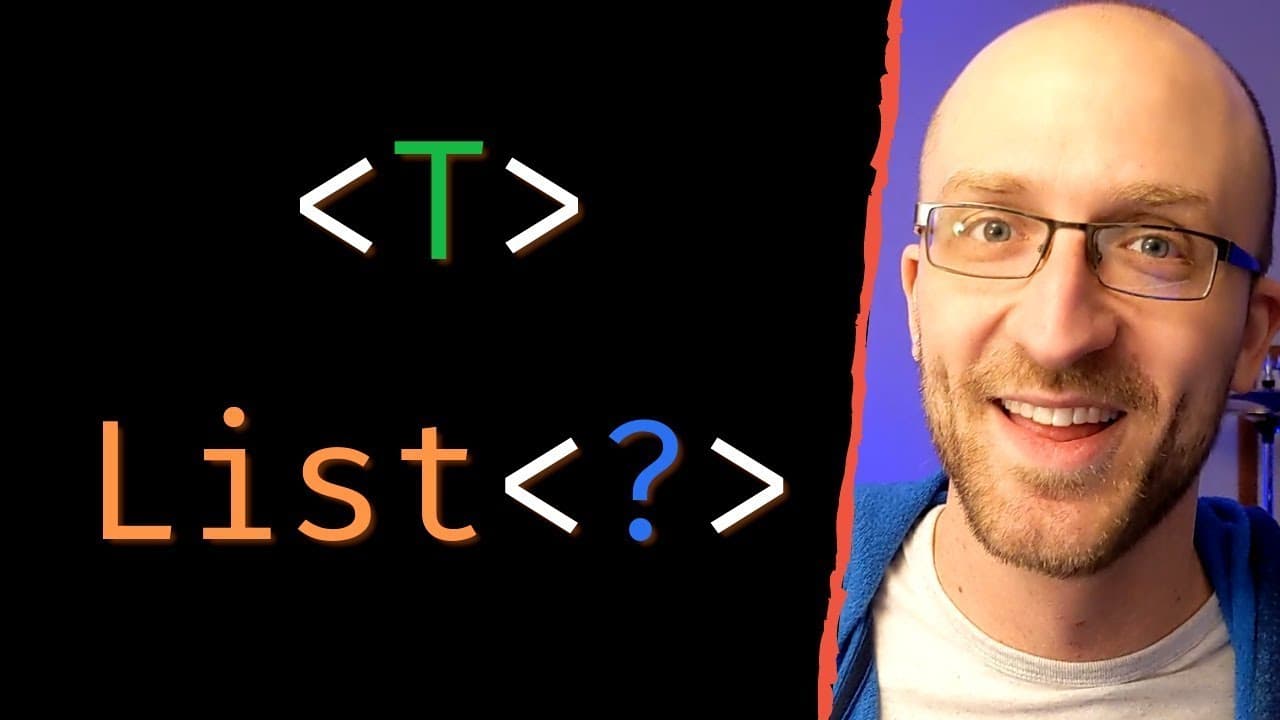
This video explains the concept of generics in Java, their purpose, and how they can be used to create flexible classes that can handle different types of data.
Transcript
in this video we're going to talk all about generics in java generics can be super confusing the first time you see them with all the t's and question marks and angle brackets and k's and v's but i promise by the end of this video you'll know exactly what generics are why they exist and why they're useful and how you can use them in your own progra... Read More
Key Insights
- 📚 Before generics existed, Java developers faced issues with code duplication when trying to create classes for different types of objects.
- 🏷️ Generics provide the ability to create flexible classes that can hold and print different types of objects, reducing code duplication.
- 💡 Generics can be used in Java's collections framework, such as creating an ArrayList that can only hold a specific type of object.
- ⚠️ Generics do not work with primitive types, but can easily be used with their corresponding wrapper classes.
- 🔧 Generics can be used to create specialized classes that follow a specific type hierarchy, such as a printer for animal objects.
- ✨ Multiple bounds can be specified for generics, allowing for restrictions on the types that can be used.
- 🔤 Generic methods can be created with wild cards, allowing for flexibility in handling lists of different types.
- 🔒 Bounded wild cards can be used to specify restrictions on the types that can be used with wild cards, ensuring type safety.
Install to Summarize YouTube Videos and Get Transcripts
Explore YouTube Video Summarizer or Get YouTube Transcript Extractor
Questions & Answers
Q: How do generics solve the problem of code duplication in Java?
Generics in Java allow developers to create a single class that can handle multiple data types, reducing code duplication. This eliminates the need to create separate classes for each data type, improving code reusability and maintainability.
Q: Can generics be used in methods and interfaces?
Yes, generics can be used in methods and interfaces as well. This allows developers to create flexible methods and interfaces that can handle different data types using a single implementation.
Q: What are the advantages of using generics in Java?
Generics in Java provide type safety by ensuring that only the specified data types are used with a generic class or method. They also improve code reusability, reduce code duplication, and allow for more flexible and scalable code.
Q: How can generics be used with Java's collections framework?
Generics are commonly used with Java's collections framework to specify the type of elements that can be stored in a collection. This ensures type safety and makes it easier to work with collections of specific data types.
Q: Can generics be used with primitive data types in Java?
Generics do not work directly with primitive data types such as int or long. However, they can be used with their corresponding wrapper classes like Integer or Long to achieve the same functionality.
Summary & Key Takeaways
-
Before generics, developers had to create separate classes for each data type they wanted to handle, resulting in code duplication.
-
Generics in Java allow developers to create a single class that can handle multiple data types, improving code reusability and reducing duplication.
-
Generics can be used in classes, methods, and interfaces, and they provide type safety and flexibility in handling different data types.
Read in Other Languages (beta)
Share This Summary 📚
Summarize YouTube Videos and Get Video Transcripts with 1-Click
Try YouTube Summary with ChatGPT & Claude or YouTube Transcript Generator
Explore More Summaries from Coding with John 📚



Summarize YouTube Videos and Get Video Transcripts with 1-Click
Try YouTube Summary with ChatGPT & Claude or YouTube Transcript Generator