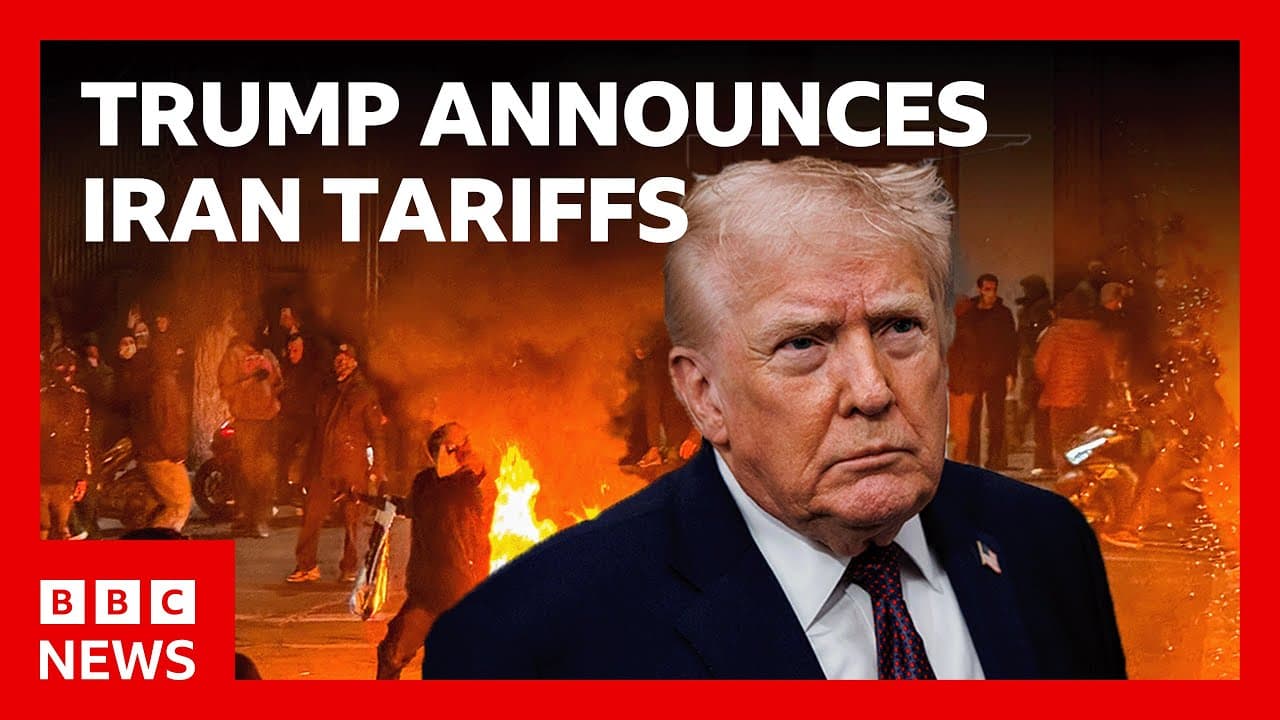
How will 25% tariffs on Iran affect US trade and crisis diplomacy
TL;DR
The US threatens 25 percent tariffs on any country doing business with Iran, aiming to pressure Tehran amid a deadly crackdown on protests. Washington shows openness to military or covert options, while Iran says it is ready for war but open to talks, and both sides assess diplomatic paths amid a volatile regional crisis.
Transcript
Donald Trump is expected to meet his top advisers today to explore how to respond to Iran's crackdown on anti-government protesters. President Trump has said countries doing business with Iran will face an immediate 25% tariff on business with the United States. He's repeatedly threatened to take action against Iran. One human rights group says it'... Read More
Key Insights
- Tariffs targeting Iran partners are being used as a tool to pressure Iran during protests, and this tactic is intended to influence Tehran’s calculations without immediate military engagement. The policy signals a willingness to use economic levers to shape regional behavior.
- The situation is described as unstable with a near internet blackout in Iran complicating information flow, while images and reports of deadly crackdowns press the urgency for a clear U.S. stance and potential escalation of diplomatic efforts.
- Iranian officials assert openness to negotiation but insist on resistance to concessions they view as compromising core state interests, highlighting a tension between war readiness and the desire to avoid conflict by negotiation.
- The conversation in Washington includes the possibility of military options, showcasing a broad spectrum of tools from sanctions to cyber capabilities, which could escalate or deter depending on implementation and international response.
- Public messaging emphasizes that the administration wants to be seen as acting, while privately exploring a range of options, underscoring the political pressure to demonstrate strategic decisiveness.
- Iran’s foreign minister signals willingness to engage in talks, yet the regime frames these talks as conditional and tied to perceived fairness, making any diplomacy contingent on internal and external signals.
- The reporting notes that protest tolls are high and continuing, with human rights groups counting fatalities and warning the numbers may be higher, underscoring the humanitarian stakes in the policy calculus.
- More videos from this channel:
- More from this channel: BBC News
Install to Summarize YouTube Videos and Get Transcripts
Explore YouTube Video Summarizer or Get YouTube Transcript Extractor
Questions & Answers
Q: What is the proposed tariff policy in relation to Iran and how is it intended to affect Tehran
The policy described involves a 25 percent tariff on any country doing business with Iran, a move designed to pressure Iran by raising the cost of supporting its economy and signaling strong US willingness to use economic tools to influence Tehran. The aim is to deter actions the US opposes and to push for changes in Iranian behavior, particularly in relation to the protests and regional tensions.
Q: What options are reportedly being considered by the US besides tariffs
The reporting indicates a range of options beyond tariffs, including long-range missile strikes, cyber tools, and psychological operations as potential means of pressuring Iran or shaping outcomes. This breadth shows that the administration is contemplating a mix of military, covert, and information-based tools to respond to the crisis and deter Iran from pursuing aggressive actions.
Q: How has Iran described its own stance in response to the crisis
Iranian officials have stated they are prepared for war but also open to negotiation, conveying a dual posture of readiness to defend interests and willingness to explore talks with Washington. This framing suggests Tehran seeks to deter external pressure while keeping channels for diplomacy open, depending on how negotiations unfold.
Q: What humanitarian aspect is highlighted in the coverage
The coverage notes that a deadly crackdown on anti-government protests has resulted in a high number of casualties, with human rights groups reporting hundreds killed, underscoring the severe humanitarian impact of the crisis and the urgency of international attention and potential intervention or mediation.
Q: What challenges are described regarding information coming out of Iran
Reporters describe a near total internet blackout and cut telephone lines, which complicates obtaining a full picture of events. Despite these barriers, people are using Starling terminals and other means to share images and messages, illustrating the difficulties in verifying events on the ground.
Q: What is the role of diplomacy according to the reporting
Diplomacy is presented as the first option for resolving tensions, with officials noting that messages from the Iranian regime differ from what is conveyed publicly. Both sides appear to be testing diplomatic avenues while keeping military options on the table, creating a precarious path toward de-escalation or further confrontation.
Q: What does the description say about public demonstrations and security response
The description emphasizes that demonstrations have faced a brutal crackdown by security forces, a tactic that historically subdued protests but risks further escalation. The open air morgues and reported killings illustrate the severity of the response and the potential for continued unrest, influencing domestic and international reactions.
Q: What are the signals regarding mediation efforts between Tehran and Washington
There are indications that mediation is being pursued through regional channels, with references to visits by Gulf state mediators and the possibility of new ideas being discussed, suggesting an interest in finding a diplomatic path while maintaining pressure through sanctions and potential talks with Tehran.
Summary & Key Takeaways
-
The video explains that the Trump administration is considering or has announced 25% tariffs on countries trading with Iran, signaling a broad economic lever in response to protests and Iranian policy. It also notes that Iran claims it is prepared for war but open to negotiations, creating a tense diplomacy landscape.
-
The report outlines the uncertainty around what actions the White House will take next and mentions possible military, cyber, and psychological options under consideration. It cites the international response and the domestic toll of the crackdown.
-
The piece emphasizes that both sides are weighing fair talks versus maximalist demands, with mediation attempts from regional players and questions about how sanctions and potential conflict could influence the broader Iran situation.
Read in Other Languages (beta)
Share This Summary 📚
Summarize YouTube Videos and Get Video Transcripts with 1-Click
Try YouTube Summary with ChatGPT & Claude or YouTube Transcript Generator
Explore More Summaries from BBC News 📚


Summarize YouTube Videos and Get Video Transcripts with 1-Click
Try YouTube Summary with ChatGPT & Claude or YouTube Transcript Generator