How Does the ISBN-10 Checksum Work?
TL;DR
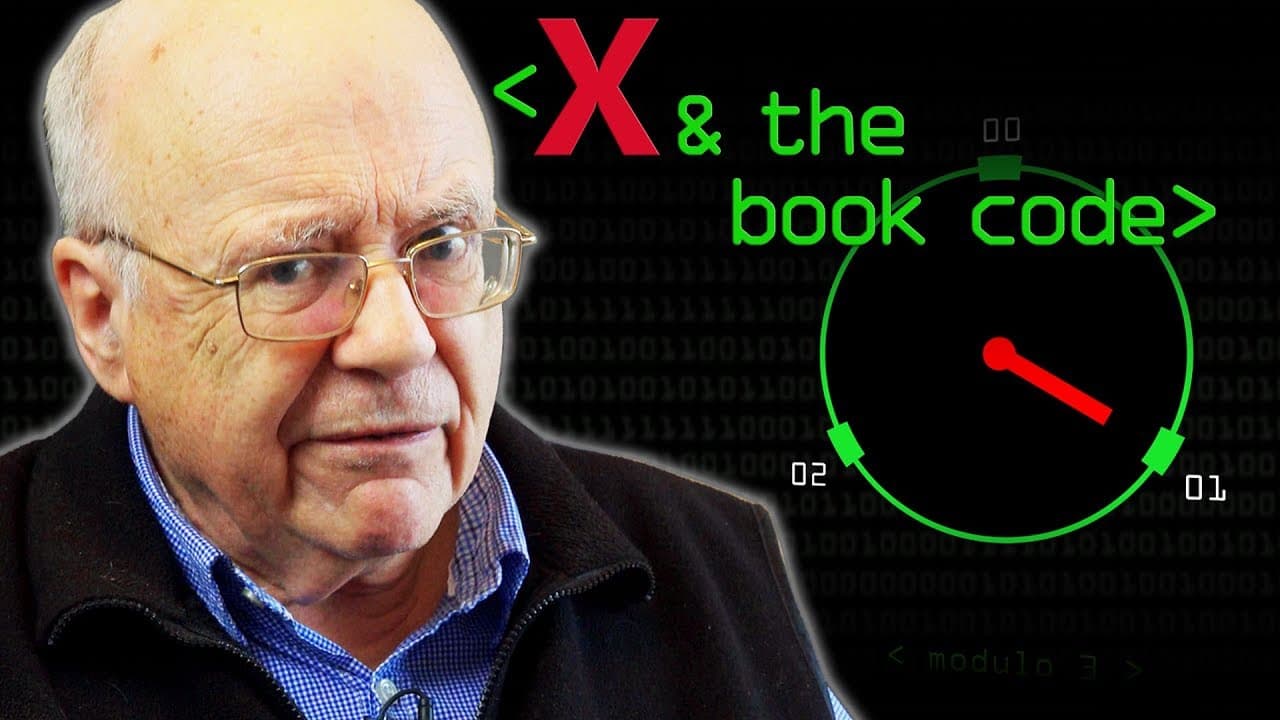
The ISBN-10 checksum employs a weighted calculation of the first nine digits to determine the last digit, ensuring accurate identification of books. This process illustrates how checksum technology operates within book codes and highlights the significance of remainders in coding theory.
Transcript
please when i say now ahead of time when you're watching this video please do not race off and say first the idea is you getting on yourself first and the answer to the question in the video is here we this is it okay so let's get there let's pose the question the reason for coming in on book codes is they're a particularly accessible and you know ... Read More
Key Insights
- 👨💻 Book codes, specifically ISBN-10, are a practical application of checksum technology.
- 🏋️ The calculation of the checksum digit involves weighted multiplication and addition.
- 👨💻 Remainders are important in coding theory, and inverses are necessary in finite fields like Zp.
- 📚 Book codes can be used for inventory management, purchasing, and library cataloging.
- ⚾ The ISBN-10 checksum algorithm is specific to base 10 calculation.
- 🤑 Inverses can be found by constructing multiplication tables and identifying the ones entries.
- #️⃣ Zp is a field if and only if p is a prime number.
Install to Summarize YouTube Videos and Get Transcripts
Explore YouTube Video Summarizer or Get YouTube Transcript Extractor
Questions & Answers
Q: What is the purpose of book codes like ISBN-10?
Book codes, like ISBN-10, provide a unique identifier for books and can be used for inventory management, purchasing, and library cataloging.
Q: How is the checksum digit of an ISBN-10 calculated?
The checksum digit is determined by performing a weighted multiplication and addition calculation on the first nine digits of the ISBN, and then finding the remainder when divided by 11.
Q: Can the ISBN-10 checksum digit calculation be applied to other bases of calculation?
No, the ISBN-10 checksum algorithm is specific to base 10 calculation. Other bases, such as base 11, will require a different algorithm.
Q: How are remainders and inverses important in coding theory?
Remainders play a crucial role in coding theory, and inverses are necessary for certain operations. In a finite field like Zp, where p is a prime number, there exists a multiplicative inverse for every non-zero element.
Summary & Key Takeaways
-
Book codes, such as ISBN-10, are a practical application of checksum technology.
-
ISBN-10 uses a weighted checksum of the previous digits to calculate the final digit.
-
This video demonstrates the process of calculating the checksum digit for a given ISBN.
Read in Other Languages (beta)
Share This Summary 📚
Summarize YouTube Videos and Get Video Transcripts with 1-Click
Try YouTube Summary with ChatGPT & Claude or YouTube Transcript Generator
Explore More Summaries from Computerphile 📚





Summarize YouTube Videos and Get Video Transcripts with 1-Click
Try YouTube Summary with ChatGPT & Claude or YouTube Transcript Generator