What Is Bit Blit and How Does It Work?
TL;DR
Bit Blit is an efficient algorithm that copies and combines blocks of memory to create graphical patterns on screens. Developed in the 1970s at Xerox PARC, it significantly enhances graphics operations and is implemented in hardware for faster performance, particularly in gaming and multimedia applications. Although less common today with advanced imaging techniques, its principles remain foundational in computer graphics.
Transcript
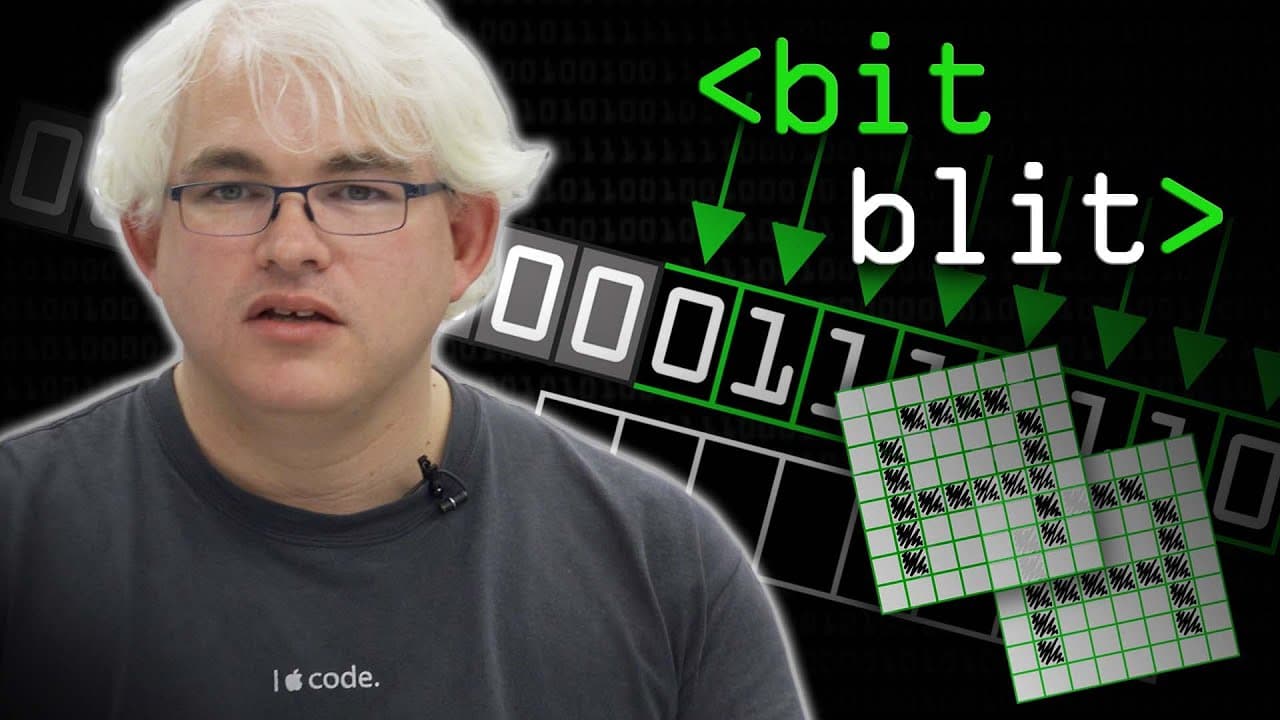
one of the things that's always fascinated me is bits or bit blitz or the blit operation and things that it's very referred to depending on which computer system you're using which operating system what time of day it is that sort of thing this was an algorithm that was developed at xerox park back in the 70s by diana mary and dan ingles and a few ... Read More
Key Insights
- 💨 The Bit Blit algorithm, developed in the 70s, is a simple yet powerful way to copy and combine blocks of memory for graphics operations.
- 💨 It can be implemented in software or hardware, with hardware implementations providing faster performance.
- 💻 The algorithm was widely used in computers of the 80s and 90s, such as the Commodore Amiga and Atari ST, and played a significant role in computer graphics.
- 😷 Bit Blit operations can be used to copy, overlay, mask, and manipulate graphical data in various ways, allowing for creative and interesting visual effects.
- 🐿️ While software implementations require CPU instructions and can be slower, hardware implementations like blitter chips optimize the process and perform the operations more efficiently.
- 🌥️ Bit Blit is particularly useful for tasks involving large regions of graphics data, such as copying windows or scrolling text, as it minimizes setup costs and performs the operations quickly.
- 🥌 With the advent of continuous tone images and more complex graphical systems, Bit Blit is less commonly used but still provides insights into the foundational principles of computer graphics.
Install to Summarize YouTube Videos and Get Transcripts
Explore YouTube Video Summarizer or Get YouTube Transcript Extractor
Questions & Answers
Q: What is the bit blit operation?
Bit blit is an algorithm that copies blocks of memory from one location to another. What makes it special is that it can combine two or three blocks in specific ways as it copies, and depending on how you combine them you get different patterns on screen. It is mainly used for graphics operations.
Q: What is bit blitting used for?
It is primarily used for computer graphics, copying and combining regions of pixel data to draw and manipulate images. It can also be used for other things: the Atari Falcon, for example, uses it to speed up hard disk access because the disk appears as a location in memory that the blitter can copy from very quickly.
Q: What is the Amiga blitter chip?
The blitter chip is simply a hardware implementation of the bit blit algorithm. It was famously listed as a feature of the Commodore Amiga and was one of the things claimed to make it so good, and it was later added to the Atari ST line. It is not a new invention from Commodore; it is the same standard algorithm Xerox PARC had been using, just built into hardware.
Q: Who invented the bit blit algorithm and when?
It was developed at Xerox PARC back in the 70s by Diana Merry and Dan Ingalls and a few others. From there it was used right through the 70s, 80s, and even into the 90s on computer graphics hardware across many different computers, and also implemented in software.
Q: Why is bit blit faster in hardware than in software?
A software implementation makes the CPU carry out the copy-and-combine work with its own instructions. A dedicated hardware implementation like a blitter chip performs the same operations more efficiently and offloads them from the CPU, so it can be faster. That speed advantage is why systems added blitter chips rather than relying only on software.
Q: How does a computer store a graphics display in memory for bit blit?
Each pixel is turned into a bit: a set (black) pixel is a 1 and an unset (white) pixel is a 0. Each row of pixels becomes a binary number stored in memory, and rows are stored one after another starting from the top of the screen. This bit-per-pixel layout is exactly what makes it easy to copy and combine regions with blit operations.
Q: Can bit blit combine blocks of memory, not just copy them?
Yes. Beyond a plain copy, blit can combine two or three blocks together depending on how it is implemented. By choosing how those blocks are combined you can create interesting patterns and effects on screen, which is why it is so useful for graphics.
Q: Why is bit blit so useful for graphics operations?
Because a graphics display is stored as bits in memory, changing the bits changes the pattern on screen. Bit blit lets you copy and combine large regions of that memory quickly, which suits tasks that move a lot of pixel data at once. Doing it in hardware makes those operations faster still.
Summary & Key Takeaways
-
The Bit Blit algorithm, also known as the blit operation, copies blocks of memory and combines them to create patterns on screen.
-
It was developed at Xerox Park in the 70s and used across various computer systems and operating systems.
-
The algorithm is mainly used for graphics operations but can also be used for other purposes, such as speeding up hard disk access.
Read in Other Languages (beta)
Share This Summary 📚
Summarize YouTube Videos and Get Video Transcripts with 1-Click
Try YouTube Summary with ChatGPT & Claude or YouTube Transcript Generator
Explore More Summaries from Computerphile 📚



Summarize YouTube Videos and Get Video Transcripts with 1-Click
Try YouTube Summary with ChatGPT & Claude or YouTube Transcript Generator