Everything You Need to Know About Planet Earth
TL;DR
Earth formed from remnants of dead stars, evolving from a hot hell to its current state with unique geological features and atmospheric layers.
Transcript
Planet Earth is the home of every lifeform, known to us, in the universe. Its age is about 1/3 of the age of the universe and, admitted, It is a thing of beauty. a slightly squashed fair with a heavy metal core, and a lighter surface crust, wrapped in a thin sliver of sweet air to breathe, with vast oceans, fertile plains, magnificent mountains,... Read More
Key Insights
- 🫢 Earth's formation involved accretion from a gas cloud, collisions with celestial bodies, and gradual cooling over billions of years.
- 🚵 Plate tectonics drive geological processes, creating mountains, trenches, and shaping landmasses.
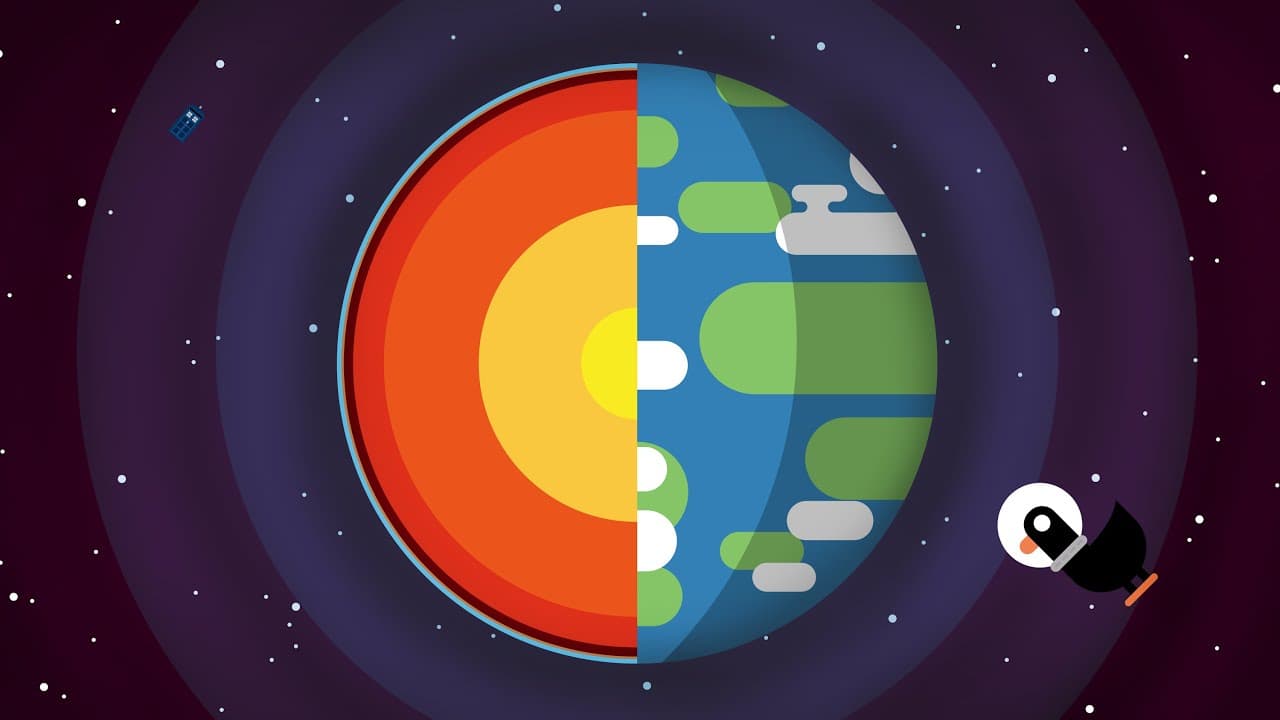
- 💯 The layered composition of Earth, including the crust, mantle, and core, impacts its magnetic field, internal dynamics, and seismic activity.
- 🛟 Earth's atmosphere, with layers like the troposphere and stratosphere, sustains life by regulating temperature, shielding from harmful radiation, and supporting weather patterns.
Install to Summarize YouTube Videos and Get Transcripts
Explore YouTube Video Summarizer or Get YouTube Transcript Extractor
Questions & Answers
Q: How did Earth form and evolve into its current state?
Earth originated from a gas cloud's remnants, leading to the formation of planets and the collision that created the Moon. Over billions of years, it transitioned from a hot, chaotic state to its current cool, diverse environment.
Q: What role do plate tectonics play in shaping Earth's surface?
Plate tectonics involve the movement and interaction of Earth's crustal plates, leading to the formation of mountains and ocean trenches. This process continuously shapes the planet's surface by shifting and reshaping landmasses.
Q: What is Earth's layered composition, and how does it impact its characteristics?
Earth consists of layers including the crust, mantle, outer core, and inner core. These layers vary in composition, temperature, and state of matter, influencing geological processes, magnetic field generation, and overall planetary structure.
Q: How do Earth's atmospheric layers contribute to maintaining life on the planet?
The atmosphere comprises layers like the troposphere, stratosphere, and thermosphere, regulating temperature, protecting from solar radiation, and sustaining weather patterns vital for life. These layers create a stable environment for diverse life forms to thrive.
Summary & Key Takeaways
-
Earth, 4.6 billion years old, arose from a gas cloud through a complex process of accretion and collisions.
-
The collision with a Mars-sized object formed the Moon and initiated Earth's transition to a cooler state.
-
Plate tectonics, Earth's composition, and its atmospheric layers play key roles in shaping the planet.
Read in Other Languages (beta)
Share This Summary 📚
Summarize YouTube Videos and Get Video Transcripts with 1-Click
Try YouTube Summary with ChatGPT & Claude or YouTube Transcript Generator
Explore More Summaries from Kurzgesagt – In a Nutshell 📚






Summarize YouTube Videos and Get Video Transcripts with 1-Click
Try YouTube Summary with ChatGPT & Claude or YouTube Transcript Generator