What Is the Infinite Game and How Do You Live With an Infinite Mindset? Simon Sinek Live Q&A Replay
TL;DR
An infinite mindset means trying to remain in the game and keep improving, rather than trying to win an activity with no finish line. Simon Sinek explains that finite thinking in business, careers, education, marriage, and governance predictably reduces trust, cooperation, and innovation. The discussion also connects resilience, worthy rivals, AI, and temporary success, giving readers practical reasons to examine how they define progress.
Transcript
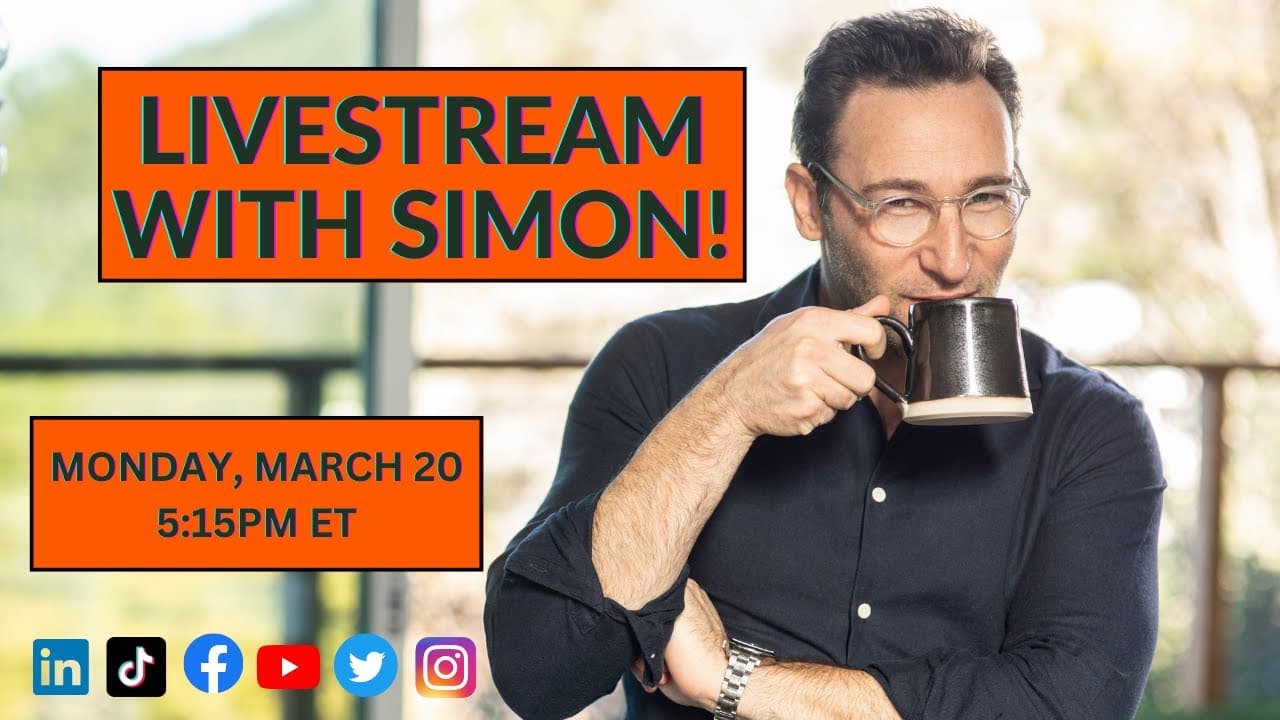
foreign okay looks like we are live everywhere so hello Instagram hello Tech talk hello everywhere else we're just going to give it a minute or two for uh to leave some time for people to join but thanks very much looking forward to taking live questions about the infinite mindset how to live an infinite mindset I'm here with my colleague Devin hi ... Read More
Key Insights
- The objective changes behavior: Finite players organize their actions around an agreed result, while infinite players organize around continued participation. This distinction matters because a strategy designed to produce a final winner becomes unsuitable when the activity never reaches a permanent conclusion. The mindset should therefore match the actual structure of the game being played.
- Unknown players prevent final control: An infinite game cannot be fully controlled because participants may be unknown and new players can join whenever they want. No existing organization can permanently settle the field or guarantee that today’s competitors will remain the only competitors. Continued relevance matters more than defeating a fixed list of opponents.
- Changeable rules demand adaptability: Participants in an infinite game may use different methods, and the rules can change. A player cannot depend on one stable formula for permanent victory because neither the environment nor every participant’s approach remains fixed. Staying in the game requires the capacity to adjust rather than treating one successful method as complete.
- Temporary measurements have limits: A school ranking, annual profit figure, or market-share result describes performance within a selected period and measurement. It does not establish permanent superiority in education, business, or another continuing activity. The ice-skating example reinforces this point, since a gold medalist who fell still won because the silver medalist fell twice.
- Business cannot be permanently won: When one company fails, the remaining companies receive no final business trophy and do not stop operating. New companies may enter, and several organizations offering similar products at comparable prices and quality can succeed simultaneously. Business rewards continued participation, not a conclusive victory over every present and future competitor.
- Finite language exposes confusion: Leaders reveal a mismatched mindset when they promise to be number one, the best, or the winner without naming agreed measurements, objectives, and time frames. Those phrases borrow the language of finite competition while describing an activity without a shared finish line. The confusion can shape damaging priorities and decisions.
- Trust declines before the game ends: Sinek identifies declining trust, cooperation, and innovation as predictable results of playing an infinite game with a finite mindset. A relentless effort to secure final victory in a continuing activity changes how people relate and work together. The organization may achieve a temporary result while weakening qualities needed for continued participation.
- Worthy rivals support improvement: Companies can treat competitors as rivals who reveal where they perform better, rather than as enemies who must be eliminated. Comparison can expose a specific opportunity to improve. This shifts attention from defeating another organization toward learning, adapting, and strengthening one’s own ability to continue.
- Resilience begins with temporariness: The rider story shows why immediate events cannot always be classified confidently as good or bad. A broken leg ends one career but later prevents the rider from entering battle. Recognizing that circumstances change supports patience during hardship and prevents success from producing excessive certainty or pride.
- Discomfort can contain lessons: Sinek says some of his greatest struggles are experiences he would never want to repeat, yet he is glad they happened. The value lies in what those struggles taught him. Learning to sit in discomfort supports an infinite mindset because a painful period is treated as temporary and potentially instructive.
- AI reflects its intended use: AI can serve an infinite mindset when it identifies errors and helps a system improve continuously without declaring the work finished. Like money, rank, or power, its effect depends on its application. Used to discover a formula for winning an activity without a finish line, AI can amplify finite thinking instead.
- Governance follows a finite election: An election has rules, measurements, winners, losers, and a defined ending, so it functions as a finite game. Governance continues after that contest and therefore requires a different mindset. An official who treats governing as a constant extension of the next campaign can produce poor governance by remaining focused on winning.
Install to Summarize YouTube Videos and Get Transcripts
Explore YouTube Video Summarizer or Get YouTube Transcript Extractor
Questions & Answers
Q: What is the infinite game according to Simon Sinek?
The infinite game is an activity with known and unknown players, changeable rules, and no final victory. New participants can enter whenever they want, and different players may use different approaches. The objective is to perpetuate the game and remain involved for as long as possible. Sinek identifies marriage, education, learning, careers, and business as infinite because nobody permanently wins them.
Q: What is the difference between a finite game and an infinite game?
A finite game has known players, fixed rules, an agreed objective, and a beginning, middle, and end. It produces an identifiable winner and loser, as football does. An infinite game can include unknown or newly arriving players, and its rules or methods can change. Because it has no permanent finish line, success means continuing to participate rather than securing final victory.
Q: Why is business considered an infinite game?
Business has no final contest after which one company is permanently declared the winner. If a company goes bankrupt, the remaining companies do not win business, they continue operating. New organizations can enter at any time, while several businesses with similar products, prices, and quality may succeed together. Treating business as infinite keeps attention on endurance and improvement instead of imaginary permanent victory.
Q: What happens when leaders use a finite mindset in an infinite game?
Sinek says trust, cooperation, and innovation predictably decline. Leaders create the mismatch when they pursue being number one, being the best, or beating competitors in an activity with no finish line. Those claims also lack a shared meaning when no agreed measurement, time frame, or objective exists. Temporary achievements are treated as final victories, even though the underlying activity continues.
Q: How can parents explain an infinite mindset to children?
Parents can use the Chinese story of the gifted horse rider and the monk. The rider’s talent first appears lucky, his broken leg appears unlucky, and that injury later appears lucky because it keeps him out of battle. The monk responds “we’ll see” because the meaning of each event changes as life continues. The story teaches that success and hardship are temporary, encouraging humility, patience, and openness to lessons from discomfort.
Q: How should companies think about competitors?
Companies should view competitors as worthy rivals from whom they can learn, not enemies whose defeat would end the game. A rival that performs one activity better can expose a concrete opportunity for improvement. This comparison helps an organization develop its own capabilities and continue participating. Trying to eliminate competitors instead mistakes temporary profit or market-share results for permanent business victory.
Q: How should AI be used with an infinite mindset?
AI should be used to identify errors and support continuing improvement. This application fits an infinite mindset because the system can keep getting better without claiming that the work is complete. Sinek’s existing explanation treats AI like money, rank, or power, whose value depends on how it is applied. Using it to find a winning formula for an activity with no finish line can intensify the damage caused by finite thinking.
Q: Why must elected officials change mindsets after an election?
An election is finite because it has agreed rules, defined measurements, a beginning, an end, winners, and losers. Governance continues after the election, so an official must move from winning the contest to sustaining the work. Acting as though every governing decision belongs to the next campaign preserves the finite focus after the finite game has ended. Sinek connects that persistent campaign mindset with poor governance.
Summary & Key Takeaways
-
Opening the live discussion: Simon Sinek begins the Infinite Game Live Q&A Replay with his colleague Devin, who collects questions from viewers joining across multiple platforms and countries. He frames the session around two connected subjects, how to understand the infinite mindset and how to live with it. Sinek also says he has been practicing this mindset in both his personal life and the way he builds his business, making the discussion about application rather than definition alone.
-
Defining a finite game: Sinek attributes the distinction between finite and infinite games to philosopher and theologian Dr. James Carse in the mid 1980s. A finite game has known players, fixed rules, an agreed objective, and a recognizable beginning, middle, and end. Football is his central example because participants understand the rules and outcome, and the existence of a winner necessarily means there is a loser. The structure makes victory identifiable and final within that game.
-
Recognizing infinite activities: Infinite games include known and unknown players, allow new participants to join, and permit rules or methods to change. Their objective is not final victory but continued participation for as long as possible. Sinek places marriage, education, learning, careers, and business in this category. A person may rank first during a limited school period, but nobody permanently wins education, learning, a career, a marriage, or business because each continues beyond a temporary measurement.
-
Seeing the leadership consequences: Trouble begins when leaders apply a finite mindset to an infinite activity. Claims about being number one, becoming the best, or beating the competition lack meaning unless participants share the same measurements, time frames, and objectives. Playing to win when no finish line exists produces predictable declines in trust, cooperation, and innovation. A bankrupt company does not make every surviving company the winner of business, because existing organizations continue and new participants may enter.
-
Teaching the mindset through change: To explain the idea to children, Sinek tells a Chinese story about a gifted young horse rider. The village calls his talent lucky, his career-ending broken leg unlucky, and his inability to enter battle lucky, while a monk repeatedly answers, “we’ll see.” The changing interpretation shows that good and bad conditions are temporary. Sinek connects this outlook with humility during success, patience during hardship, and the ability to discover lessons by sitting with discomfort.
Read in Other Languages (beta)
Share This Summary 📚
Summarize YouTube Videos and Get Video Transcripts with 1-Click
Try YouTube Summary with ChatGPT & Claude or YouTube Transcript Generator
Explore More Summaries from Simon Sinek 📚



Summarize YouTube Videos and Get Video Transcripts with 1-Click
Try YouTube Summary with ChatGPT & Claude or YouTube Transcript Generator