How to Preserve Your iPhone's Battery Health
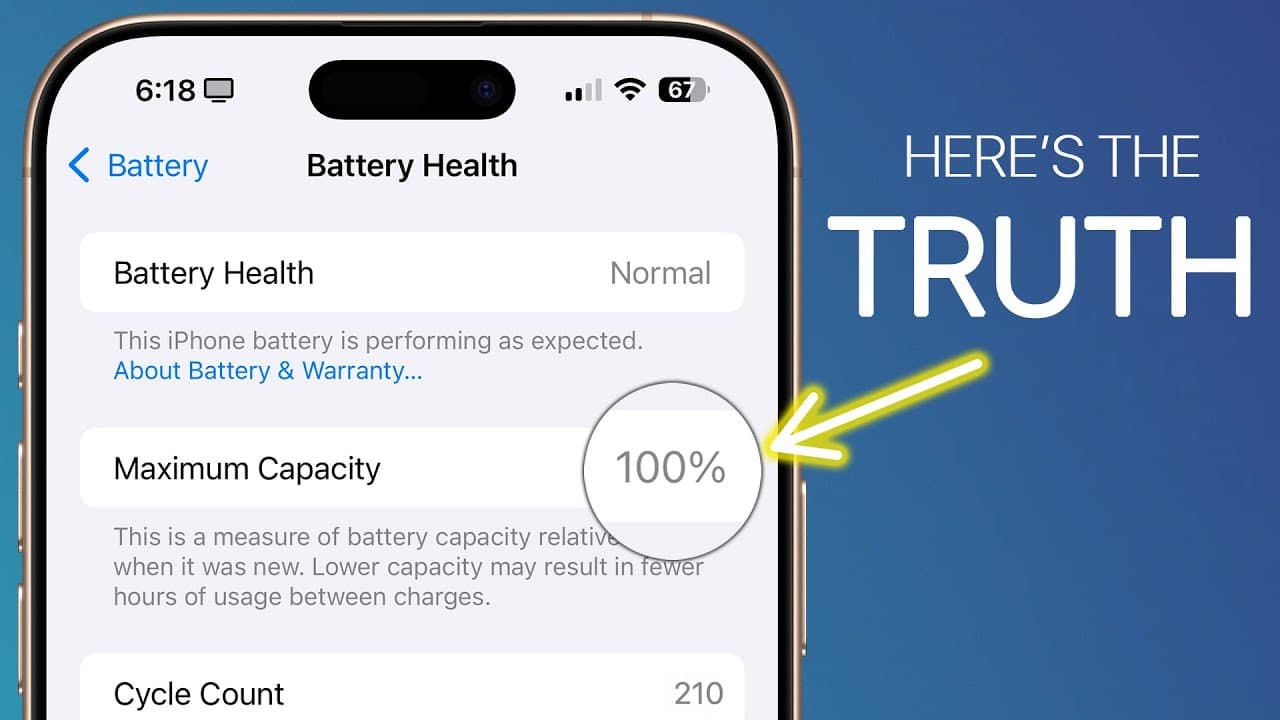
TL;DR
Heat management is the most important step for slowing iPhone battery degradation. Avoid intensive use while charging, direct sunlight, hot cars, frequent deep discharges, and poorly regulated chargers. Keep the battery roughly between 20% and 80%, or use a 90% charge limit for additional daily capacity, while accepting that chemical aging makes permanent 100% health unrealistic.
Transcript
Your iPhone's battery health is one of the most important yet also one of the most misunderstood parts of your device. Things like battery cycles, charge habits, and what actually causes your battery to degrade over time can get confusing very fast. So, in this video, I'm going to make it easier for you because I'm going to break down how the lithi... Read More
Key Insights
- Battery degradation is a chemical and physical process in which the electrolyte, anode, and cathode gradually wear down, while lithium ions become less effective or get stuck. The decline is permanent and occurs naturally over time, rather than being caused by an iOS update or planned obsolescence.
- A battery cycle is 100% of the battery’s capacity used and recharged in total, not necessarily one uninterrupted discharge from 100% to 0%. Using 40% on one day and 60% on another completes one cycle, while two separate 50% uses also equal one cycle.
- The iPhone 15 and newer display cycle count under Settings, Battery, and Battery Health. Their batteries are described as being designed to retain 80% of maximum capacity after 1,000 cycles, although actual degradation varies with heat, charging behavior, usage, and other conditions.
- Heat is the leading enemy of lithium-ion battery health because it accelerates electrolyte degradation, damages the anode and cathode, and can cause lithium ions to form crystals or become trapped. Repeated overheating creates permanent capacity loss that accumulates over months and years.
- Using an iPhone while it charges can increase battery stress because charging adds heat while active use draws power. Gaming and other intensive activities are especially problematic, so avoiding heavy use during charging can help reduce the temperature-related wear placed on the battery.
- Direct sunlight and hot cars can expose an iPhone to damaging temperatures. At a beach or another outdoor location, covering the phone with a blanket or storing it in a bag can keep it out of direct sun, especially when the device already feels too hot to handle comfortably.
- Keeping an iPhone between roughly 20% and 80% can reduce long-term battery stress. Occasional drops below 20% are not presented as disastrous, but repeatedly waiting until the battery reaches the red or yellow range creates a harmful pattern of deep discharge.
- A charging limit can prevent the battery from remaining fully charged unnecessarily. The presenter uses a 90% limit as a compromise between battery preservation and daily runtime. Users who charge to 100% should enable Optimized Battery Charging so completion beyond 80% is delayed until closer to use.
Install to Summarize YouTube Videos and Get Transcripts
Explore YouTube Video Summarizer or Get YouTube Transcript Extractor
Questions & Answers
Q: How can I keep my iPhone battery health high?
The most effective approach is to minimize heat and avoid keeping the battery near extreme charge levels as a regular habit. Do not perform intensive activities while charging, leave the phone in direct sunlight, or store it in a hot car. Keep the charge roughly between 20% and 80% when practical, set an 80% to 90% charging limit, and use reputable charging equipment.
Q: What causes iPhone battery health to decrease?
Battery health decreases because the lithium-ion battery’s internal materials gradually deteriorate. The electrolyte wears down, the anode and cathode begin to break down, and lithium ions can become trapped or form crystals. Heat accelerates all of these processes. Regular cycling and heavy daily use also contribute to wear, making some capacity loss unavoidable even when careful charging habits are followed.
Q: What counts as one iPhone battery cycle?
One cycle is completed after the iPhone uses a combined amount equal to 100% of its battery capacity. It does not require a single discharge from 100% to 0%. Using 40% today and 60% tomorrow equals one cycle. Likewise, using 50%, recharging, and then using another 50% also produces one complete cycle.
Q: How many cycles should an iPhone battery last?
The transcript states that batteries in the iPhone 15 and newer are designed to retain 80% of their maximum capacity after 1,000 cycles. That figure describes a design target rather than a promise that every battery will degrade identically. Heat exposure, charging patterns, screen time, and intensive use can influence how much capacity remains as the cycle count rises.
Q: Why is heat harmful to an iPhone battery?
Heat accelerates the chemical reactions inside a lithium-ion battery. It makes the ions move faster than intended, causes the electrolyte to degrade more quickly, and speeds up wear in the anode and cathode. Lithium ions may also form crystals or become stuck. This damage is permanent, which is why repeated overheating can noticeably reduce capacity over time.
Q: Should I use my iPhone while it is charging?
Light use is not described as catastrophic, but intensive use while charging should be avoided when possible. Charging produces heat, while gaming or another demanding activity simultaneously draws substantial power and can add more heat. This combination raises battery temperature and accelerates chemical wear. Letting the phone charge without heavy activity is therefore better for preserving long-term capacity.
Q: What iPhone charging limit should I choose?
A limit between 80% and 90% is recommended for users focused on long-term battery health. The presenter chooses 90% because it provides more usable battery during the day without always charging completely to 100%. If a 100% limit is necessary, Optimized Battery Charging should be enabled so the phone delays finishing the charge beyond 80% until closer to when it expects to be used.
Q: Is occasionally letting an iPhone fall below 20% harmful?
An occasional drop below 20% is not presented as a serious problem, even if it happens about once a week. The larger concern is making deep discharge a constant habit by repeatedly waiting until the battery enters the yellow or red range. Charging during the day when a charger is available can reduce that repeated low-charge stress without harming the battery.
Summary & Key Takeaways
-
Lithium-ion batteries power an iPhone by moving lithium ions between the anode and cathode through an electrolyte. Charging stores energy, while using the phone releases it. These components gradually crack, degrade, or become less effective, so declining maximum capacity is a natural result of chemistry and physics rather than an iOS update.
-
A battery cycle represents 100% of capacity used in total, even when that usage is divided across multiple partial discharges and recharges. For example, using 40% one day and 60% the next completes one cycle. The presented iPhone 16 Pro retained 97% capacity after eight months and 306 cycles.
-
Reducing heat and avoiding extreme charge levels can slow battery wear. The recommended habits include limiting intensive use while charging, protecting the phone from direct sunlight and hot cars, selecting reputable chargers, keeping charge between 20% and 80% when practical, enabling a charge limit, and reducing excessive daily screen time.
Read in Other Languages (beta)
Share This Summary 📚
Summarize YouTube Videos and Get Video Transcripts with 1-Click
Try YouTube Summary with ChatGPT & Claude or YouTube Transcript Generator
Explore More Summaries from Brandon Butch 📚






Summarize YouTube Videos and Get Video Transcripts with 1-Click
Try YouTube Summary with ChatGPT & Claude or YouTube Transcript Generator