How Do Smartphones Affect Our Ability to Focus?
TL;DR
Smartphones negatively impact our focus by constantly bombarding us with distractions like notifications and emails. This leads to increased cognitive load and stress, as our brains struggle to prioritize tasks. To improve focus, consider batching email checks and setting scheduled 'do not disturb' times on your phone.
Transcript
- Attention, much like your daily allowance of money is a limited resource and in any particular moment, you can only have that much of it. - We live in an age of constant distractions nine to five is out, 24/7 is in. With my smartphone in hand I bring my work with me everywhere but our devices make us less attentive. Having spent 10 years doing re... Read More
Key Insights
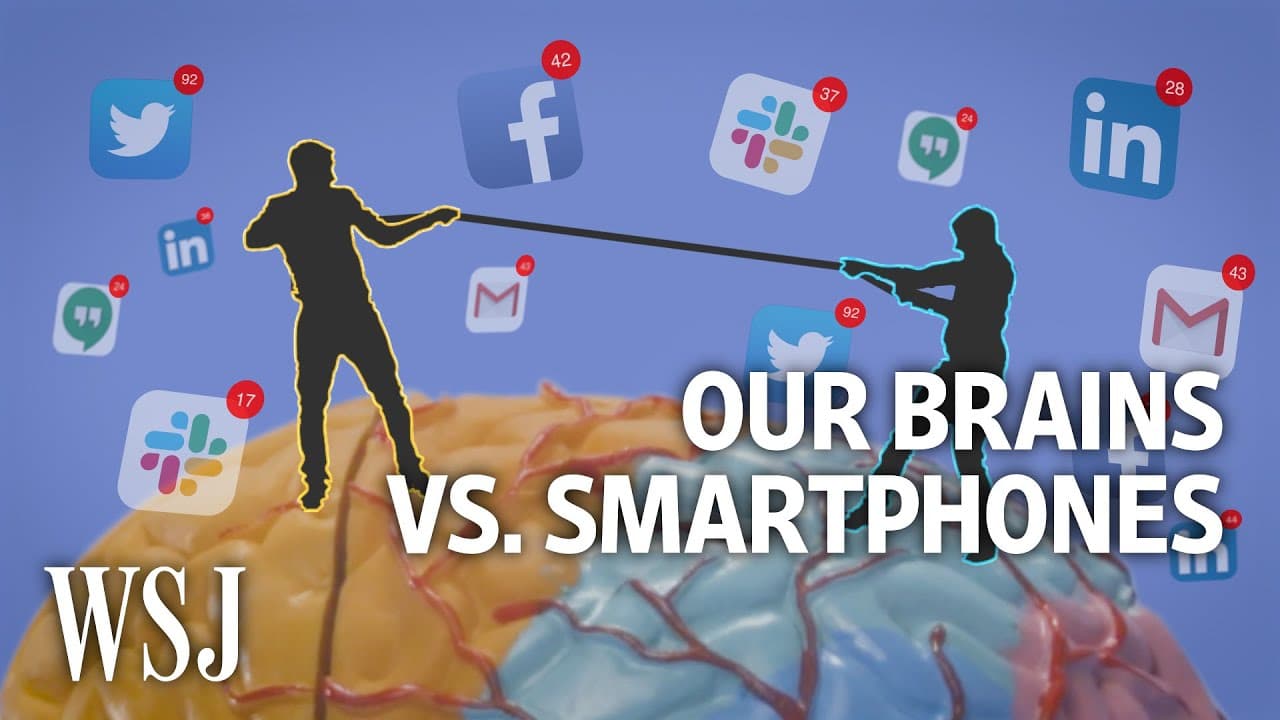
- 🧠 Distractions, such as notifications and switching tasks frequently, can impede focus and productivity by triggering a tug of war between the parietal cortex and frontal cortex of the brain.
- 💭 Even seemingly menial tasks, like managing emails, require cognitive effort and can lead to decision fatigue if done in excess.
- 😟 Checking emails frequently throughout the day is associated with feeling more stressed and overwhelmed, while batching emails three to five times a day leads to lower stress levels.
- 🌊 Notifications act as disturbances to our ability to focus, increasing cognitive load and making us more susceptible to new distractions.
- 📱 Switching attention due to notifications requires cognitive effort and can leave us feeling depleted at the end of the day.
- ⏳ Setting scheduled "do not disturb" times and keeping phones on silent can help mitigate the negative effects of constant notifications and reduce addiction to email and social media.
- 🌍 Overreliance on technology, such as relying on phones for navigation, may lead to reduced connection with the community and societal bonds.
- 💼 Casual conversations at work have been proven to enhance productivity, happiness, and a sense of connection to others.
Install to Summarize YouTube Videos and Get Transcripts
Explore YouTube Video Summarizer or Get YouTube Transcript Extractor
Questions & Answers
Q: How do distractions affect our ability to focus?
Distractions from our devices cause us to switch tasks frequently, preventing us from maintaining focus and productivity. The brain's parietal cortex responds to distractions, and if it becomes too active, it can overpower the frontal cortex that helps us maintain focus.
Q: Why are tasks like checking email stressful?
Tasks like checking email can be stressful because they require cognitive effort for each decision made, depleting our mental resources. When we have to make numerous micro decisions, it can leave us with limited mental power for other important tasks.
Q: What did the study on email checking reveal?
The study found that checking email more frequently throughout the day is associated with feeling more stressed and overwhelmed. On the other hand, batching emails three to five times a day reduces these negative emotions.
Q: How do notifications impact our productivity?
Notifications on our phones draw our attention away from the task at hand, requiring us to switch our attention and switch back, which depletes cognitive effort and leaves us more mentally exhausted at the end of the day.
Q: How can we mitigate distractions from our phones?
Some strategies to mitigate distractions include setting scheduled "do not disturb" times on our phones and keeping our phones on silent. Limiting the frequency of opening email and social media apps also helps reduce unnecessary reminders to check them constantly.
Summary & Key Takeaways
-
Our devices constantly bombard us with distractions, such as notifications and emails, causing us to switch tasks every three minutes.
-
The parietal cortex and frontal cortex in our brain are in a tug of war, with distractions winning if the parietal cortex becomes too active.
-
Checking email frequently throughout the day is associated with feeling more stressed and overwhelmed, while batching emails reduces these feelings.
Read in Other Languages (beta)
Share This Summary 📚
Summarize YouTube Videos and Get Video Transcripts with 1-Click
Try YouTube Summary with ChatGPT & Claude or YouTube Transcript Generator
Explore More Summaries from The Wall Street Journal 📚






Summarize YouTube Videos and Get Video Transcripts with 1-Click
Try YouTube Summary with ChatGPT & Claude or YouTube Transcript Generator