Is There Enough High-Quality Data for AGI?
TL;DR
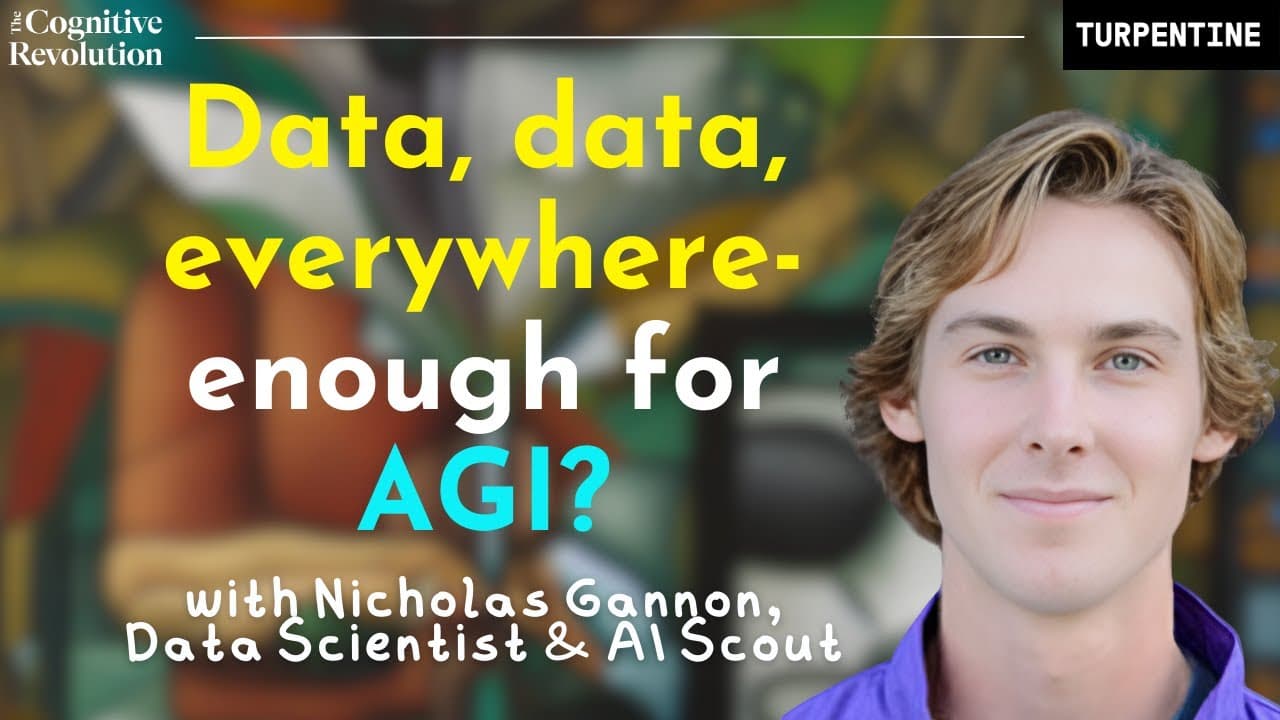
To achieve Artificial General Intelligence (AGI), we potentially need 100 trillion high-quality tokens. While there is a vast amount of data generated globally, only a tiny fraction is deemed high-quality enough for training AI models. The conversation explores various data sources and trends, emphasizing that improving data quality and algorithmic approaches could meet AGI requirements.
Transcript
oftentimes people's conceptions of AI progress seem to be more so derived from aggregating the sentiments of the crowd than any core groundup framework this is something often I do as well but we want to avoid reducing AI as a concept to an index that were sort of longer short bearish and bullish overpriced underpriced because doing so makes our mo... Read More
Key Insights
- AI models are increasingly approximating their data sets, with improvements in data quality and algorithmic architectures reducing the scale requirements for achieving human-level performance.
- The scaling hypothesis suggests that larger models with more data and compute can achieve greater intelligence, but the availability of high-quality data is a concern.
- GPT models have shown a trend of increasing data requirements, with GPT-5 potentially needing 100 trillion high-quality tokens.
- While there is an abundance of data generated globally, only a small fraction is considered high-quality enough for AI training.
- Different data modalities, such as text, images, and genomic data, offer varying scales of data availability, impacting their potential use in training AI models.
- Self-play and synthetic data generation could help overcome data limitations, but the quality of such data is crucial for effective AI training.
- The potential for large-scale training runs, possibly involving billions of dollars in compute, raises questions about the feasibility and necessity of such investments.
- The integration of multiple data modalities, such as language, vision, and DNA, could lead to more comprehensive AI models capable of understanding complex tasks.
Install to Summarize YouTube Videos and Get Transcripts
Explore YouTube Video Summarizer or Get YouTube Transcript Extractor
Questions & Answers
Q: What is the main challenge in achieving AGI according to the podcast?
The main challenge in achieving AGI, as discussed in the podcast, is the availability of high-quality data. While there is an abundance of data generated globally, only a small fraction is considered suitable for training AI models to reach human-level performance. The quality of data is crucial, as models rely on it to approximate intelligence accurately.
Q: How do GPT models relate to the scaling hypothesis of intelligence?
GPT models exemplify the scaling hypothesis of intelligence, which posits that larger models with more data and compute can achieve greater intelligence. The trend of increasing data requirements for successive GPT models, such as GPT-5 potentially needing 100 trillion tokens, reflects this hypothesis. However, the challenge lies in acquiring enough high-quality data to meet these growing demands.
Q: What are the key concerns regarding data quality for AI training?
Key concerns regarding data quality for AI training include the limited availability of high-quality data amidst the vast amounts generated globally. While there is a significant volume of data from various sources, such as email and social media, only a small fraction meets the standards required for effective AI training. This raises questions about the feasibility of scaling models to achieve AGI.
Q: What role does synthetic data generation play in AI training?
Synthetic data generation plays a potential role in overcoming data limitations for AI training. By generating data through self-play and other methods, AI models can create additional training material. However, the quality of synthetic data is crucial, as it must be high enough to effectively train models and approximate human-level intelligence. This approach could complement existing data sources.
Q: How does the podcast approach the economic implications of large-scale AI training?
The podcast discusses the economic implications of large-scale AI training by considering the potential for billion-dollar training runs. Such investments could require extensive compute resources and data, raising questions about the feasibility and necessity of these endeavors. The conversation explores whether these investments are justified in the pursuit of AGI and the potential returns on such scale.
Q: What insights are provided on the integration of multiple data modalities?
The integration of multiple data modalities, such as language, vision, and DNA, is highlighted as a way to create more comprehensive AI models. By combining different types of data, models can potentially achieve a deeper understanding of complex tasks. This approach could enhance the capabilities of AI, moving closer to AGI by leveraging diverse data sources and modalities.
Q: What are the potential benefits of AI models understanding DNA natively?
The potential benefits of AI models understanding DNA natively include the ability to analyze and interpret genetic information with unprecedented accuracy. This capability could lead to advancements in personalized medicine, genomics research, and biotechnology. By integrating DNA as a modality, AI models could provide insights into biological processes and contribute to scientific discoveries.
Q: How does the podcast address the feasibility of reaching 100 trillion tokens?
The podcast addresses the feasibility of reaching 100 trillion tokens by analyzing various datasets and their potential contributions to AI training. While the bull case suggests that ample data is available, the bear case raises concerns about the quality of data needed. The discussion explores synthetic data generation, self-play, and the integration of multiple modalities as potential solutions to meet the token target.
Summary & Key Takeaways
-
The podcast explores the data requirements for achieving Artificial General Intelligence (AGI), focusing on the current scaling trends for GPT models and the feasibility of reaching 100 trillion high-quality tokens. The discussion highlights the abundance of data but questions its quality.
-
Various datasets, including email, Twitter, YouTube, and genomic data, are analyzed to determine their potential contribution to AI training. The bull case suggests ample data availability, while the bear case highlights concerns about data quality.
-
The potential for synthetic data generation and self-play is discussed as a means to overcome data limitations. The conversation also touches on the economic and technological implications of large-scale AI training runs.
Read in Other Languages (beta)
Share This Summary 📚
Summarize YouTube Videos and Get Video Transcripts with 1-Click
Try YouTube Summary with ChatGPT & Claude or YouTube Transcript Generator
Explore More Summaries from Cognitive Revolution "How AI Changes Everything" 📚






Summarize YouTube Videos and Get Video Transcripts with 1-Click
Try YouTube Summary with ChatGPT & Claude or YouTube Transcript Generator