How DDL and DML shape DBMS schemas and data
TL;DR
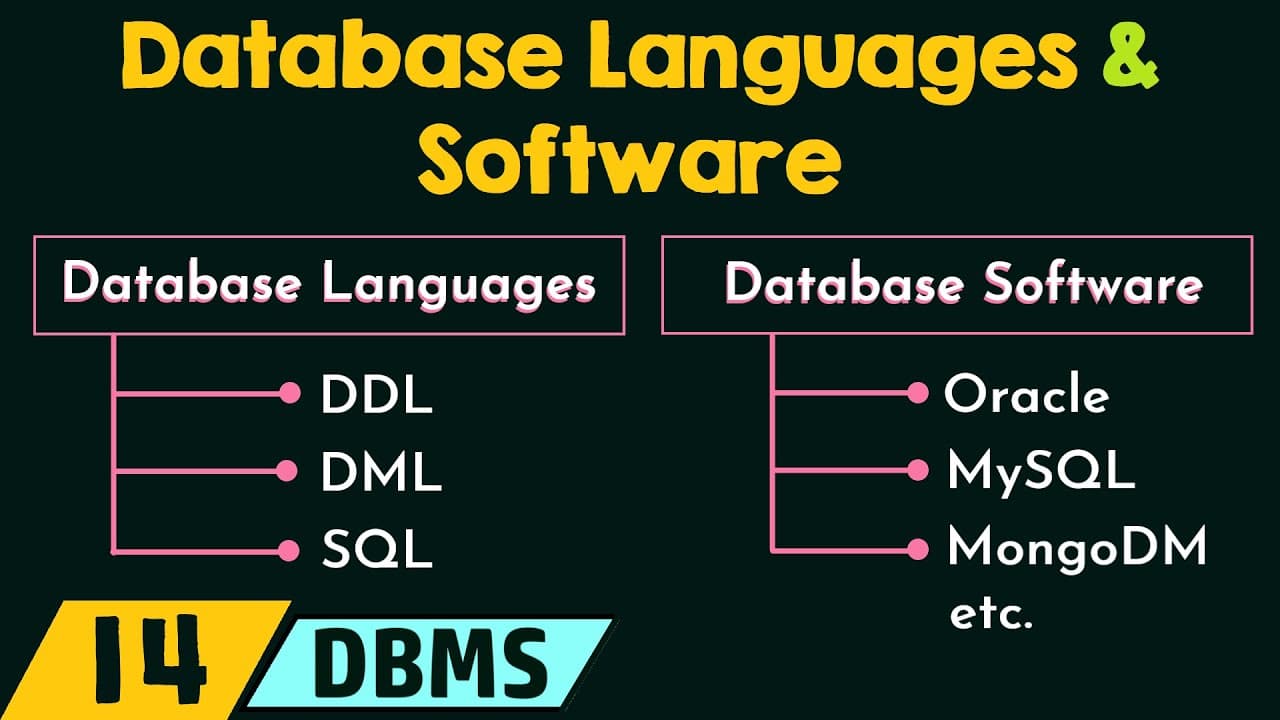
DDL handles the schema of a table, including creation, alteration, renaming, and deletion, while DML manages the actual data inside tables through retrieval, insertion, deletion, and updates. Both are bundled in a single database language package, and constraints like domain and referential integrity can be enforced within DDL. The data dictionary stores metadata about these operations.
Transcript
foreign we are going to focus on database languages and various database softwares at first let's see the various database languages talking about these database languages these are the exclusive languages that directly interact with the database so basically these database languages are of two types number one the data definition language ddl and ... Read More
Key Insights
- DDL stands for Data Definition Language and deals with the schema of the table.
- DML stands for Data Manipulation Language and deals with the data in the table.
- DDL includes creating, altering, renaming, dropping, and truncating tables.
- DML includes retrieving, inserting, deleting, and updating table data.
- Constraints can be defined in DDL to enforce data validity such as domain constraints.
- Referential integrity is a type of constraint where a value must exist in a related table.
- Authorization in the database controls read, insert, update, and delete privileges.
- The data dictionary stores metadata and is updated by DDL operations, and is accessible only to the database system.
Install to Summarize YouTube Videos and Get Transcripts
Explore YouTube Video Summarizer or Get YouTube Transcript Extractor
Questions & Answers
Q: How to define the schema with DDL in a DBMS?
DDL defines the database schema by a set of definitions and can specify constraints when creating the schema. It covers creating tables, altering them, renaming schemas, dropping tables, and truncating data. By using DDL statements you establish the structure that governs how data will be stored and how constraints apply to future data entries.
Q: What is the difference between DDL and DML in practical use?
DDL implements the schema side, controlling how data is organized, stored, and constrained, including table creation and modification. DML operates on the data itself, handling operations like retrieving, inserting, updating, and deleting records. In practice these two are bundled in one language package but serve distinct purposes in database management.
Q: What are domain constraints in DDL?
Domain constraints in DDL refer to data type restrictions and value-based rules applied to a column. For example, setting a column to numerics or enforcing that a balance column must be greater than zero. These constraints ensure that any data entered adheres to defined rules and maintain data validity within the table.
Q: What is referential integrity in DBMS terms?
Referential integrity is a constraint where a value inserted into one table must exist in another related table. It ensures relationships between tables remain consistent, so that referenced data is valid and present in the related table before considering the operation successful.
Q: What role does the data dictionary play in DBMS?
The data dictionary is a special system table that stores metadata about data definitions and other database objects. It records the outcomes of DDL commands, guides data access and management, and is typically accessible only to the database system rather than regular users.
Q: What does DML cover in terms of data operations?
DML covers manipulating the data within tables, including data retrieval (queries), inserting new records, updating existing ones, and deleting records. It focuses exclusively on the data, not the schema, and can be categorized into procedural and non-procedural types.
Q: How are procedures for data retrieval described in DML?
When data retrieval statements are written to obtain information from the database, those statements are referred to as queries. Queries in DML specify what data is needed and how to retrieve it, with procedural DML requiring detailed steps and non-procedural DML focusing on the desired result with less step-by-step specification.
Q: Which software examples are mentioned as part of DBMS offerings?
The transcript lists several DBMS software options such as Oracle, MySQL, IBM DB2, Microsoft SQL Server, PostgreSQL, and others like MongoDB, Redis, Teradata, Elasticsearch, Amazon RDS, Microsoft Access, SQLite, and more. These examples illustrate the variety of systems available to implement and run database languages and management tasks.
Summary & Key Takeaways
-
DDL defines and changes the database structure, serving as the blueprint for tables and schemas, and ensures constraints are applied to maintain consistency.
-
DML manipulates the data in tables, enabling queries, inserts, updates, and deletes, with procedural and non-procedural approaches discussed.
-
The data dictionary is a special system table that records metadata about all DDL operations and the database schema, guiding data management and access control.
Read in Other Languages (beta)
Share This Summary 📚
Summarize YouTube Videos and Get Video Transcripts with 1-Click
Try YouTube Summary with ChatGPT & Claude or YouTube Transcript Generator
Explore More Summaries from Neso Academy 📚




Summarize YouTube Videos and Get Video Transcripts with 1-Click
Try YouTube Summary with ChatGPT & Claude or YouTube Transcript Generator