Why Is Trump's Greenland Push Threatening NATO?
TL;DR
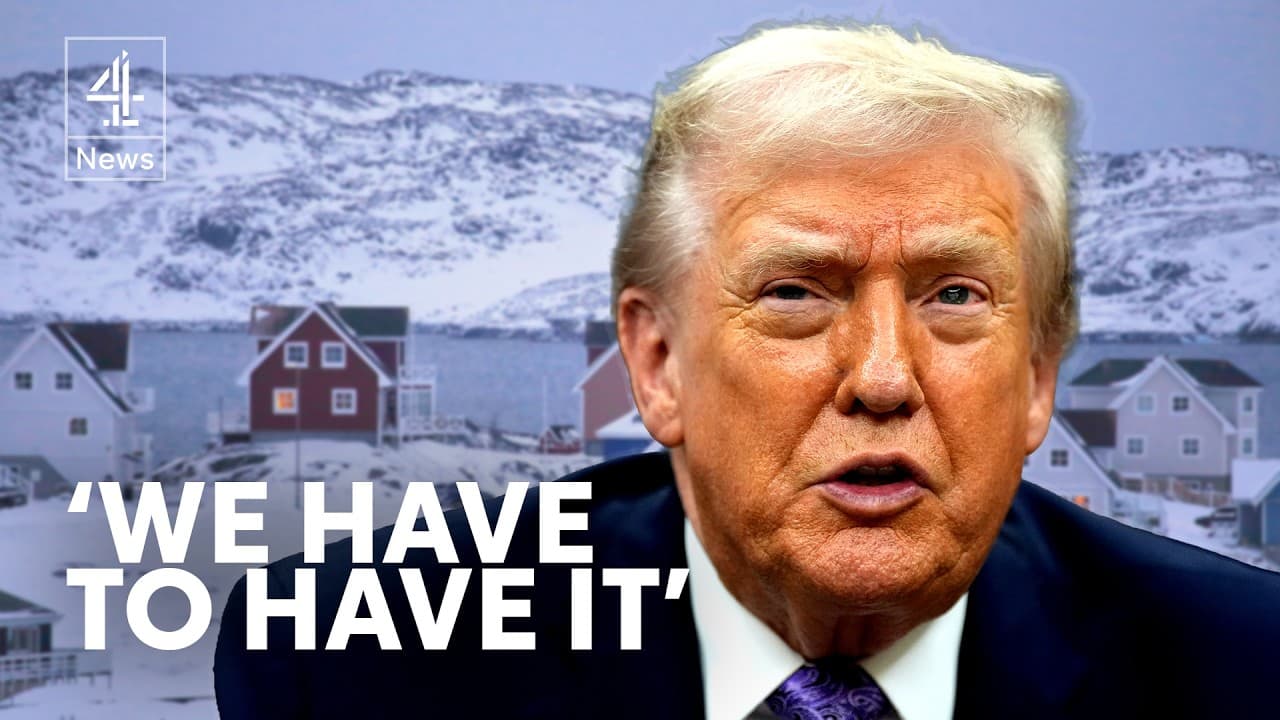
Trump says the United States must acquire Greenland and has threatened tariffs against allies that resist a deal. Former NATO Secretary General Anders Fogh Rasmussen argues that Greenland is not for sale, military seizure would end NATO, and Europe must respond with strength and unity because the dispute threatens the transatlantic alliance and the existing world order.
Transcript
President Trump is a real threat to world peace. >> It would once have been unthinkable that a former NATO secretary general would speak like this about a sitting US president. But in an interview with Channel 4 News and Folasm Musen did, >> the future of NATO is at stake and the world order as we know it is at stake. So it's a very serious situati... Read More
Key Insights
- Trump's stated position is that the United States must acquire Greenland because Denmark cannot adequately protect it. He questioned Denmark's title to the territory and predicted that European governments would not offer substantial resistance to his demand.
- Economic coercion is central to Trump's pressure campaign, according to the report. He threatened eight allies, including Denmark and the United Kingdom, with 10 percent tariffs in February, rising to 25 percent in June, unless they agree to a Greenland deal.
- Greenlandic opposition is publicly visible and supported by its political leadership. Protesters in the capital marched to the US consulate alongside Prime Minister Jens-Frederik Nielsen, demonstrating that conceding the territory to the United States is unacceptable to them.
- European diplomacy has relied on calm engagement and personal appeals to Trump. Private messages showed NATO Secretary General Mark Rutte seeking a way forward and French President Emmanuel Macron proposing dinner, while other European leaders argued that repeated red lines had already been crossed.
- Rasmussen's central legal and political argument is that Greenland cannot be purchased because it is not for sale. He said acquiring it through military action would amount to conquest and would bring NATO to an end.
- NATO's credibility depends on allies not attacking one another for territory. Rasmussen argued that collective security becomes incoherent if the alliance's major power threatens another member with military action intended to seize land.
- European strength and unity are Rasmussen's preferred response to Trump's pressure. He called for a stronger NATO presence in Greenland and a determined European Union response if the threatened tariffs are implemented.
- Transatlantic division would benefit Russia and China, according to Rasmussen. He said Trump's language resembles that of autocratic governments in Moscow and Beijing, which would welcome an erosion of the transatlantic community and the established international order.
Install to Summarize YouTube Videos and Get Transcripts
Explore YouTube Video Summarizer or Get YouTube Transcript Extractor
Questions & Answers
Q: Why does Trump say the United States needs Greenland?
Trump says the United States must acquire Greenland because Denmark cannot protect it. He also disputes the historical basis of Denmark's title, arguing that a boat visiting centuries ago does not establish ownership. His allies frame the Arctic as an area where China and Russia create modern security threats, although the report also notes China's rejection of that justification.
Q: What tariffs did Trump threaten over Greenland?
Trump threatened eight allies, including Denmark and the United Kingdom, with tariffs beginning at 10 percent in February and increasing to 25 percent in June if they do not make a deal with him on Greenland. The report presents these threats as unprecedented economic pressure by one NATO member against fellow allies and as a major test of European diplomacy.
Q: How have Greenlanders responded to Trump's acquisition push?
Greenlanders have responded with public opposition. Protesters in Greenland's capital marched to the US consulate, and Prime Minister Jens-Frederik Nielsen joined them. The report characterizes conceding to the United States as out of the question for the demonstrators. Rasmussen reinforced that position by stating that Greenland is not for sale and cannot simply be purchased.
Q: Why could a military seizure of Greenland end NATO?
Rasmussen argues that NATO cannot function as a collective security organization if its most powerful member attacks another ally to take territory. Because Greenland is not for sale, he says military conquest would be Trump's only means of acquiring it against local and Danish opposition. Such an attack would therefore destroy the fundamental trust and mutual security purpose of NATO.
Q: How are European leaders trying to manage the Greenland dispute?
European leaders have largely pursued calm engagement, personal outreach, and persuasion. NATO Secretary General Mark Rutte told Trump he was committed to finding a way forward, while Emmanuel Macron proposed discussing the issue over dinner in Paris. However, Belgium's prime minister and Rasmussen argued that appeasement has reached its limit because too many political red lines have been crossed.
Q: What response does Rasmussen recommend for Europe?
Rasmussen recommends that Europe answer Trump's pressure with force, strength, and unity, which he believes are the only things Trump respects. He supports a stronger NATO troop presence in Greenland and says the European Union should respond determinedly if the threatened tariffs are imposed. His position is that earlier diplomatic flattery may have helped, but is no longer sufficient.
Q: Why does Rasmussen call Trump a threat to world peace?
Rasmussen says Trump's behavior is shaking the world order and creating significant risks. He compares Trump's language with the language used by autocratic governments in Moscow and Beijing and argues that those governments would benefit from a divided transatlantic community. He therefore concludes that Trump's pressure on allies and unpredictable conduct make him a real threat to world peace.
Q: How does the Greenland dispute affect wider transatlantic relations?
The dispute places NATO, European unity, and longstanding diplomatic relationships under severe strain. Trump has threatened allies with tariffs, criticized the United Kingdom over the Chagos Islands agreement, and pressured France over Macron's refusal to join his Board of Peace. The report describes diplomatic whiplash as leaders gather in Davos and reconsider whether continued accommodation can preserve the alliance.
Summary & Key Takeaways
-
Trump intensified his campaign to acquire Greenland, claiming Denmark cannot protect the territory and questioning its title. He reinforced the demand with provocative imagery and threatened eight allies, including Denmark and the United Kingdom, with tariffs of 10 percent in February and 25 percent in June unless they support a deal.
-
European and Greenlandic resistance is growing. Protesters marched with Greenland Prime Minister Jens-Frederik Nielsen to the US consulate, while European leaders debated whether their strategy of calm engagement had reached its limit. Belgium's prime minister said Europe must choose between preserving its self-respect and accepting subordination to Washington.
-
Former NATO Secretary General Anders Fogh Rasmussen said Greenland is not for sale and could therefore be acquired against its will only through military conquest. He argued that an attack by NATO's leading member against another ally would destroy the alliance, benefit Moscow and Beijing, and threaten the established world order.
Read in Other Languages (beta)
Share This Summary 📚
Summarize YouTube Videos and Get Video Transcripts with 1-Click
Try YouTube Summary with ChatGPT & Claude or YouTube Transcript Generator
Explore More Summaries from Channel 4 News 📚




Summarize YouTube Videos and Get Video Transcripts with 1-Click
Try YouTube Summary with ChatGPT & Claude or YouTube Transcript Generator