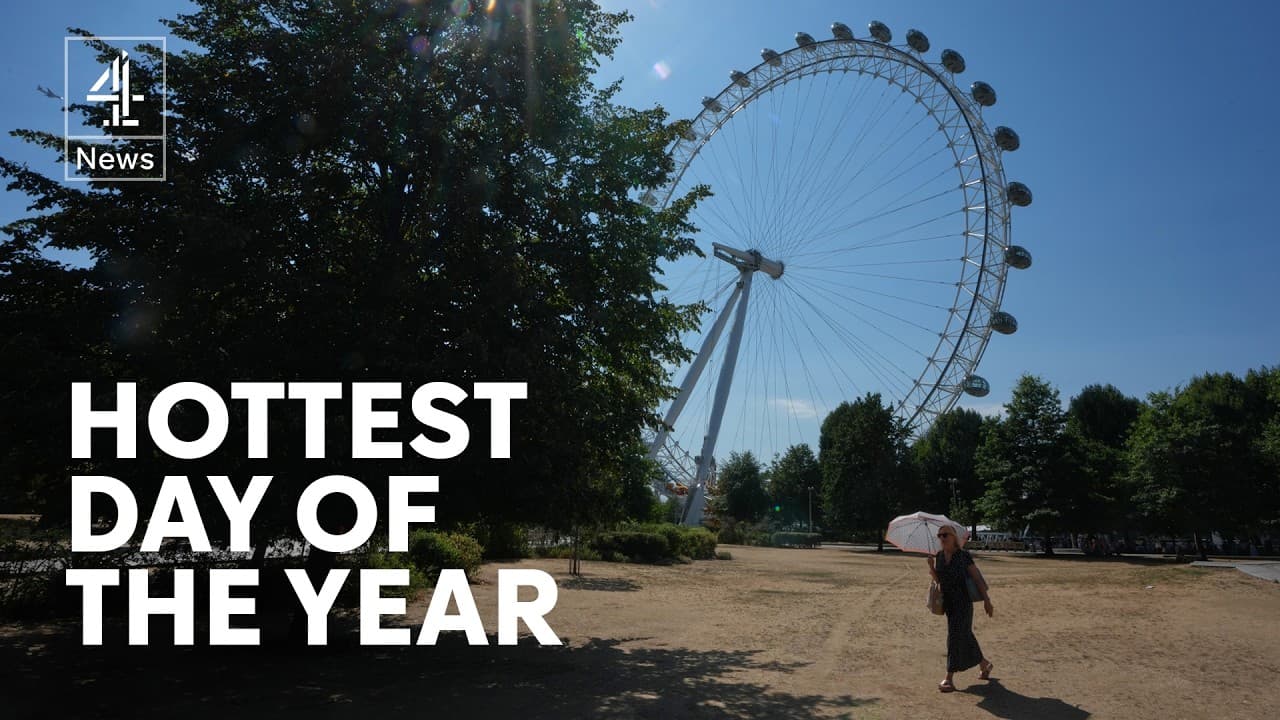
Why is the UK facing its fifth heatwave this year?
TL;DR
Record temperatures and severe dryness are driving wildfires and added strain on health services. The amber heat warning covered a large region, with 38.1C recorded, and hospitals and care homes report heat stress with some staff collapsing. Zoos and animal welfare are adapting, while discussions turn to policy and leadership on climate and energy.
Transcript
Matt, the last thing fire services need right now is another yet another heatwave, but that's what they've got and with it worse and seemingly the wildfires, they are flaring up on a daily basis across England and Wales. And if Dai pans across now, you'll see the smoke condensed here, possibly center the flames as well. You can hear the crackle of ... Read More
Key Insights
- Heatwaves are described as extreme weather events driven by record temperatures and dry conditions.
- Wildfires are a recurring risk during heatwaves, with multiple incidents requiring significant firefighting resources.
- Healthcare systems report strain and safety risks for staff due to high temperatures in hospitals and care homes.
- Extreme heat is impacting animals in zoos, necessitating changes in care and feeding.
- Drought affects a large portion of the population, including urban and rural areas, increasing water scarcity concerns.
- Policy discussions focus on leadership and climate strategy rather than only immediate firefighting actions.
- Public discourse connects heat to climate change and the need for a broader energy and environmental policy response.
- Media coverage highlights the role of fossil fuel pollution in intensifying heat and related impacts.
- More videos from this channel:
- More from this channel: Channel 4 News
Install to Summarize YouTube Videos and Get Transcripts
Explore YouTube Video Summarizer or Get YouTube Transcript Extractor
Questions & Answers
Q: What caused the fifth heatwave in the UK according to the report?
The report attributes the heatwave to extreme temperatures and dry conditions, described as amber extreme heat warnings by the Met Office, with 38.1C recorded on the hottest day of the year. It notes that heat and drought are driving wildfires, impacting hospitals, care homes, and animal welfare, while linking the event to broader climate change dynamics and fossil fuel pollution.
Q: How is the heatwave affecting fire services across England and Wales?
Fire services report a high number of wildfire incidents, with agencies deploying many appliances across multiple valleys to douse fires near homes and prevent spread. The intensity and frequency of fires during this period strain resources, leading to concerns about continued coverage and response capacity as the heat persists.
Q: What are the impacts on hospitals and care homes during the heatwave?
Hospitals and care homes report extreme heat making conditions difficult for patients and staff, with some nursing staff collapsing on shift. The Royal College of Nursing describes working conditions as inhumane, highlighting the health risks faced by frontline workers and the need for protective measures and policy responses to reduce heat stress.
Q: How are animals being affected, according to the video?
Zoos are adjusting to the heat by managing animal welfare, including changes to feeding and care routines, as heat stresses herbivores and other animals. Wildlife parks are implementing heat-related adaptation strategies to keep animals safe and comfortable during the extreme temperatures.
Q: What does the video say about drought conditions?
The report notes widespread drought with 45 million people in England living in drought areas, reflecting dry conditions that compound heat effects on water supply, wildlife, and agriculture. This drought context intensifies concerns about sustainability and long-term resilience in the face of ongoing heat events.
Q: What political or policy angles are discussed in relation to the heatwave?
The program discusses leadership and policy responses, including potential actions beyond immediate firefighting, such as climate policy and energy decisions in the North Sea. It highlights the need for a united and pragmatic approach to addressing climate change and the political debate surrounding net zero and fossil fuel licensing.
Q: What role does climate change play in this event, according to the experts?
Experts in the discussion describe climate change as a systemic driver that makes extreme heat more likely and persistent. They warn that temperatures will continue to rise as long as greenhouse gases are emitted, emphasizing the need for sustained climate action, adaptation, and policy coherence to manage increasing heat risk.
Q: How is public discourse framing this heatwave in terms of future risk?
Public discourse frames the heatwave as a wake-up call about climate risk and the need for proactive measures. The discussion suggests that next years may bring even hotter conditions if policy and energy choices do not change, emphasizing a longer-term horizon for resilience and climate strategy rather than short-term firefighting fixes.
Summary & Key Takeaways
-
The day featured an amber Met Office heat warning across central England and a 38.1C high, marking the hottest day so far this year.
-
Wildfires surged across England and Wales, stretching fire services and threatening homes in several valleys.
-
Nursing staff and hospital workers faced extreme heat, with reports of people collapsing and calls for government action on climate and energy policy.
Read in Other Languages (beta)
Share This Summary 📚
Summarize YouTube Videos and Get Video Transcripts with 1-Click
Try YouTube Summary with ChatGPT & Claude or YouTube Transcript Generator
Explore More Summaries from Channel 4 News 📚




Summarize YouTube Videos and Get Video Transcripts with 1-Click
Try YouTube Summary with ChatGPT & Claude or YouTube Transcript Generator