How Did the MOD Afghan Data Breach Unfold?
TL;DR
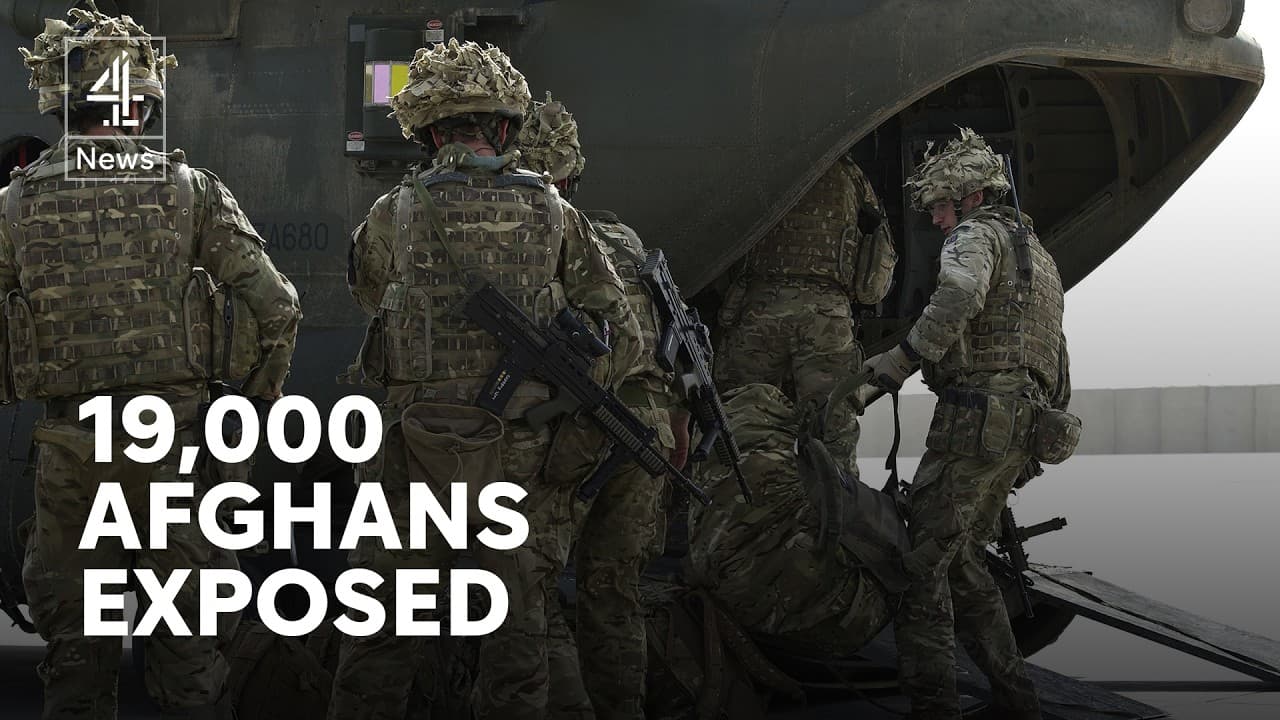
The MOD accidentally exposed personal details of Afghan relocation applicants, potentially increasing the danger facing people associated with UK forces. The breach remained undiscovered for 18 months, prompted a secret relocation route protected by a super injunction, and is expected to cost about £850 million, while officials and Afghan representatives continue to dispute whether affected people remain at heightened risk.
Transcript
Some mistakes can cost money. Some mistakes can cost lives. Some have the potential to cost both. Four years ago, Afghans were desperate enough to cling to the bottom of airplanes. What they were fleeing a return of the Taliban, the abandonment by international forces. Today it was revealed that some wishing to flee, some who had helped UK forces h... Read More
Key Insights
- The breach exposed the personal details of nearly 19,000 Afghans who had applied to relocate to the UK after working with or supporting British forces. The information was released accidentally by British defense personnel and remained undiscovered for 18 months.
- The government's initial response was a super injunction that prevented media organizations and parliamentarians from publicly discussing the breach. Officials argued that secrecy was necessary because disclosure could increase the danger facing people whose identities and relocation applications had been exposed.
- The secret Afghan relocation route was created specifically in response to the data breach. About 6,900 people are expected to be resettled through that route, including people who would not otherwise have qualified to move to the UK.
- The relocation response is expected to cost about £850 million in total. The Armed Forces Minister said £400 million had already been spent and approximately the same amount remained necessary to honor invitations previously issued by the British government.
- The revised government assessment is that possession of the leaked dataset is unlikely to substantially change an affected person's existing exposure. Officials cited the information already available to the Taliban, the elapsed time, and the regime's reported focus on current threats.
- The continuing safety dispute centers on whether existing Taliban access to Afghan government records makes the additional leak materially less dangerous. Government reviewers see limited added exposure, while lawyers representing affected applicants say their clients remain frightened and believe their lives are threatened.
- The practical response of affected Afghans includes moving between locations and changing phone numbers. Lawyers said these actions reflect fears of being identified by the Taliban or its sympathizers because applicants may be regarded as enemies associated with former Afghan or international forces.
- The government's stated obligation is to honor relocation invitations already issued, even after closing the secret route. Ministers also apologized for the breach, accepted that it should never have happened, and said such expenditure and policy decisions should receive parliamentary and public scrutiny.
Install to Summarize YouTube Videos and Get Transcripts
Explore YouTube Video Summarizer or Get YouTube Transcript Extractor
Questions & Answers
Q: What information was exposed in the MOD Afghan data breach?
The breach exposed personal details belonging to nearly 19,000 Afghans who had applied to move to the UK through the Afghan relocations and assistance policy. Many applicants had worked with British forces or the wider NATO mission. Their association with foreign forces meant that disclosure could identify them as opponents or enemies of the Taliban and potentially place them at risk.
Q: Why did the government create a secret Afghan relocation route?
The secret relocation route was established because the previous government assessed that inclusion in the leaked dataset increased the danger facing affected applicants. It was designed to bring people considered at risk to the UK while keeping the breach and response confidential. About 6,900 individuals are expected to be resettled through the route when the government's existing commitments are completed.
Q: Why was a super injunction imposed after the data breach?
The government sought a super injunction after discovering the leak because officials believed public disclosure could heighten the threat to affected Afghans. The order prevented media organizations and parliamentarians from discussing the incident openly. It also concealed the existence of the associated relocation route, limiting public and parliamentary scrutiny of both the policy and its substantial cost.
Q: Why was the super injunction eventually lifted?
The super injunction was lifted after the government commissioned an independent review and revised its assessment of the danger associated with the dataset. The review considered the amount of information already available to the Taliban, the time elapsed since the incident, and the regime's reported behavior. The government presented its changed position to the High Court, which then lifted the restriction.
Q: How much is the secret Afghan relocation scheme expected to cost?
The Armed Forces Minister said the total cost would be about £850 million. He stated that £400 million had already been spent supporting people relocated because of the breach and that approximately the same amount would be needed to complete existing obligations. The government said it would honor invitations already issued because those recipients had received a formal promise of relocation.
Q: Does the UK government believe affected Afghans remain at heightened risk?
The government's revised assessment is that acquiring the leaked dataset is unlikely to substantially change an individual's existing exposure. Officials argued that the Taliban already possesses extensive records and appears focused on people considered current threats to its regime. However, ministers acknowledged that Afghanistan remains dangerous and that the original data breach was serious and unacceptable.
Q: Why do lawyers and Afghan representatives dispute the government's risk assessment?
Lawyers representing affected applicants said their clients remain frightened and believe their lives are at risk. Peymana Assad argued that Afghans associated with the UK mission, including former security personnel and women, have faced killing, torture, disappearance, and retaliation. She maintained that limited reporting in Western media does not demonstrate that the danger has subsided.
Q: What will happen to Afghans who already received relocation invitations?
The government has closed the secret relocation route but says it will honor invitations already issued under the scheme. Ministers described this as fulfilling a British government promise, even though the program carries a substantial financial cost. The wider objective is to complete commitments to eligible Afghans who served alongside UK forces and conclude the relocation process by 2029.
Summary & Key Takeaways
-
A British defense official accidentally released personal information belonging to nearly 19,000 Afghan relocation applicants. The breach occurred in February 2022 but was not discovered until 18 months later. Because applicants might face retaliation under Taliban rule, the government sought a super injunction and created a secret route for relocating affected people.
-
The government commissioned an independent review after ministers inherited the secret relocation route and restrictions on public discussion. The review concluded that the leaked dataset was unlikely to substantially change applicants' existing exposure, partly because the Taliban already had access to extensive information. The High Court subsequently lifted the super injunction.
-
The secret route is expected to relocate about 6,900 people and cost roughly £850 million in total. Ministers have closed the scheme to new cases but said existing invitations will be honored. Lawyers and Labour councillor Peymana Assad dispute the revised risk assessment, arguing that affected Afghans still face serious danger.
Read in Other Languages (beta)
Share This Summary 📚
Summarize YouTube Videos and Get Video Transcripts with 1-Click
Try YouTube Summary with ChatGPT & Claude or YouTube Transcript Generator
Explore More Summaries from Channel 4 News 📚





Summarize YouTube Videos and Get Video Transcripts with 1-Click
Try YouTube Summary with ChatGPT & Claude or YouTube Transcript Generator