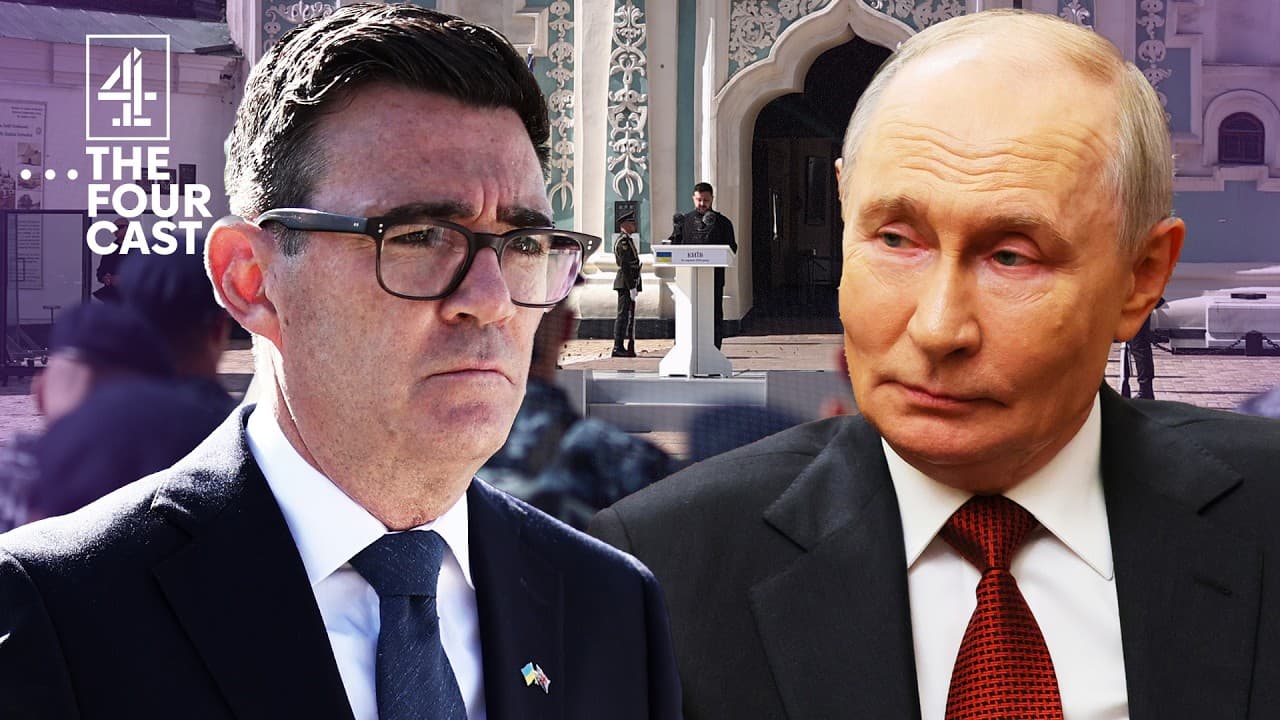
How can Britain help Ukraine build long-range missiles?
TL;DR
Britain backs a deal to let Ukraine produce its own long-range missiles, signaling a deeper commitment to arming Ukraine. The discussion highlights gaps in Western support, the need for interceptors like Patriot missiles, and the challenge of winter battles as Russia steps up strikes.
Transcript
Europe always seems to be behind the curve, never quite catching up with what is necessary militarily. >> Russia sees itself not just as being at war with Ukraine, but really at war with what it calls the collective west, which means the entire democratic world. >> Is the United States seen as any kind of viable broker? It >> it seems the Americans... Read More
Key Insights
- Ukraine is pursuing a policy shift toward enabling Ukraine to manufacture long-range missiles.
- The blueprints for missiles are seen as a potential capability gain for Ukraine, contingent on factory development.
- British political signaling is intended to reassure Ukraine and deter Kremlin pressure.
- Russia remains focused on intensifying missile and drone warfare to pressure civilian populations.
- Patriot interceptor missiles are identified as a critical gap in Ukraine’s defense against ballistic threats.
- Winter battles are expected to amplify civilian harm unless effective air defense improves.
- Western support is portrayed as variable, with US involvement fluctuating and other allies stepping up incrementally.
- The broader strategic landscape involves Europe, the US, and allied partners determining how far to push arms and sanctions against Russia.
- More videos from this channel:
- More from this channel: Channel 4 News
Install to Summarize YouTube Videos and Get Transcripts
Explore YouTube Video Summarizer or Get YouTube Transcript Extractor
Questions & Answers
Q: A real search query question about the video (e.g. 'How to...', 'What is...', 'Why does...', 'When should...'). Question 1
Britain is backing a deal that could allow Ukraine to produce its own long-range missiles, but the move requires establishing a local factory and securing materials. The discussion explains that this would signal a deeper, steadier commitment from Britain and allies, while also highlighting the risks tied to escalating an arms production capability during ongoing conflict and the potential for retaliation from Russia. The answer considers both strategic signaling and practical hurdles, including industrial capability and political support from partners. The outcome depends on how quickly the production line can be built and how the international community manages escalation.
Q: Question 2
What role do interceptors like Patriot missiles play in Ukraine’s defense, and why is there pressure to obtain more of them? Interceptors are cited as a critical missing piece to shoot down ballistic missiles, protecting cities and civilians during winter. The discussion emphasizes that even if other weapons arrive, without interceptors, Ukraine remains vulnerable to high-speed missiles. The answer outlines the strategic urgency and the political complexity of sourcing and deploying such defense systems from allies.
Q: Question 3
How does the war context affect Britain and Europe in terms of long term military support and political will? The program notes that while Western backing has been steady, it can be uneven as administrations change and public opinion shifts. The answer explains the balance between maintaining support, managing escalation, and ensuring that arms deliveries do not provoke disproportionate responses from Russia. It also touches on the idea of continuity of policy despite leadership changes.
Q: Question 4
What are the potential risks of Ukraine producing its own missiles in terms of international law and regional stability? The discussion implies that domestic production could alter the strategic balance and raise questions about control, verification, and escalation. The answer addresses that such a move would require robust oversight, international agreements, and careful diplomacy to prevent wider conflict while enhancing Ukraine’s defenses. It also notes the importance of avoiding unintended consequences.
Q: Question 5
Why is winter described as a significant factor in the conflict, and how does it influence military and civilian outcomes? The transcript highlights that winter could worsen living conditions and increase civilian casualties amid heavy bombardment, particularly if air defenses are insufficient. The answer elaborates that cold, power outages, and supply constraints compound the humanitarian crisis, driving urgency for defense upgrades and international relief efforts.
Q: Question 6
What is the broader strategic implication of Britain reinforcing Ukraine through missile blueprints for Western alliances? The answer explains that this move signals a durable commitment that could shape NATO and European security dynamics, impacting defense planning, industrial collaboration, and deterrence. It explores how allies might recalibrate risk, sanctions, and arms assistance in response to evolving threats from Russia.
Q: Question 7
How do drone capabilities intersect with missile strategies in the Ukraine war, according to the discussion? The program notes Ukraine’s strength in drones and counter drone tech alongside new missile capabilities. The answer discusses how drones complement missiles by targeting fuel depots, command centers, or logistics, potentially complicating Russian defense planning and illustrating a multi-domain approach to warfare.
Q: Question 8
What uncertainties remain about the timeline for Ukrainian missile production and the possible responses from Russia? The answer covers that while blueprints and intent exist, factories, supply chains, and political decisions will determine the pace. It also mentions Russian promises to destroy potential Ukrainian production and the broader risk management required by all sides as winter approaches.
Summary & Key Takeaways
-
Britain endorses a plan that could enable Ukraine to manufacture its own long-range missiles, illustrating a strategic shift in support. The episode stresses that while aid is increasing, crucial equipment like Patriot interceptors remains scarce and contested. The conversation weighs geopolitical risks and humanitarian consequences as winter nears.
-
The conversation notes that European countries may need to do more to counter ballistic threats if US support wanes, and that Russia continues intense bombing campaigns. It also emphasizes Ukraine’s growing drone capability and the debate over turning points in the war.
-
The episode frames Britain as a steadfast ally while acknowledging that Western patience and policy responses evolve with the war’s pace. It concludes that persistent aid, battlefield readiness, and diplomatic pressure will shape outcomes in the coming months.
Read in Other Languages (beta)
Share This Summary 📚
Summarize YouTube Videos and Get Video Transcripts with 1-Click
Try YouTube Summary with ChatGPT & Claude or YouTube Transcript Generator
Explore More Summaries from Channel 4 News 📚





Summarize YouTube Videos and Get Video Transcripts with 1-Click
Try YouTube Summary with ChatGPT & Claude or YouTube Transcript Generator