What Are the Key Themes in Romeo and Juliet?
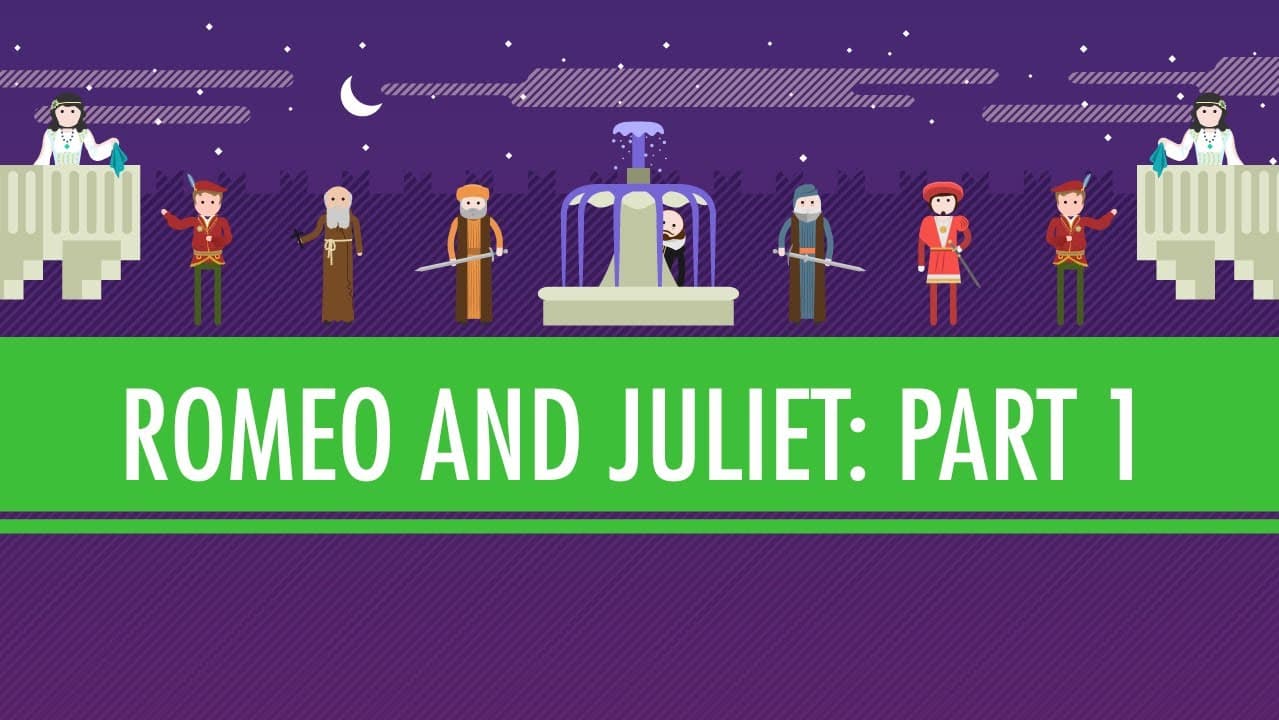
TL;DR
Key themes in 'Romeo and Juliet' include the complexities of love, duty, and social expectations. Shakespeare adapted an earlier story, infusing it with empathy for the characters and depicting the tragedy of young love amid familial conflicts. The play uses iambic pentameter to reflect natural speech and is set in Italy to explore controversial topics safely, engaging audiences through lively performances.
Transcript
Hi, I'm John Green, this is Crash Course English Literature and THIS is Romeo and Juliet, written in 1595 or 1596 and often called the greatest love story of all time. Which, when you think about it, is a very strange thing to say about a play that features, like, one off-stage sex scene and like seven on-stage fatalities. I mean, let's quickly rev... Read More
Key Insights
- Romeo and Juliet is often seen as the greatest love story, despite its tragic elements and high death toll.
- Shakespeare adapted the story from Arthur Brooke's poem, adding narrative complexity and empathy for the characters.
- The play raises questions about personal desires versus social responsibilities, relevant to Elizabethan England.
- Shakespeare's use of iambic pentameter reflects natural speech rhythms, enhancing the play's language.
- The Elizabethan theater experience was lively, with audiences engaging vocally, unlike today's quiet theaters.
- Shakespeare's work bridged high and low culture, offering both entertainment and deep thematic exploration.
- The play's setting in Italy allowed Shakespeare to discuss controversial topics safely distanced from England.
- Star-crossed lovers like Romeo and Juliet explore themes of fate and free will, resonating through literature.
Install to Summarize YouTube Videos and Get Transcripts
Explore YouTube Video Summarizer or Get YouTube Transcript Extractor
Questions & Answers
Q: What is the main theme of Romeo and Juliet?
The main theme of Romeo and Juliet is the tension between individual desires and social responsibilities. The play explores how personal love conflicts with family loyalty and societal expectations, ultimately leading to tragic consequences for the star-crossed lovers.
Q: How does Shakespeare's adaptation differ from its source material?
Shakespeare's adaptation of Romeo and Juliet differs from Arthur Brooke's original poem by adding narrative complexity and depth to the characters. While Brooke's poem was a cautionary tale about disobedient lovers, Shakespeare offers a more compassionate portrayal, encouraging empathy for the young couple's plight.
Q: Why is the play set in Italy?
The play is set in Italy because it allowed Shakespeare to discuss controversial themes safely distanced from England. By setting the story in a foreign land, Shakespeare could explore topics like familial duty and individual desires without directly challenging English societal norms.
Q: How does iambic pentameter enhance the play?
Iambic pentameter enhances the play by mirroring the natural rhythms of English speech while elevating the language. This metric structure adds a poetic quality to the dialogue, allowing Shakespeare to convey emotions and themes more effectively, and is particularly notable when he disrupts the meter to emphasize key points.
Q: What was the Elizabethan theater experience like?
The Elizabethan theater experience was lively and interactive, with audiences vocally engaging during performances. Theaters were partly open-air, and plays were performed without modern lighting or sound equipment. This environment encouraged a dynamic interaction between the actors and the audience, unlike today's more reserved theater experiences.
Q: How does the play balance high and low culture?
The play balances high and low culture by blending sophisticated themes and poetic language with entertainment elements that appealed to a wide audience. Shakespeare navigated between addressing profound questions about human nature and providing engaging, accessible entertainment, making his work resonate with both nobles and commoners.
Q: What role does fate play in the story?
Fate plays a significant role in Romeo and Juliet, as the concept of star-crossed lovers highlights the tension between destiny and free will. The characters' tragic end is often seen as inevitable, driven by a combination of their choices and uncontrollable external forces, reflecting the era's fascination with fate.
Q: Why is the play considered both a love story and a tragedy?
The play is considered both a love story and a tragedy because it depicts the intense, passionate love between Romeo and Juliet, while also highlighting the destructive consequences of their relationship. Their love defies familial and societal boundaries, leading to a tragic ending that ultimately restores peace, blending romantic and tragic elements seamlessly.
Summary & Key Takeaways
-
John Green examines the complexities of Shakespeare's Romeo and Juliet, highlighting its tragic yet romantic nature. The play, adapted from earlier works, explores themes of love, duty, and societal expectations through its young protagonists.
-
Shakespeare's use of iambic pentameter and setting in Italy allowed him to address controversial themes safely, while the lively Elizabethan theater experience engaged audiences in ways modern theaters do not.
-
The play's exploration of star-crossed lovers and the balance between high and low culture continues to resonate, showing Shakespeare's ability to entertain while addressing profound questions about human nature.
Read in Other Languages (beta)
Share This Summary 📚
Summarize YouTube Videos and Get Video Transcripts with 1-Click
Try YouTube Summary with ChatGPT & Claude or YouTube Transcript Generator
Explore More Summaries from CrashCourse 📚





Summarize YouTube Videos and Get Video Transcripts with 1-Click
Try YouTube Summary with ChatGPT & Claude or YouTube Transcript Generator