How does Amazon dodge holiday shipping delays?
TL;DR
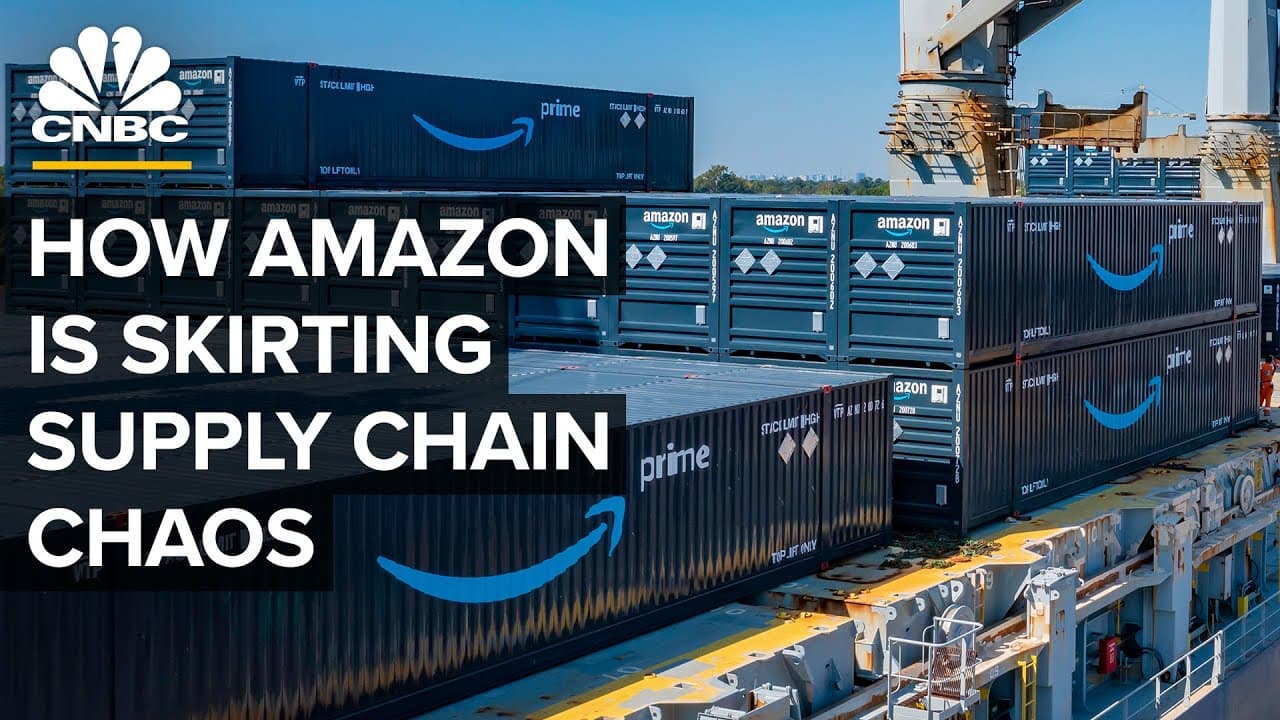
Amazon reduces holiday shipping delays by owning more of the logistics chain. It charters its own containers and vessels, builds an air cargo fleet, and uses predictive data to pre position goods, enabling faster internal moves and cheaper last mile delivery. This mix helps it push more shipping in house and avoid port congestion faced by rivals.
Transcript
Online holiday orders are streaming in, but supply chain chaos is causing panic this season. There are 77 container vessels waiting in California, San Pedro Bay. That's a record high, but some of those ships are unscheduled container charters with no docking appointment. The ports of Los Angeles and Long Beach announcing they'll fine shipping compa... Read More
Key Insights
- Amazon ships a large portion of its own packages, increasing control over the supply chain.
- Amazon has been creating its own containers in China to guarantee equipment availability for domestic use.
- Port congestion is mitigated by using smaller vessels and port of entry diversification, including less busy ports.
- The cost of shipping a container has skyrocketed, incentivizing internal solutions like own vessels and containers.
- Amazon has structured its logistics to operate like a large in house transportation company, not just a retailer.
- Data gathering at every node allows dynamic reallocation between container and air shipments based on cost.
- Amazon has accelerated its air freight operations to move goods quickly from China to the U.S.
- Other retailers are following by chartering their own smaller vessels to avoid busiest ports.
- More videos from this channel:
- More from this channel: CNBC
Install to Summarize YouTube Videos and Get Transcripts
Explore YouTube Video Summarizer or Get YouTube Transcript Extractor
Questions & Answers
Q: What is the core strategy Amazon uses to avoid holiday shipping delays?
Amazon reduces delays by owning and controlling more of the shipping journey. It charters vessels, builds its own containers, expands its warehousing capacity, and uses its network of over 50 000 truck trailers and hundreds of facilities to move goods more directly. This multi node control minimizes exposure to port congestion and third party delays.
Q: How does Amazon use data to manage its logistics?
Amazon gathers data at every potential pain point of the process and uses it to adjust the mode of transport on hourly terms. When costs increase for one mode, it can switch to another, such as flying goods via cargo aircraft if container shipping becomes too expensive or slow, ensuring faster and more reliable delivery.
Q: Why is container shortage a problem and how does Amazon address it?
Container shortages raise costs and slowdowns because empty containers must be returned and repositioned. Amazon addresses this by manufacturing its own 53 foot containers in China for domestic use, reducing dependency on external supply and ensuring more predictable equipment availability.
Q: What role do smaller vessels play in Amazon’s strategy?
Smaller vessels can dock at less congested ports, improving unload times and reducing delays compared to Ultra Large Container Ships that require big port infrastructure. Leasing smaller vessels helps Amazon bypass the busiest ports and speed up the middle mile.
Q: How significant is Amazon Air in their logistics mix?
Amazon Air provides a fast, high capacity option to move goods from origin to destination, reducing reliance on ground transport and ports. It operates from 42 U S airports with hundreds of daily flights, enabling rapid replenishment of high demand items and preserving shelf availability.
Q: What is the meaning of Amazon becoming an ocean vendor?
Being an ocean vendor means Amazon handles ocean freight for its goods, ranking among top five transportation companies in the Trans Pacific. This status gives Amazon more control over routing, timing, and costs, reducing dependence on external carriers.
Q: How do other retailers respond to the same supply chain pressures?
Walmart, Costco, Home Depot, IKEA and Target are chartering their own smaller vessels to bypass congested ports and speed up unloading. This mirrors Amazon’s strategy of taking control of critical nodes to ensure faster delivery during peak seasons.
Q: What risks does Amazon still face despite these measures?
Despite more control, Amazon is not immune to supply chain shocks. The transcript notes an increase in out of stock items and higher site prices, indicating that even with in house capabilities, external factors like labor shortages and global disruptions can still impact operations.
Summary & Key Takeaways
-
Amazon uses data to predict demand and pre buys bulk items from China to move them efficiently. This reduces reliance on external shippers and speeds up first mile processing.
-
The company has expanded its own container and vessel capacity, including 53-foot containers and small ships, to bypass congested ports and improve offload times.
-
Amazon Air and long haul planes provide an alternate route for fast delivery from China to the U.S., decreasing exposure to surface transportation bottlenecks.
Read in Other Languages (beta)
Share This Summary 📚
Summarize YouTube Videos and Get Video Transcripts with 1-Click
Try YouTube Summary with ChatGPT & Claude or YouTube Transcript Generator
Explore More Summaries from CNBC 📚





Summarize YouTube Videos and Get Video Transcripts with 1-Click
Try YouTube Summary with ChatGPT & Claude or YouTube Transcript Generator