How Do Relationships Create Lasting Happiness?
TL;DR
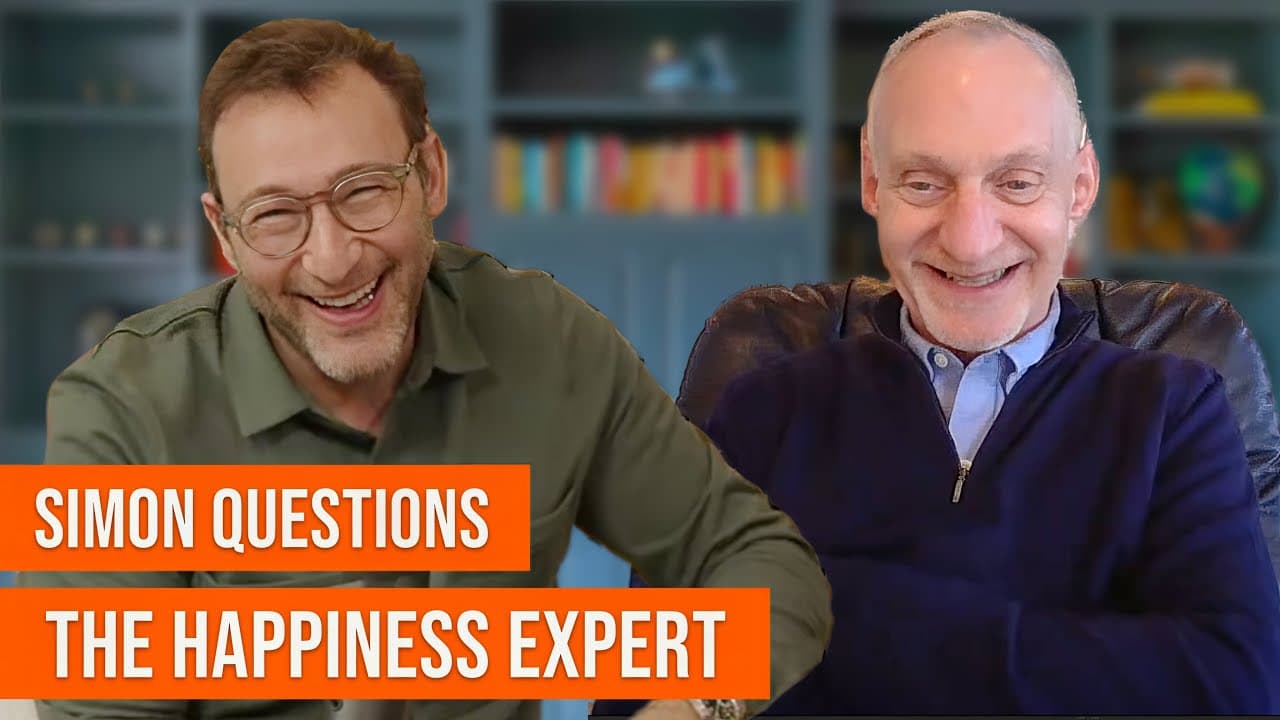
Lasting happiness grows from meaningful relationships, active engagement in life, and contributing to something larger than yourself. The Harvard study suggests that belonging is strengthened by connecting people across family, work, faith, and friendship circles, while isolation becomes easier when digital interaction replaces participation. A satisfying life requires deliberately maintaining relationships and creating communities where different parts of life can meet.
Transcript
you might know this because you are a psychiatrist how many psychiatrists does it take to change a light bulb one exactly one but the light bulb has to really want to change we all want to live a happy life of course in fact we want it so much that there is a whole cottage industry built around helping us find it but what does a happy life actually... Read More
Key Insights
- The Harvard Study of Adult Development began in 1938 with 724 teenagers and followed participants throughout adulthood, preserving detailed records of their hopes, relationships, disappointments, and sources of satisfaction across different stages of life.
- A lasting desire to make a difference can keep people engaged with life. Participants did not necessarily pursue one unchanging purpose, but those who maintained an aspiration to contribute beyond themselves appeared more consistently connected to meaningful activity.
- Generativity is the adult desire to contribute to something larger than oneself through activities such as raising children, mentoring others, or serving a broader purpose. The conversation associates this orientation with reduced regret and a stronger sense that one’s life was good enough.
- Modern institutions often emphasize employment prospects and graduate salaries when guiding young people. The discussion argues that parents, counselors, and universities could also ask how young people want to contribute to the world and participate in purposes larger than personal advancement.
- Social isolation has become a path of least resistance as participation in companies, religious institutions, clubs, volunteering, and home gatherings has declined. The digital revolution is described as accelerating trends toward weaker forms of belonging that were already underway.
- Community is more than appearing on an email list or repeatedly meeting the same small group. Meaningful community involves showing up, participating, forming relationships, and creating opportunities for people from different parts of life to encounter and support one another.
- Strong community builders act as connection points among otherwise separate social circles. They invite colleagues, relatives, friends, and people from religious settings into shared gatherings, producing fluid and individually shaped networks instead of relying exclusively on one formal institution.
- Belonging can become harmful when it depends on treating outsiders as enemies. The discussion warns that political identities, lifestyle identities, and other temporary attachments may imitate purpose without providing the durable, inclusive relationships associated with deeper community.
Install to Summarize YouTube Videos and Get Transcripts
Explore YouTube Video Summarizer or Get YouTube Transcript Extractor
Questions & Answers
Q: What does the Harvard study suggest creates lasting happiness?
The study discussion identifies meaningful human connection, engagement with life, and contribution beyond oneself as central ingredients of lasting happiness. Wealth and fame are not presented as the deeper answer. People benefit from maintaining relationships, participating in communities, mentoring or raising others, and sustaining a purpose that connects their individual lives to something larger.
Q: How was the Harvard happiness study conducted?
Harvard researchers began tracking 724 teenagers in 1938 and kept detailed records as the participants moved through adulthood. Those records documented their aspirations, relationships, marriages, disappointments, and sources of satisfaction. The project continued across generations of researchers, and only 10 participants were still living at the time described, all of them in their hundreds.
Q: Why did Robert Waldinger agree to direct the Harvard study?
Robert Waldinger became interested after his proposed research project did not receive federal funding and his predecessor invited him to examine one participant’s file. The file contained about a thousand pieces of paper. Reading one person’s hopes at 19, ambitions at 40, and reflections on marriage at 60 convinced him that studying complete lives was unusually valuable.
Q: Why does contributing to something bigger support happiness?
A desire to contribute beyond personal interests can keep a person engaged with life, even if the particular purpose changes over time. The conversation describes this orientation as generativity, which may involve raising children, mentoring people, or serving a wider cause. People who sustain it may later experience less regret and greater acceptance of their lives.
Q: What is generativity in adult development?
Generativity is described as the mature desire to participate in something larger than oneself. It can take the form of raising children, mentoring others, or pursuing work that benefits more than the individual. The alternative is stagnation. According to the discussion, generative people are more likely to look back with less regret and feel their lives were good enough.
Q: How can someone build a meaningful community?
A person can build community by connecting people from different areas of life rather than repeatedly gathering one closed circle. The strongest connectors described in the conversation invite colleagues, relatives, friends, and people from religious communities into shared activities such as barbecues. This creates a diverse, fluid network in which previously separate relationships begin to overlap.
Q: Why can digital life increase social isolation?
Digital interaction can make isolation easier by replacing forms of belonging that require physical participation and sustained responsibility. The discussion notes declining involvement in clubs, volunteering, religious institutions, long-term workplaces, and gatherings at home. It presents the digital revolution as accelerating existing social trends, while online uses of the word community may require little more than joining an email list.
Q: What is the difference between a community and a tribe?
The conversation treats community as inclusive participation built through showing up, forming relationships, and connecting different social circles. The word tribe is viewed more cautiously because it can imply exclusion and the creation of outsiders. Belonging becomes less constructive when members depend on shared enemies, rigid political identities, or lifestyle labels instead of durable relationships and mutual contribution.
Summary & Key Takeaways
-
Harvard researchers began tracking 724 teenagers in 1938, recording their aspirations, relationships, satisfaction, and adult experiences across their lives. Robert Waldinger became the study’s director after discovering the extraordinary value of reading one participant’s development from age 19 through later adulthood, including his changing ambitions, marriage, and disappointments.
-
The participants who retained a desire to make a difference remained engaged with life, even when their specific purposes changed. The discussion connects this pattern to generativity, the adult desire to raise children, mentor others, or contribute beyond oneself. Such engagement can support greater satisfaction and fewer regrets when looking back on life.
-
Belonging does not require membership in one fixed institution. Effective community builders connect colleagues, relatives, friends, and people from religious settings, creating diverse networks in which relationships overlap. Digital life can encourage isolation and reduce participation in clubs, volunteering, home gatherings, and other forms of belonging, making intentional connection increasingly important.
Read in Other Languages (beta)
Share This Summary 📚
Summarize YouTube Videos and Get Video Transcripts with 1-Click
Try YouTube Summary with ChatGPT & Claude or YouTube Transcript Generator
Explore More Summaries from Simon Sinek 📚



Summarize YouTube Videos and Get Video Transcripts with 1-Click
Try YouTube Summary with ChatGPT & Claude or YouTube Transcript Generator