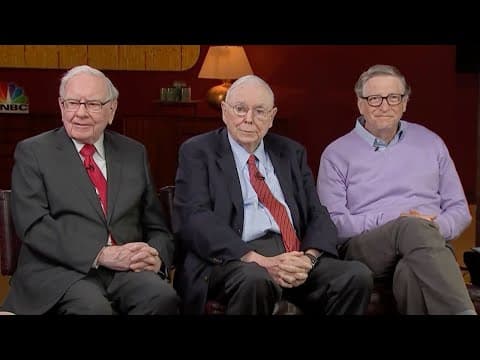
Warren Buffett | Charlie Rose | July 17, 2015
TL;DR
The Giving Pledge asks wealthy people to commit at least half of their fortunes to philanthropy during their lifetimes or at death. Its private dinners and annual gatherings encourage candid peer learning about charitable causes, family involvement, foundations, leadership, successes, and failures, while motivating participants to begin giving earlier and apply their experience to problems such as inequity.
Transcript
15 years ago in the year 2000 bill and melinda gates created the bill and melinda gates foundation nine years ago in 2006 warren buffett pledged part of his fortune to the bill and melinda gates foundation the gates foundation has since become a leader in fighting global issues such as hunger poverty infectious diseases and education in 2010 warren... Read More
Key Insights
- The Giving Pledge is a voluntary commitment by wealthy people to donate at least 50 percent of their wealth to philanthropy during their lifetimes or at death, although many participants choose to pledge a larger proportion of their fortunes.
- The initiative grew from a candid dinner conversation where participants discussed how parents, families, personal experiences, successes, and disappointments shaped their approaches to giving. The openness of the first couple encouraged similarly honest contributions from everyone else around the table.
- The Giving Pledge had grown to 137 contributors from 14 countries by the time of the interview. Buffett said the response substantially exceeded his earlier expectation that the initiative might have approximately 50 participants by that point.
- The annual gathering is designed for peer learning rather than fundraising pitches or competition. Participants privately discuss difficult subjects such as involving children, preparing the next generation, selecting leaders, starting foundations, choosing causes, and learning from both successes and failures.
- The United States is described as the country most engaged in philanthropy, with strong historical examples of foundations influencing universities, research, education, and pilot programs. Most Giving Pledge members were American, but the organizers wanted international participation to continue growing.
- Early philanthropic involvement gives donors more time to apply their judgment, business experience, and intellectual effort to problems such as inequity. Meetings can expose pledgers to practical possibilities and encourage them to begin acting before the end of their lives.
- Joining the Giving Pledge requires a personal letter rather than an elaborate transaction. The letter states the donor's commitment, identifies the pledged share, and often explains the family influences, examples, and reasoning that led to the decision.
- Family conversations are a central part of deciding whether to pledge because the commitment raises questions about inheritance, death, and children's roles. Some prospective members request several months to discuss the decision, and in one case children persuaded a hesitant parent to participate.
Install to Summarize YouTube Videos and Get Transcripts
Explore YouTube Video Summarizer or Get YouTube Transcript Extractor
Questions & Answers
Q: What is the Giving Pledge and what does it require?
The Giving Pledge is a voluntary request for wealthy people to commit at least 50 percent of their wealth to philanthropic causes. The promised giving may occur during the donor's lifetime or at death, and many participants specify a higher percentage. Joining involves writing a letter that states the commitment and often describes the personal influences and reasoning behind it.
Q: How did the idea for the Giving Pledge begin?
The idea evolved from a dinner hosted by David Rockefeller with approximately 15 attendees, counting couples as two. Participants went around the table explaining where their giving philosophies came from, without trying to persuade or solicit one another. The discussion became unusually candid, and Buffett, Bill Gates, and Melinda Gates later developed the Giving Pledge from that peer exchange.
Q: Why does the Giving Pledge hold annual gatherings?
The annual gatherings allow pledgers to learn privately from people facing similar philanthropic and family decisions. Conversations address starting a foundation, choosing leaders and causes, involving children, preparing the next generation, and understanding successes and failures. The meetings are not intended for pitching or competition. Their value comes from candor, shared experience, relationships, and occasional collaboration among participants.
Q: Why are participants encouraged to begin philanthropy early?
Beginning earlier gives donors time to learn what is possible, develop their interests, and apply the judgment and experience gained during their business lives. The gatherings can help participants understand a field, meet others working on similar concerns, and move from a future promise toward present involvement. The organizers hope this produces earlier, more collaborative, and more substantial giving.
Q: How does someone join the Giving Pledge?
A prospective participant writes a letter pledging to give at least 50 percent of their wealth to philanthropy during life or at death. Buffett often sends explanatory material first, asks whether the person has questions, and encourages discussion. Dinners about philanthropy can precede this outreach, but they are not presented as recruitment events. Participation remains voluntary throughout the process.
Q: Why are Giving Pledge letters considered important?
The letters record both the charitable commitment and the reasoning that produced it. Participants may describe the influence of parents, family experiences, surrounding examples, or personal convictions. Buffett believes someone reading such a letter 10, 20, or 50 years later might find an idea that resonates, just as earlier philanthropic examples influenced later donors.
Q: How do family considerations affect a Giving Pledge decision?
The commitment can require families to discuss death, inheritance, children's expectations, and whether children will participate in philanthropy. Business success does not automatically prepare someone to answer these questions. Some prospective pledgers therefore ask for three or four months to speak with their children before deciding. The transcript also describes a case where children persuaded a reluctant parent to pledge.
Q: How international was the Giving Pledge at the time discussed?
The Giving Pledge had 137 contributors across 14 countries, although most members were from the United States. Bill Gates said American philanthropy offered influential historical examples involving foundations, universities, research, education, and experimental programs. The organizers expected the international portion to grow and wanted philanthropic engagement to become stronger globally, especially among younger and more collaborative donors.
Summary
In this video, Bill and Melinda Gates and Warren Buffett talk about the creation of the Bill and Melinda Gates Foundation and the Giving Pledge. They discuss the origins of the idea and how it has grown over the years. They also talk about the impact of the foundation's work in areas such as global health and education. The conversation highlights the importance of collaboration and innovation in philanthropy.
Questions & Answers
Q: How did the idea for the Giving Pledge come about?
The idea for the Giving Pledge came from Warren Buffett's suggestion to meet with other philanthropists and learn from their experiences. Through dinner conversations, the idea of creating a group dedicated to giving away a significant portion of their wealth emerged.
Q: How has the Giving Pledge grown since its creation?
The Giving Pledge has grown to include 137 contributors from 14 countries. It has become a platform for like-minded individuals to come together, share experiences, and learn from one another. The annual gatherings have created a sense of community among the pledgers.
Q: What is the purpose of the yearly gatherings for Giving Pledge members?
The yearly gatherings provide an opportunity for pledgers to connect with one another, discuss their philanthropic efforts, and learn from each other's experiences. It is a place for candid conversations about topics such as how to involve the next generation and how to approach leadership in philanthropy.
Q: How did the idea for the Giving Pledge evolve from the initial dinner conversations?
The initial dinner conversations sparked a realization that a group of like-minded, similarly situated individuals could learn from each other and have a positive impact on philanthropy. The Giving Pledge evolved as a way to formalize this group and encourage others to commit to giving away a significant portion of their wealth.
Q: How has the international dimension of the Giving Pledge developed?
While most of the Giving Pledge members are from the United States, efforts are being made to reach out to philanthropists in other countries. The success and innovation of American philanthropy have caught the attention of other countries, and there is a desire to see philanthropy strengthen on a global basis.
Q: What is the importance of encouraging wealthy individuals to think about philanthropy earlier in life?
The idea behind encouraging early engagement in philanthropy is that individuals will have more time, resources, and expertise to make a significant impact. By starting early, individuals can apply their business acumen and experience to address social issues and have a greater effect on the problems they choose to tackle.
Q: How do Warren Buffett and the others approach inviting individuals to join the Giving Pledge?
The process of inviting individuals to join the Giving Pledge involves sending them materials and discussing any misconceptions they may have. The focus is on getting the invitees talking and understanding their motivations and concerns. The goal is to have a candid and open conversation about philanthropy and inspire them to make a commitment.
Q: What is the transaction that occurs when someone joins the Giving Pledge?
When someone joins the Giving Pledge, they commit to giving away at least 50 percent of their wealth to philanthropic causes either during their lifetime or after their death. They write a letter explaining their decision and the reasons behind it. The transparency and thoughtfulness of these letters are seen as essential for inspiring others and leaving a lasting impact.
Q: How does the Bill and Melinda Gates Foundation coordinate its work with partners and grantees?
The foundation works with a wide range of partners and grantees to achieve its goals. It convenes different experts and organizations with complementary expertise to address specific issues, such as malaria eradication or vaccine development. The foundation also has its own team of experts who oversee and coordinate the various projects and initiatives.
Q: What are some of the outcomes and impact of the foundation's work in global health and education?
The foundation has made significant progress in global health, particularly in the areas of polio eradication and vaccine development. They are optimistic about eventually eradicating polio and believe that investments in vaccines and other tools will have a lasting impact. In education, the foundation acknowledges that progress has been slower, but they remain committed to improving the U.S. education system and creating equal opportunities for all children.
Takeaways
The conversation with Bill and Melinda Gates and Warren Buffett highlights the power of collaboration, innovation, and early engagement in philanthropy. The Giving Pledge has grown into a community of like-minded individuals who are committed to giving away a significant portion of their wealth. The foundation's work in global health and education is driven by a belief in the value of all lives and a focus on innovation and measurement. The foundation's efforts in eradicating diseases like polio and improving education outcomes demonstrate the impact that can be achieved through collaboration and smart investments.
Summary & Key Takeaways
-
The Giving Pledge developed after a dinner hosted by David Rockefeller, where approximately 15 people, counting couples as two, discussed the origins of their giving philosophies. Their candid stories about parents, children, disappointments, and successes revealed that similarly situated people could learn valuable lessons by discussing philanthropy privately with peers.
-
A participant joins by writing a letter pledging at least 50 percent of their wealth to philanthropy during life or at death. Many promise a larger share and explain how they reached the decision. Buffett considers these personal letters important because future readers may find inspiration in their reasoning and examples.
-
The initiative had reached 137 pledgers across 14 countries, with most members coming from the United States. Its annual gatherings offer private conversations about foundations, leadership, causes, children, and the next generation. Buffett, Bill Gates, and Melinda Gates hope these exchanges encourage earlier, more collaborative, and more substantial philanthropic engagement.
Read in Other Languages (beta)
Share This Summary 📚
Summarize YouTube Videos and Get Video Transcripts with 1-Click
Try YouTube Summary with ChatGPT & Claude or YouTube Transcript Generator
Explore More Summaries from Investor Archive 📚


Summarize YouTube Videos and Get Video Transcripts with 1-Click
Try YouTube Summary with ChatGPT & Claude or YouTube Transcript Generator