How to Effectively Prompt Claude 5 Models
TL;DR
Prompting Claude 5 models requires a shift in approach. Provide the entire task specification upfront, use an 'interview me' skill to clarify task details, and explain the purpose behind tasks. Define clear output criteria and avoid overly specific instructions. These strategies help optimize model performance and reduce unnecessary token usage.
Transcript
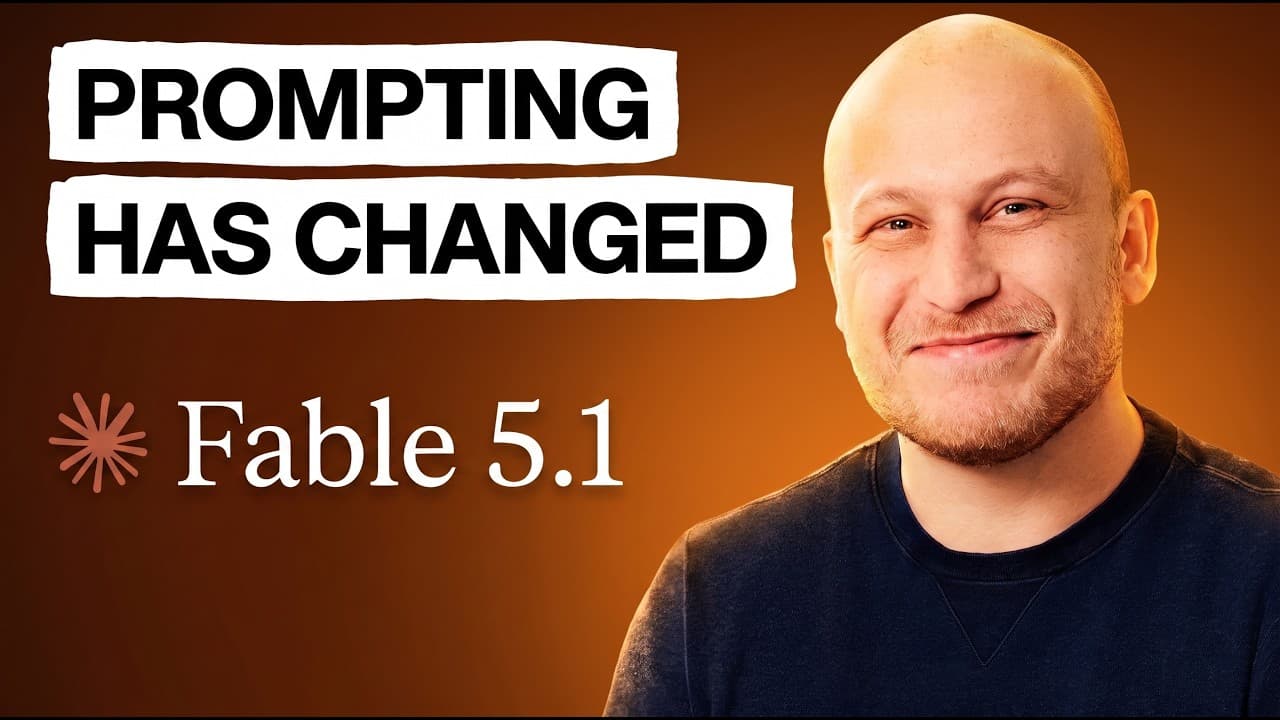
I recently looked at Anthropic's new guides and keynotes on prompting and I learned that almost everyone is prompting Claude 5 models wrong because Claude Opus 5, Fable 5, and similar models work fundamentally different than previous models, we need to change the way we prompt in 2026. So, in this video, I'll show you seven rules for prompting Clau... Read More
Key Insights
- Claude 5 models perform best with full task specifications upfront, rather than step-by-step instructions.
- Using an 'interview me' skill helps clarify task details before prompting, improving output quality.
- Understanding the 'why' behind a task helps Claude 5 models make better decisions during execution.
- Defining clear exit criteria prevents Claude 5 models from overextending tasks and burning tokens.
- Replacing hard rules with reasons enhances model understanding and compliance with instructions.
- Claude 5 models are trained to autonomously verify and correct outputs, making double-checking prompts unnecessary.
- Avoid using aggressive emphasis or step-by-step reasoning prompts to prevent over-triggering the model.
- Treat Claude 5 models like new employees: provide context, purpose, and clear instructions for optimal results.
Install to Summarize YouTube Videos and Get Transcripts
Explore YouTube Video Summarizer or Get YouTube Transcript Extractor
Questions & Answers
Q: How to prompt Claude 5 models effectively?
To prompt Claude 5 models effectively, provide the entire task specification upfront rather than step-by-step instructions. Use skills like 'interview me' to clarify task details and explain the purpose behind tasks. Define clear output criteria and avoid overly specific instructions. This approach aligns with the models' training for end-to-end tasks and optimizes performance.
Q: What is the 'interview me' skill in prompting?
The 'interview me' skill is a tool used to gather detailed information about a task before prompting a Claude 5 model. It asks questions to uncover the full context and create a comprehensive brief or prompt. This pre-planning step ensures clarity and improves the quality of the model's output by addressing potential unknowns in the task.
Q: Why is it important to explain the 'why' behind a task to Claude 5 models?
Explaining the 'why' behind a task is crucial because it helps Claude 5 models understand the intent and make informed decisions during execution. This understanding is particularly important for complex tasks where the model may encounter decisions not pre-specified. By grasping the bigger picture, the model can navigate these decisions with better context, leading to improved outcomes.
Q: How can you define what 'done' looks like for Claude 5 models?
Defining what 'done' looks like involves setting clear exit criteria and output style for the task. This prevents Claude 5 models from overextending tasks and burning unnecessary tokens. Include specific details about the desired output format, tone, and any examples to guide the model. This clarity helps the model understand when a task is complete and delivers the expected results.
Q: What is the impact of using hard rules versus reasons in prompting?
Using reasons instead of hard rules in prompting enhances model understanding and compliance. Claude 5 models respond better to instructions that include the rationale behind them. This approach aligns with Anthropic's research, indicating that models perform better when they understand the context and reasons for specific instructions, leading to more accurate and effective outputs.
Q: Why should you avoid double-checking prompts with Claude 5 models?
Avoid double-checking prompts with Claude 5 models because they are trained to autonomously verify and correct their outputs. Instructing the model to verify its output adds an unnecessary step, increasing costs without improving results. Rely on the model's built-in capabilities for verification and focus on providing clear, purpose-driven prompts to optimize performance.
Q: What are common mistakes to avoid when prompting Claude 5 models?
Common mistakes include using aggressive emphasis, step-by-step reasoning prompts, and unnecessary verification steps. These can cause over-triggering and inefficiency. Instead, focus on concise, purpose-driven prompts that align with the model's training. Provide clear task specifications, reasons for instructions, and avoid overly specific guidance to enhance model performance.
Q: How should you treat Claude 5 models to optimize their performance?
Treat Claude 5 models like new employees by providing context, purpose, and clear instructions. Explain the 'why' behind tasks, define what 'done' looks like, and replace hard rules with reasons. This human-like approach helps models understand tasks better, make informed decisions, and deliver optimal results, reflecting a shift towards more effective interactions with AI.
Summary & Key Takeaways
-
Claude 5 models excel when given complete task specifications rather than fragmented instructions. This approach aligns with their training to handle end-to-end tasks efficiently. By explaining the purpose and defining clear output criteria, users can optimize model performance and reduce token consumption.
-
Pre-planning through skills like 'interview me' clarifies task requirements, leading to better outputs. Additionally, providing reasons for instructions instead of hard rules enhances model understanding. These practices reflect a shift toward more human-like interactions with AI models.
-
Avoid common prompting mistakes such as unnecessary verification steps or overly specific instructions. Claude 5 models are designed to autonomously verify outputs and benefit from concise, purpose-driven prompts. This approach mirrors effective human communication, focusing on clarity and intent.
Read in Other Languages (beta)
Share This Summary 📚
Summarize YouTube Videos and Get Video Transcripts with 1-Click
Try YouTube Summary with ChatGPT & Claude or YouTube Transcript Generator
Explore More Summaries from Ben AI 📚



Summarize YouTube Videos and Get Video Transcripts with 1-Click
Try YouTube Summary with ChatGPT & Claude or YouTube Transcript Generator