How to Automate SEO with AI Agents
TL;DR
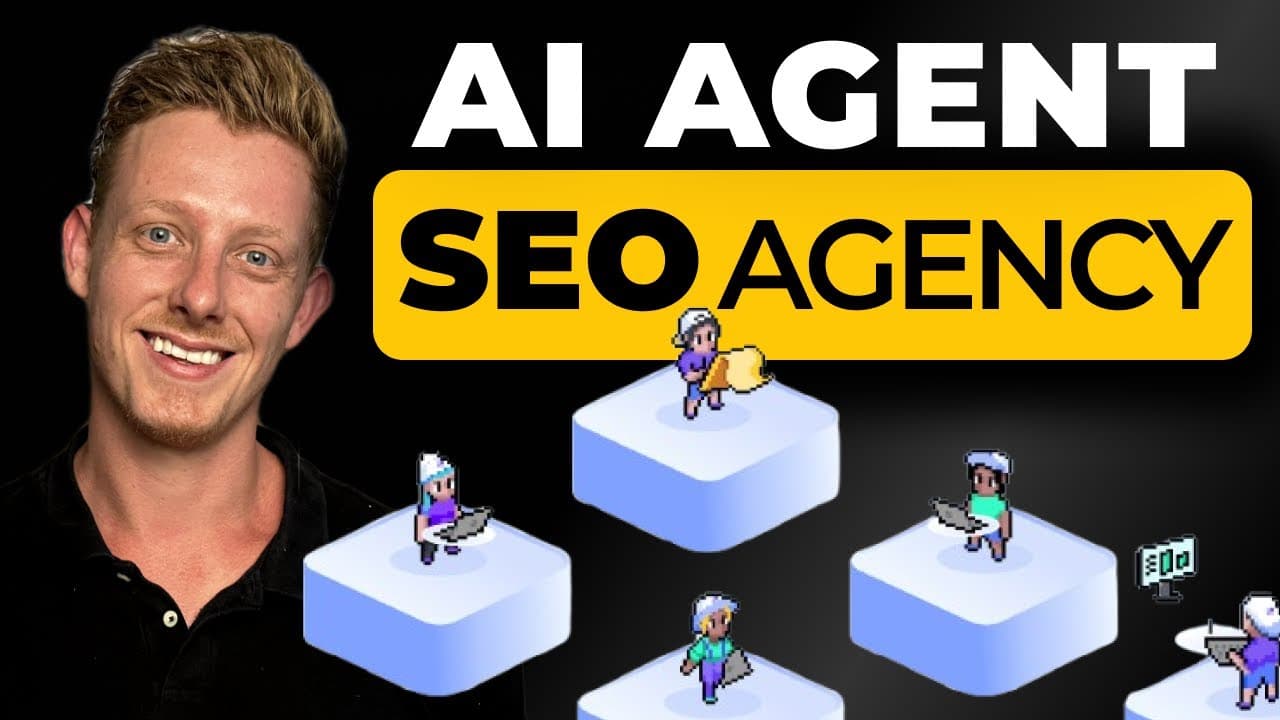
Automating an SEO agency's content process can significantly increase output and efficiency. By using a system of 15 AI agents, tasks like research, content creation, and publication are streamlined, allowing for up to 150 pieces of content daily at a fraction of the traditional cost. This approach is particularly beneficial for e-commerce brands focused on volume.
Transcript
hey everyone so in this video I'm going to show you how we automated the entire content process for an SEO agency using a 15 agent AI team now we built this system for an agency that specializes in SEO for e-commerce Brands and I can honestly say it's one of the crazier builds we've done now you might be thinking why use 15 AI agents when I can cre... Read More
Key Insights
- AI can automate the entire content process for SEO agencies, improving efficiency.
- A system of 15 AI agents handles research, content creation, and publication.
- The system is designed for SEO agencies specializing in e-commerce brands.
- AI-generated content can rank on Google, contrary to common objections.
- The system allows for creating up to 150 pieces of content daily.
- Content costs are reduced from $50 to $1.50 per piece using AI automation.
- Relevance AI and Make.com are used to build the no-code automation system.
- The multi-layered agent system includes directors, managers, and sub-agents.
Install to Summarize YouTube Videos and Get Transcripts
Explore YouTube Video Summarizer or Get YouTube Transcript Extractor
Questions & Answers
Q: How does AI automate the SEO content process?
AI automates the SEO content process by using a system of agents that handle various tasks such as research, content creation, and publication. The system includes AI agents that perform in-depth research, create content briefs, draft content, and finalize articles. It integrates with platforms like Webflow and WordPress to publish content efficiently, significantly increasing output and reducing costs.
Q: What are the benefits of using AI for SEO content creation?
The benefits of using AI for SEO content creation include increased efficiency, reduced costs, and higher output. AI systems can produce up to 150 pieces of content daily, compared to traditional methods. They lower content creation costs from $50 to $1.50 per piece and ensure comprehensive research and quality output, challenging the notion that AI content cannot rank on Google.
Q: Why use 15 AI agents instead of a single AI tool?
Using 15 AI agents instead of a single AI tool allows for a more comprehensive and specialized approach to SEO content creation. Each agent has a specific role, such as conducting research, creating briefs, or finalizing content. This multi-layered system ensures thoroughness and quality, mirroring traditional workflows and enabling efficient content production at scale.
Q: What platforms are used to build the AI automation system?
The AI automation system is built using Relevance AI and Make.com. Relevance AI is a no-code AI agent builder that allows for the creation of multi-agent systems, while Make.com is a traditional automation platform used to facilitate integrations with third-party software. These platforms enable the construction of a scalable and efficient automation system for SEO content processes.
Q: Can AI-generated content rank on Google?
Yes, AI-generated content can rank on Google. The video demonstrates that AI content, when implemented correctly, can achieve significant ranking results. The system's clients saw increased clicks and impressions after implementing AI-generated content, challenging the common objection that AI content does not perform well in search engine rankings.
Q: What is the role of the SEO director in the AI system?
The SEO director in the AI system orchestrates the entire content creation process. They delegate tasks to various agents, update the CRM with finalized content, and ensure that the content is posted on the client's website. The director acts as the central point of control, managing the workflow and ensuring quality and efficiency in content production.
Q: How does the AI system handle content research?
The AI system handles content research through a research manager agent and sub-agents. The research manager delegates tasks to sub-agents responsible for keyword research, topic research, and competitor analysis. These agents use tools like SEMrush, Google Search, and web scraping to gather comprehensive data, which is then evaluated and compiled into a detailed research report.
Q: What types of content can the AI system create?
The AI system can create various types of content, including blog posts, product reviews, product descriptions, category pages, and landing pages. Each content type has a dedicated agent responsible for creating briefs and finalizing content. This specialization ensures that each piece of content is tailored to its specific format and purpose, enhancing its effectiveness and quality.
Summary & Key Takeaways
-
Automating SEO content processes with AI agents can drastically increase output and reduce costs. The system, using 15 AI agents, handles tasks from research to publication, allowing e-commerce-focused agencies to produce up to 150 content pieces daily at a reduced cost. This approach challenges the belief that AI content cannot rank on Google.
-
The AI system includes a director, managers, and sub-agents, each with specific roles in the content creation process. It conducts in-depth research, creates content briefs, drafts initial content, and finalizes articles, integrating with platforms like Webflow and WordPress for publication.
-
Using Relevance AI and Make.com, the system is a no-code solution that mirrors traditional content workflows, ensuring comprehensive research and quality content production. It demonstrates the potential of AI in scaling SEO operations efficiently for e-commerce brands.
Read in Other Languages (beta)
Share This Summary 📚
Summarize YouTube Videos and Get Video Transcripts with 1-Click
Try YouTube Summary with ChatGPT & Claude or YouTube Transcript Generator
Explore More Summaries from Ben AI 📚




Summarize YouTube Videos and Get Video Transcripts with 1-Click
Try YouTube Summary with ChatGPT & Claude or YouTube Transcript Generator