How to Use Semrush for SEO and AI Visibility
TL;DR
Build visibility across traditional and AI search by strengthening content, connections, and technical corrections. Use Semrush to find attainable keywords, expand topic coverage, analyze competitor gaps, plan pillar pages and subtopics, improve backlinks, and identify crawl problems. Track rankings, traffic trends, and AI visibility over time, while using Google Search Console when more accurate position data is available.
Transcript
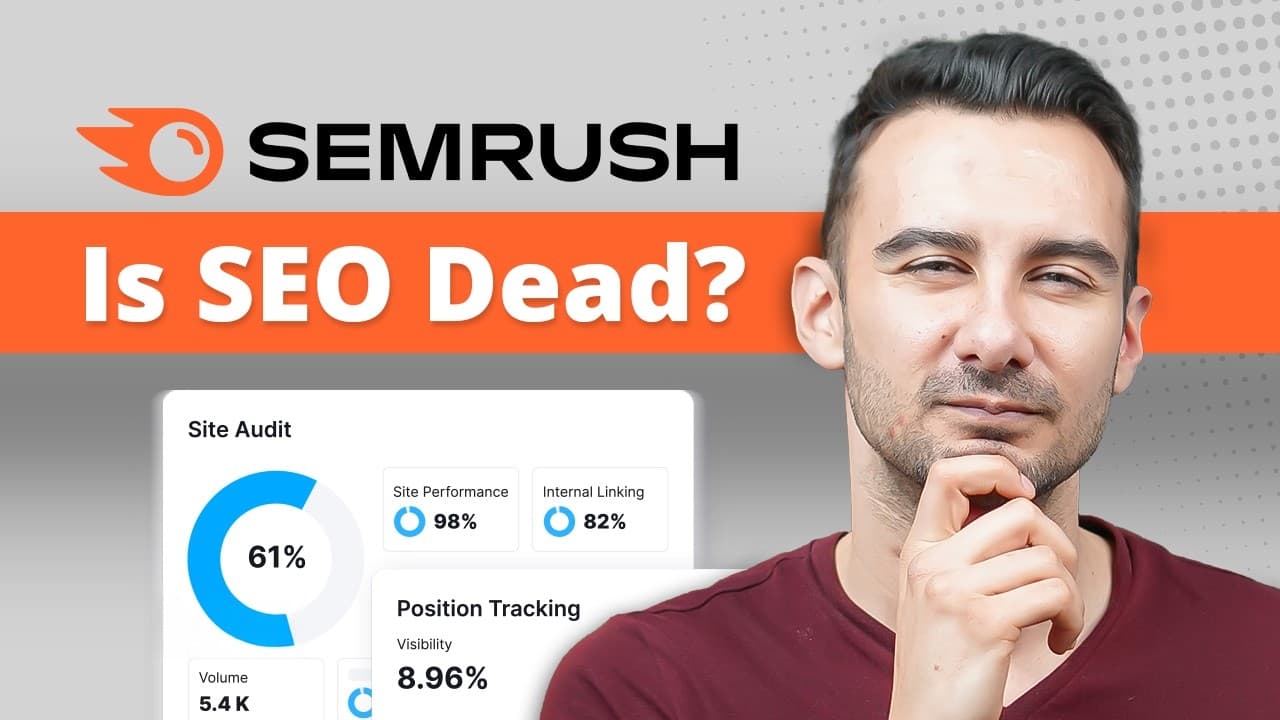
We're hearing everywhere that SEO is dead. With Google AI overviews and chatgbt serving up instant answers, it's easy to wonder if that's actually true or just hype. In this tutorial, I'm partnering up with SEMrush to show you how to increase your reach across both traditional search and AI-generated answers. That's because growing your brand i... Read More
Key Insights
- The Rocket Reach Triangle is a framework built around three areas: content, connections, and corrections. Together, they address website expertise, authoritative backlinks, and technical problems that can affect visibility in both conventional search results and AI-generated answers.
- Keyword intent is divided into navigational, informational, commercial, and transactional categories. These labels reveal whether a searcher wants a specific page, information, help with a purchasing decision, or an opportunity to complete a purchase.
- Keyword difficulty is measured from 0 to 100, with lower scores indicating easier opportunities to reach the top 10. Beginners can filter the Keyword Magic Tool to a custom 0%–29% range to find very easy and easy targets.
- Personalized keyword difficulty is based on the authority of a specific domain. Adding a domain to the Keyword Magic Tool also reveals existing positions and estimated potential traffic, making the analysis more relevant than relying only on general difficulty.
- AI visibility depends on topical depth, not merely isolated keyword coverage. The questions filter can reveal missing subjects that audiences ask about, helping a website expand its coverage and present itself as a more complete source of information.
- Organic Research is a domain-first method for finding keywords a website already ranks for. Filtering positions from 2–15 highlights terms that may benefit from additional optimization, although Google Search Console provides more accurate position data when available.
- The Keyword Gap Tool compares a website with competitors and separates opportunities into categories such as strong, missing, and weak keywords. Strong terms show where the website outpaces competitors, while missing and weak terms suggest possible additions to the content plan.
- The Keyword Strategy Builder converts two to five core topics into broader clusters containing pillar pages and supporting subtopics. Its traffic, difficulty, relevance, and strategy filters help prioritize pages instead of treating thousands of related keywords as independent assignments.
Install to Summarize YouTube Videos and Get Transcripts
Explore YouTube Video Summarizer or Get YouTube Transcript Extractor
Questions & Answers
Q: How do you use Semrush to improve SEO and AI visibility?
Start with the SEO Toolkit and organize the work around content, connections, and corrections. Research attainable keywords, identify unanswered questions, compare competitor coverage, and convert core topics into pillar pages and supporting subtopics. Then evaluate backlinks, recover lost links, find authoritative outreach targets, run a site audit, correct crawl problems, and track traffic, rankings, and AI visibility over time.
Q: What are the three Cs in the Rocket Reach Triangle?
The three Cs are content, connections, and corrections. Content is the information on a website that audiences, Google, and language models can read. Connections are backlinks from high-authority websites, which build trust and relevance. Corrections are technical fixes that remove problems preventing Google or an AI crawler from reading and trusting the website properly.
Q: How do you find easy keywords with the Keyword Magic Tool?
Enter a term that potential visitors might search, then review its variations and associated metrics. Instead of beginning with the highest-volume terms, open the keyword difficulty filter and set a custom range from 0% to 29%. This isolates very easy and easy keywords. If an existing website is available, add its domain to obtain personalized difficulty, current positions, and potential traffic estimates.
Q: What keyword metrics should you review in Semrush?
Review intent, monthly search volume, search trends, keyword difficulty, and SERP features. Intent distinguishes navigational, informational, commercial, and transactional searches. Trends can expose declining demand, while difficulty estimates how hard reaching the top 10 may be. SERP features show elements such as AI overviews, image packs, and video results that can push conventional listings farther down the page.
Q: How can you find content gaps for AI search?
Use the questions filter in the Keyword Magic Tool to discover subjects that the existing content does not fully answer. Broader question coverage can add the depth that AI systems reward and help position a brand as a go-to source. You can also compare competitors with the Keyword Gap Tool and examine missing or weak keywords for further topic ideas.
Q: How do you identify existing rankings worth improving?
Open Organic Research, enter the website domain, and navigate to the positions tab. Filter ranking positions with a custom range from 2–15 to find keywords that are already performing near prominent search positions and may justify more effort. When access is available, use Google Search Console for more accurate keyword position information than Semrush estimates.
Q: How does the Keyword Strategy Builder create a content plan?
Reduce the selected keyword list to two to five core topics, then enter those topics into the Keyword Strategy Builder. Semrush expands them into related topic clusters, each organized around a pillar page and supporting subtopics. Compare potential traffic with difficulty, apply presets such as Best for Strategy, and prioritize pages marked as highly relevant or high potential.
Q: How do backlinks and site audits support AI SEO?
Backlinks from high-authority websites strengthen trust and relevance for search engines and language models. Semrush can help audit the backlink profile, recover lost links, compare backlink gaps, and identify authoritative websites for outreach. A Site Audit complements that work by finding crawl errors and other technical obstacles, including AI-friendly improvements such as llms.txt, that affect whether crawlers can access and trust the site.
Summary & Key Takeaways
-
The Rocket Reach Triangle organizes SEO work into content, connections, and corrections. Content establishes topical expertise for audiences, Google, and language models. Connections are authoritative backlinks that strengthen trust and relevance. Corrections remove technical obstacles that prevent search engines or AI crawlers from reading and trusting a website.
-
Semrush supports keyword discovery through several complementary workflows. Keyword Magic starts from a search term, Organic Research starts from a domain, and Keyword Gap compares competitors. Useful metrics include intent, search volume, trends, difficulty, personalized difficulty, ranking position, potential traffic, and search features such as AI overviews.
-
The Keyword Strategy Builder turns two to five core topics into organized topic clusters, pillar pages, subtopics, and page-level keyword groups. Backlink analysis and site auditing extend the strategy beyond content by identifying link opportunities, lost links, crawl errors, AI-friendly improvements, and performance trends that can be monitored over time.
Read in Other Languages (beta)
Share This Summary 📚
Summarize YouTube Videos and Get Video Transcripts with 1-Click
Try YouTube Summary with ChatGPT & Claude or YouTube Transcript Generator
Explore More Summaries from Kevin Stratvert 📚





Summarize YouTube Videos and Get Video Transcripts with 1-Click
Try YouTube Summary with ChatGPT & Claude or YouTube Transcript Generator