What Are the Funniest Outtakes from Crash Course Philosophy?
TL;DR
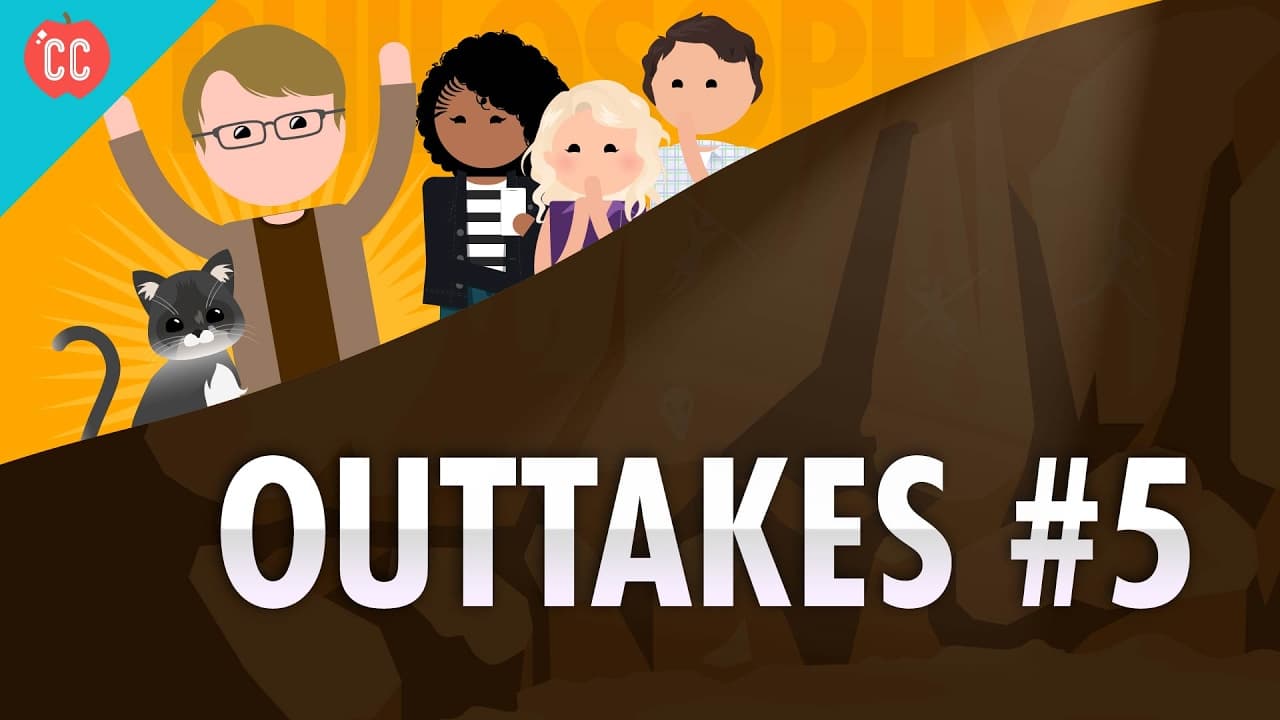
The video features humorous outtakes from Crash Course Philosophy that blend comedic interpretations with complex philosophical ideas. Moments include unexpected script twists, discussions on Aristotle's vague definitions of virtue, and a surrealist joke about a washing machine that entertain while provoking thought on moral considerations and ethical theories.
Transcript
20th century American philosopher Robert nosik asked us to remember that scientists have developed the ultimate Innovation inag imagine what did I say remember everybody don't forget that scientists have developed the ultimate innovation in V virtual reality it already happened now there are at least two pretty immediate responses to this line of t... Read More
Key Insights
- The video explores the humorous side of philosophical discussions, using outtakes and unscripted moments to highlight complex ideas.
- Robert Nozick's thought experiments are mentioned, emphasizing the innovative nature of philosophical inquiry and its relevance to modern technology like virtual reality.
- Aristotle's definition of virtue is discussed, highlighting its vagueness and dependence on situational context, which leads to comedic interpretations.
- A thought experiment by Peter Singer is referenced, exploring moral considerations between humans and animals, with a humorous twist on script reading.
- Emanuel Kant's philosophies are briefly touched upon, showcasing the challenges of translating complex ideas into digestible content.
- The video includes anecdotes and jokes, such as a surrealist joke about a washing machine, illustrating the blend of humor and education.
- The concept of rule utilitarianism is introduced, providing a platform for discussing ethical decision-making in a light-hearted manner.
- The video promotes engagement with philosophical ideas through entertaining and relatable content, encouraging viewers to explore deeper meanings.
Install to Summarize YouTube Videos and Get Transcripts
Explore YouTube Video Summarizer or Get YouTube Transcript Extractor
Questions & Answers
Q: What is the main theme of the video content?
The main theme of the video is to present philosophical concepts in a humorous and engaging manner. Through outtakes and unscripted moments, the video explores complex ideas from philosophers like Robert Nozick, Aristotle, and Emanuel Kant, making them more accessible to a general audience.
Q: How does the video use humor to explain philosophical concepts?
The video uses humor by incorporating outtakes, unexpected script changes, and anecdotes. These elements create a light-hearted atmosphere that makes complex philosophical ideas, such as virtue ethics and rule utilitarianism, more relatable and easier to understand for viewers.
Q: What philosophical ideas are discussed in the video?
The video discusses several philosophical ideas, including Robert Nozick's thought experiments, Aristotle's definition of virtue, Peter Singer's moral considerations, and Emanuel Kant's philosophies. These concepts are presented with humor to highlight their relevance and complexity in a modern context.
Q: How does the video make philosophical content more engaging?
The video makes philosophical content more engaging by blending humor with education. It uses outtakes, jokes, and anecdotes to present complex ideas in an entertaining way, encouraging viewers to explore philosophical concepts further and appreciate their significance in everyday life.
Q: What role do anecdotes play in the video?
Anecdotes in the video serve to illustrate the blend of humor and education. They provide relatable and entertaining examples that make philosophical discussions more engaging. For instance, a surrealist joke about a washing machine is used to highlight the light-hearted approach to complex ideas.
Q: How are philosophical experiments presented in the video?
Philosophical experiments are presented in the video through humorous interpretations and unscripted moments. For example, Robert Nozick's virtual reality thought experiment is mentioned with a comedic twist, making the innovative nature of philosophical inquiry both entertaining and thought-provoking.
Q: What is the significance of unexpected script changes in the video?
Unexpected script changes add an element of surprise and humor to the video, making philosophical discussions more dynamic and engaging. These changes highlight the spontaneity of philosophical inquiry, encouraging viewers to think critically and appreciate the unpredictable nature of philosophical exploration.
Q: How does the video encourage viewers to explore philosophical ideas?
The video encourages viewers to explore philosophical ideas by presenting them in an entertaining and accessible manner. Through humor, anecdotes, and unscripted moments, it demystifies complex concepts and invites viewers to engage with philosophical discussions, fostering curiosity and deeper understanding.
Summary & Key Takeaways
-
The video features outtakes from a Crash Course Philosophy episode, blending humor with philosophical discussions. It includes unexpected script changes and humorous interpretations of philosophical concepts, making complex ideas more accessible.
-
Philosophers like Robert Nozick, Aristotle, and Emanuel Kant are referenced, with their ideas presented in a comedic context. The video uses humor to explore philosophical inquiries, such as virtual reality and moral considerations between humans and animals.
-
Anecdotes and jokes, including a surrealist joke about a washing machine, are used to illustrate the blend of humor and education. The video encourages viewers to engage with philosophical ideas through entertaining content, promoting deeper exploration.
Read in Other Languages (beta)
Share This Summary 📚
Summarize YouTube Videos and Get Video Transcripts with 1-Click
Try YouTube Summary with ChatGPT & Claude or YouTube Transcript Generator
Explore More Summaries from CrashCourse 📚
Summarize YouTube Videos and Get Video Transcripts with 1-Click
Try YouTube Summary with ChatGPT & Claude or YouTube Transcript Generator