What Is the Water-Energy Nexus and Its Impact?
TL;DR
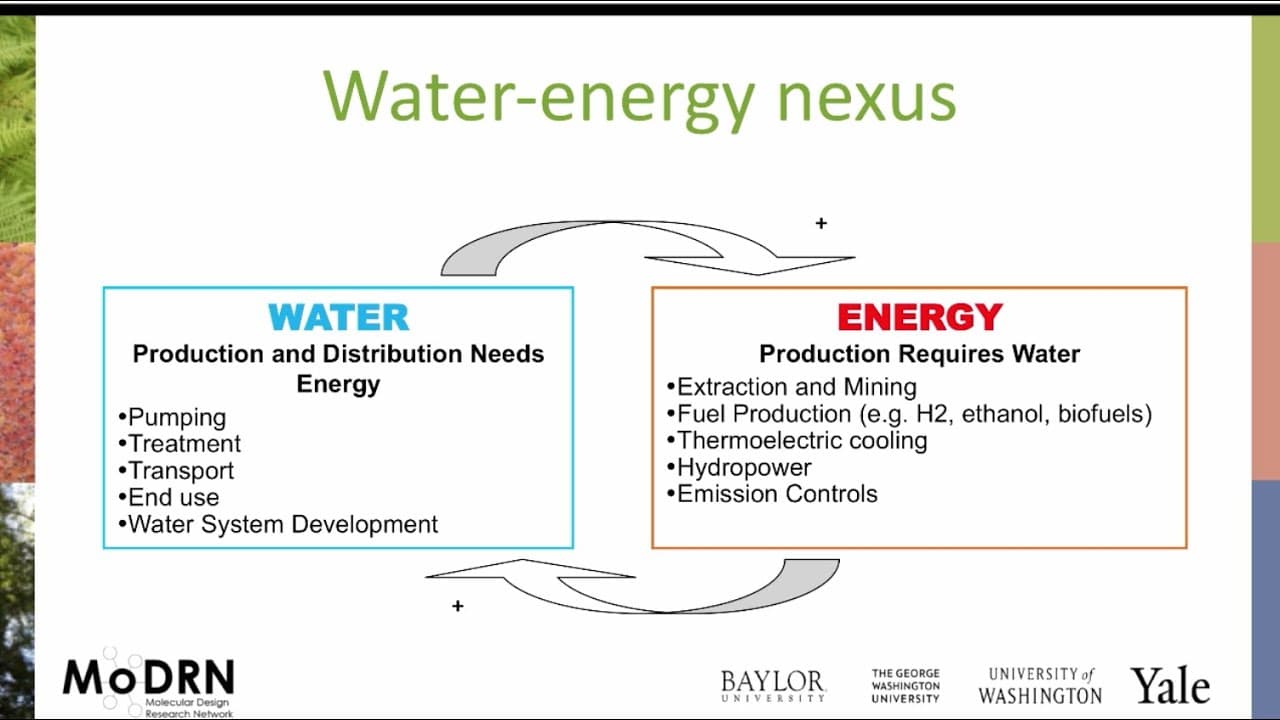
The water-energy nexus highlights that producing water requires energy for activities like pumping and treatment, while energy production demands water for processes like cooling and fracking. This interdependence creates a feedback loop: more water production increases energy needs, and more energy production increases water consumption. Understanding this relationship is crucial, especially in contexts like desalination, where high energy requirements are needed to produce fresh water.
Transcript
so focusing in more on this this water energy connection i kind of touched on this at the beginning but so producing water needs energy if you're pumping from underground pumping from a river you have to treat it you have to transport it somewhere in the end use you've got to you know put it up in a storage tower somewhere you've got to build more ... Read More
Key Insights
- 🥺 Water production and energy production are interconnected, leading to a positive feedback loop.
- 💦 Activities such as pumping, treating, transporting, and storing water require energy.
- 😎 Energy production activities like fracking and cooling systems consume significant amounts of water.
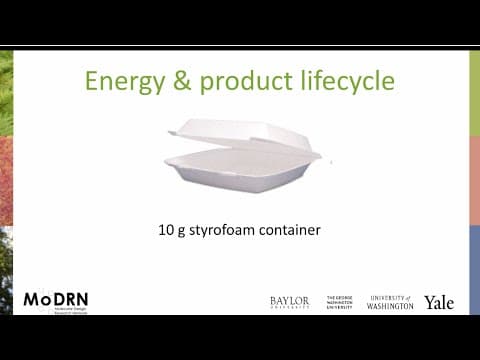
- 💦 Styrofoam containers have a half gallon of water embedded in their energy production.
- ✋ Desalination involves significant energy requirements due to the high pressures involved.
- 💦 The water-energy connection is a global concern, especially for countries reliant on imported manufacturing goods.
- 💦 Desalination membranes are compared based on their energy efficiency measured as kilowatt hours per thousand gallons of water.
Install to Summarize YouTube Videos and Get Transcripts
Explore YouTube Video Summarizer or Get YouTube Transcript Extractor
Questions & Answers
Q: How does water production require energy?
Water production requires energy for various processes such as pumping from underground or rivers, treating the water, transporting it, and storing it in towers. These activities require infrastructure and energy consumption.
Q: How does energy production require water?
Energy production requires water for activities such as using large quantities of water for fracking in crude oil extraction, cooling in power plants, and for emission controls like CO2 capture and scrubbing. Hydropower also directly utilizes water.
Q: What is the connection between water and energy consumption in producing styrofoam containers?
Producing and using a styrofoam container requires about a megajoule of energy, which is equivalent to approximately half a gallon of water. This does not include the additional water used in the manufacturing process or for washing the containers.
Q: How does desalination relate to the water-energy connection?
Desalination, the process of obtaining fresh water from seawater, requires applying high pressures, typically ranging from 600 to 1200 pounds per square inch. This makes desalination a significant energy-intensive activity.
Summary & Key Takeaways
-
Water production requires energy for pumping, treating, transporting, and storage.
-
Energy production requires water for activities such as fracking, cooling, and emission controls.
-
The more water produced, the more energy is needed, and vice versa, creating a feedback loop.
Read in Other Languages (beta)
Share This Summary 📚
Summarize YouTube Videos and Get Video Transcripts with 1-Click
Try YouTube Summary with ChatGPT & Claude or YouTube Transcript Generator
Explore More Summaries from YaleCourses 📚




Summarize YouTube Videos and Get Video Transcripts with 1-Click
Try YouTube Summary with ChatGPT & Claude or YouTube Transcript Generator